By Col Manoj Batra (Retd) · SSB faculty, The Cavalier · Senior GTO (retd), 20 SSB
The Indian Army is split into arms, which fight or directly support the fight, and services, which keep the fighting force fed, armed, moved, mended and healed. Where a unit sits decides who trains it, what its officers command, and which question a paper can ask about it. "Is Artillery a combat arm or a service?" and "Which arm became a separate corps in 1994?" are the classic traps.
This page is part of the Indian Army section. It gives the Army's own grouping, then the arms in one table with each arm's raising date, corps day and training centre, then a short note on every arm. The services have their own page, Army services.
How the Army Groups Its Arms and Services
The Army's official Arms and Services page lists eight arms first, in this order: the Armoured Corps, the Regiment of Artillery, Army Air Defence, the Army Aviation Corps, the Corps of Engineers, the Corps of Signals, Mechanised Infantry and Infantry. After them come the corps that serve the force (Army Service, Medical, Dental, Ordnance, EME, Remount and Veterinary, Educational, Military Police, Pioneer and Postal Service), the Territorial Army and the Defence Security Corps.
That page does not print the words "combat" or "combat support". The split in the NIOS military studies text, and in PIB's own wording, is this:
| Group | Members | What it means |
|---|---|---|
| Combat arms | Armoured Corps, Mechanised Infantry, Infantry | The fighting force that closes with the enemy and takes ground (NIOS) |
| Combat support arms | Artillery, Corps of Engineers, Army Air Defence, Army Aviation Corps, Corps of Signals | They work beside the combat arms with fire, mobility, air cover, reach and communications (NIOS). PIB calls Air Defence a "Combat Support Arm" |
| Services | ASC, AMC, ADC, AOC, EME, RVC, AEC, CMP, Pioneer, APS, and others | Supply, repair, medical care, policing and education |
Intelligence Corps. It is not on the Army's arms-and-services list, and NIOS puts it among the services. Some guides list it as a combat support arm. We found no official list that does, so treat it as "classification varies" and watch the wording of a question. Army Aviation. NIOS files it with the combat support arms; the Army's own page gives it no label, and we found no official order moving it to the combat arms. Artillery. Some books say "fighting arm"; NIOS and standard usage say combat support.
The Arms in One Table
One row per arm. "Raised" is the date the Army or PIB gives; where an arm has two dates (an origin and a separate-corps date), both are shown. Centres are as the Army's own site and PIB's list of defence training establishments give them.
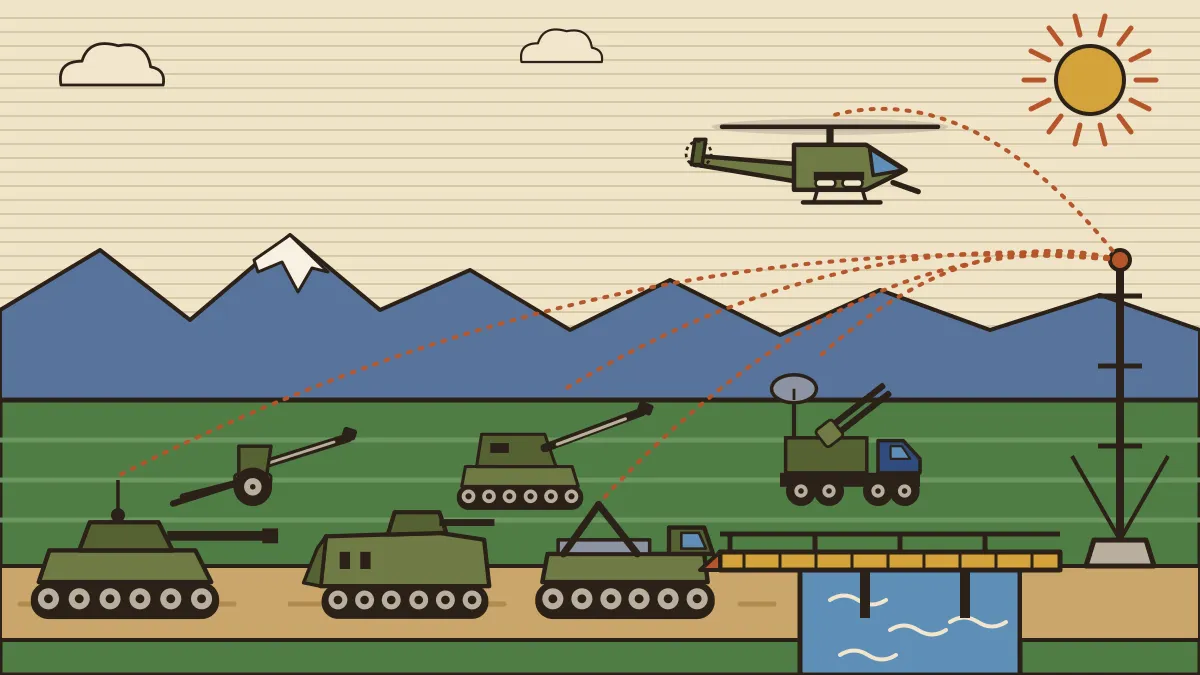
| Arm | Role in one line | Raised or lineage | Corps day | Training centre or school |
|---|---|---|---|---|
| Armoured Corps | Tanks: shock, break-through and fire support for infantry | Mechanisation of the cavalry began 1 May 1938, when the Scinde Horse gave up its horses (PIB) | Armour Day, 1 May | Armoured Corps Centre and School, Ahmednagar |
| Infantry | Attack, hold and occupy ground | Regiments with their own raising dates; see the regiments page | Infantry Day (Shaurya Diwas), 27 October | The Infantry School, Mhow (there since 1 Apr 1948), plus regimental centres |
| Mechanised Infantry | Infantry carried in tracked combat vehicles beside the tanks | Regimental Centre raised 2 April 1979 | 2 April | Mechanised Infantry Centre and School, Ahmednagar |
| Regiment of Artillery | Firepower: guns, howitzers and rockets | 5 (Bombay) Mountain Battery, raised 28 Sep 1827 | Gunners' Day, 28 September | School of Artillery, Devlali; Artillery Centres at Nasik Road and Hyderabad |
| Corps of Army Air Defence | Protect Army assets from hostile air threats | Roots in 1939-40; separate arm from Artillery on 10 Jan 1994 | 10 January in PIB releases (see note below) | Army Air Defence College and Centre, Gopalpur (Odisha) |
| Army Aviation Corps | Helicopters and drones: observe, move, support, strike | Came into being 1 Nov 1986 | 1 November | Combat Army Aviation Training School, Nashik (raised 1 Sep 2003) |
| Corps of Engineers | Build mobility for own troops, deny it to the enemy | Madras Sappers, 1780; three groups merged 18 Nov 1932 | 18 November | College of Military Engineering, Pune; Engineer Groups at Bengaluru, Roorkee and Khadki |
| Corps of Signals | Communications in peace and war | 31 and 32 Divisional Signal Companies, 15 Feb 1911 | 15 February | Military College of Telecommunication Engineering, Mhow; Signal Training Centres at Jabalpur and Goa |
| Intelligence Corps | Intelligence, counter-intelligence and security | Formed 1 Nov 1942 in press raising-day reports; sources vary | 1 November | Military Intelligence Training School and Depot, Pune |
One trap sits behind the table: the Artillery and the Engineers share the motto "Sarvatra" (Everywhere), so a motto alone will not tell them apart.
The Combat Arms: Armoured Corps, Infantry, Mechanised Infantry
Armoured Corps
In battle: the Armoured Corps replaced the horse cavalry and is the Army's shock force. NIOS says tanks are its main weapons, and that it covers the infantry while they attack enemy positions. PIB's Armour Day release (2017) names the fleet as the T-72 Ajeya, T-90 Bhishma and Arjun. Equipment: main battle tanks and weapon systems. One fact: Armour Day, 1 May, marks the mechanisation of the Indian cavalry in 1938, with the Scinde Horse the first regiment to convert. See our note on the Jabalpur tank overhaul line.
Infantry
In battle: NIOS calls infantry the fighting troops who attack and occupy ground, and the most important and largest branch of the fighting forces. It is built from regiments (see regiments), whose battalions sit in brigades (brigades and battalions). Equipment: infantry weapons. One fact: Infantry Day on 27 October marks the first Army infantry troops landing at Srinagar airport in 1947 (PIB); PIB called the 2025 observance the 79th Shaurya Diwas.
Mechanised Infantry
In battle: infantry that rides into action in tracked infantry combat vehicles, so that it can keep up with the tanks and fight from or beside the vehicle. PIB says its centre is the home of "all technical and tactical aspects" of infantry combat vehicles, and trains soldiers of every arm that uses them. Equipment: tracked infantry combat vehicles, covered with the tanks on the weapons pages. One fact: the Mechanised Infantry Regimental Centre was raised at Ahmednagar on 2 April 1979 and was re-designated the Mechanised Infantry Centre and School on 17 September 2021 (PIB, 2 Apr 2024; the Army's page says 17 November 2021).
NIOS calls Mechanised Infantry "the latest arm" of the Army, and in another line calls Aviation "the youngest of the armed corps". By the dates above, Mechanised Infantry (1979) is the newest combat arm, but Army Aviation (1986) and Air Defence as a separate corps (1994) are younger arms of the support group. Read the question for "combat arm" before choosing.
The Combat Support Arms
Regiment of Artillery
In battle: it supplies the Army's firepower, destroying enemy defences and giving the infantry fire cover to take ground (NIOS). Some defence writers call it the Army's second-largest arm after the infantry, but the Army publishes no strength table, so do not quote a share. Equipment: artillery guns, plus rockets such as Pinaka; our note on loitering munitions and artillery shows where the arm is heading. PIB's 30 June 2026 list of the outgoing chief's reforms names Shaktibaan regiments and Divyastra batteries among the initiatives progressed. One fact: Gunners' Day, 28 September, marks the raising of 5 (Bombay) Mountain Battery in 1827; PIB says the battery has served without a break, which is why its raising day is the Gunners' Day. The motto is "Sarvatra Izzat-O-Iqbal".
Corps of Army Air Defence
In battle: the Army's page says it protects Army assets from aerial threats and is embedded with the battle outfits, using air-surveillance radars, air-defence missiles and air-defence guns. Equipment: the Akash family and the older guns are on the weapon systems page. One fact: PIB's raising-day releases say its origin is 1939, that raising began 15 September 1940 at Colaba, Mumbai (the Army's history says 14 September), and that after independence it stayed in the Regiment of Artillery and "bifurcated as a separate arm on 10 Jan 1994". The motto is "Akashe Shatrun Jahi", which PIB translates as "Shoot the Enemy in Air". The college is at Gopalpur, Odisha.
PIB marked the Corps' raising day on 10 January in 2024 (31st), and press reported it on 10 January in 2023 (30th) and 2025 (32nd). ThePrint reported on 31 August 2020 that the Army would move the day to 15 September, to mark the 1940 origin, citing unnamed officers. We found no official order making the change; 10 January is the date still in use. For a question on the corps becoming separate from the Artillery, the date is 10 January 1994. Army Air Defence is an Army arm, not the Air Force's; the IAF's layers are on IAF air defence.
Army Aviation Corps
In battle: the Army's helicopter and drone arm: it observes the enemy, moves troops and stores, and now flies armed helicopters. The Army's history starts with Air Observation Post flights (first Indian flight, August 1947); Chetak helicopters came in March 1969 and Cheetahs in 1971; the Corps came into being on 1 November 1986 and went straight into Operation Pawan. The Army's training-school page says the arm "has graduated to combat roles" with the Rudra helicopter and has taken over command of remotely piloted aircraft; PIB (Nov 2022) calls it "a decisive third dimensional manoeuvre arm". Equipment: Army Aviation. One fact: the training school at Nashik was raised on 1 September 2003.
- Dec 2025: the Army receives the last three of six AH-64E Apaches from Boeing (The Tribune); the first three came in July 2025.
- 30 Jun 2026: PIB lists Shaktibaan Regiments, Divyastra Batteries and Ashni drone platoons among reforms progressed in the outgoing chief's tenure.
- 28 Sep 2026: the 200th Gunners' Day (UNI). The count treats 1827 as year one; PIB called 2022 the 196th.
Corps of Engineers
In battle: the Army says the Corps has four constituents: Combat Engineers, the Military Engineer Services, the Border Roads Organisation and Military Survey. In war the combat engineers build bridges, tracks and helipads for own forces and deny them to the enemy with minefields and demolitions. Equipment: bridging and mine-clearing kit sit under engineering, not the headline weapons pages. One fact: PIB gives the raising year as 1780, the Madras Sappers, and says the Madras, Bengal and Bombay groups merged on 18 November 1932, now Corps of Engineers Day. Major R R Rane won the Param Vir Chakra in the 1947-48 Kashmir fighting for opening a passage through minefields.
Corps of Signals
In battle: it gives the Army its combat communications and its peacetime static networks (PIB, 15 Feb 2024). PIB's history says the raising of the 31st and 32nd Divisional Signal Companies at Fatehgarh on 15 February 1911 marked the raising of the Corps. One fact: the motto "Teevra Chaukas" is rendered "Swift and Sure" in PIB's 2024 release and "Swift and Secure" in its older history, and NIOS gives "Intense Alertness", so learn the Hindi words, not one English rendering.
Intelligence Corps
Press raising-day reports count the Corps from 1 November 1942, though some give 1940. Its training school and depot is at Pune (PIB's list). Which group it belongs to is where the books disagree.
How the Arms Fight Together
No arm fights alone. In the NIOS account the tanks cover the infantry as it attacks, the guns give fire cover, the engineers open the route and the signals carry the orders, while Air Defence screens the group and aviation looks deep into enemy ground. A formation is the mix: a brigade mixes battalions from several arms, and the divisions page shows how armoured, mountain and RAPID divisions blend them. The corps then holds several divisions with their own arms troops.
The current reform is about blending earlier. The Raksha Mantri used the Integrated Battle Group at Jabalpur on 27 August 2026 as the example of tanks, infantry, artillery, drones and air power working as one system (PIB), and the seven commands hold the formations that carry the arms. For the Army beside the Navy and Air Force, see tri-services.
- Artillery is a combat support arm, not a service. The services are the logistic corps: ASC, AMC, AOC, EME and the rest.
- Army Air Defence is not the Air Force's air defence. It belongs to the Army, trains at Gopalpur and covers Army assets.
- The Corps of Signals is an arm, not a formation. A corps with a small "c" (Signals, Engineers) is an arm; a Corps headed by a Lieutenant General, such as 14 Corps, is a formation.
Exam pins
- Combat arms (NIOS): Infantry, Armoured Corps and Mechanised Infantry. Everything else is a combat support arm or a service.
- Combat support arms (NIOS): Artillery, Engineers, Army Air Defence, Army Aviation, Signals.
- Armour Day, 1 May, marks the 1938 conversion of the Scinde Horse; the Armoured Corps Centre and School is at Ahmednagar.
- Mechanised Infantry: centre raised 2 April 1979 at Ahmednagar; re-designated Centre and School on 17 September 2021.
- Gunners' Day, 28 September = 5 (Bombay) Mountain Battery, 1827; School of Artillery at Devlali.
- Army Air Defence became a separate arm from Artillery on 10 January 1994; college at Gopalpur, Odisha; motto "Akashe Shatrun Jahi".
- Army Aviation Corps: 1 November 1986; training school at Nashik.
- Corps of Engineers Day, 18 November (merger of 1932); CME at Pune; four constituents including BRO and Military Survey; motto Sarvatra.
- Corps of Signals: 15 February 1911; MCTE at Mhow.
- Infantry Day, 27 October (Srinagar landing, 1947); Infantry School at Mhow.
Asked in past papers
Three past-paper questions land on this page's ground: where an arm trains, what Army Aviation flies, and who built a gun.
Which one of the following pairs of military training institute of India and location is not correctly matched?
(a) Army War College : Mhow (b) High Altitude Warfare School : Gulmarg (c) Army Air Defence College : Pune (d) Rashtriya Indian Military College : Dehradun
Answer: (c). The Army Air Defence College is at Gopalpur in Odisha; PIB's list of defence training establishments gives it there. The tempting wrong pair is (a), but the War College is at Mhow.
With reference to India's defence, consider the following helicopters 1. Cheetah 2. Chetak 3. Rudra. Which of the above has/have turret gun, rocket system and air-to-air missile?
(a) 1 and 2 (b) 2 only (c) 1 and 3 (d) 3 only
Answer: (d). The Army's training-school page says the Rudra marks the arm's step into combat roles; Cheetah and Chetak are older utility helicopters, in service from 1971 and 1969. UPSC's key gives (d).
Which one of the following manufacturers is engaged in upgradation of the Swedish 155-mm Bofors Howitzer under the project 'Dhanush'?
(a) Bharat Electronics Limited (b) Ordnance Factory Board (c) Bharat Dynamics Limited (d) Mishra Dhatu Nigam
Answer: (b). The Ordnance Factory Board built Dhanush, an upgraded Bofors-pattern gun. The board has since been split into seven companies (2021), so a newer question would name AWEIL, covered on the weapon systems page.
Practice MCQs (with answers)
- In the NIOS military studies text, which of these is a combat arm?
- Artillery
- Mechanised Infantry
- Corps of Signals
- Corps of Engineers
- On 10 January 1994 which arm became separate from the Regiment of Artillery?
- Army Aviation Corps
- Mechanised Infantry
- Corps of Army Air Defence
- Corps of Engineers
- Gunners' Day, 28 September, marks the raising of which unit?
- 5 (Bombay) Mountain Battery
- 1 Sikh
- The Madras Sappers
- 31 Divisional Signal Company
- Corps of Engineers Day, 18 November, marks which event?
- Raising of the Madras Sappers in 1780
- Founding of the College of Military Engineering in 1943
- Independence in 1947
- The merger of the three Engineer groups in 1932
- Where is the Combat Army Aviation Training School?
- Mhow
- Ahmednagar
- Nashik
- Gopalpur
- Which of these is NOT one of the four constituents of the Corps of Engineers named on the Army's site?
- Combat Engineers
- Military Engineer Services
- Border Roads Organisation
- Army Postal Service
1-b, 2-c, 3-a, 4-d, 5-c, 6-d. Q1: NIOS lists Infantry, Armoured Corps and Mechanised Infantry as combat arms; Artillery, Signals and Engineers are support arms. Q2: Air Defence separated in 1994; Aviation dates from 1986. Q3: Infantry Day marks the 1947 Srinagar landing, and 1911 is the Signals. Q4: 1780 is the raising year, not the day. Q5: Mhow is the Infantry School, Gopalpur Air Defence. Q6: the postal corps is a service.
Where to Go Next
Go next to Army services for the logistic corps and regiments for the infantry families. The training centres are covered with the other schools on training establishments, and corps days sit on defence days and dates. See career in the Indian Army for how a commission leads to an arm. At SSB, "which arm would you choose and why?" is a standard question, so read our SSB interview tips with this page open. Revise in the CDS/OTA study material and the NDA study material, and our CDS/OTA coaching batches cover defence GK with PYQ drills and weekly tests.
Frequently asked questions
What are the combat arms of the Indian Army?
In the NIOS military studies text, the combat arms are the Armoured Corps, Mechanised Infantry and Infantry. The Artillery, Engineers, Army Air Defence, Army Aviation and Signals are combat support arms. Everything else falls under the services.
Is Artillery a combat arm or a service in the Indian Army?
Artillery is a combat support arm, not a service. NIOS lists it with the combat support arms, and the Army's own page lists the Regiment of Artillery among the arms, ahead of the logistic corps. The services are corps such as the Army Service Corps, Army Medical Corps and Army Ordnance Corps.
When did Army Air Defence become a separate corps?
PIB says Army Air Defence stayed in the Regiment of Artillery after independence and became a separate arm on 10 January 1994. Its origin goes back to anti-aircraft units raised in 1939 and 1940. PIB marked its raising day on 10 January 2024 and press reported 10 January in 2023 and 2025, while a 2020 press report said the Army would move the day to 15 September.
What is the difference between arms and services in the Indian Army?
Arms fight or directly support the fight: tanks, infantry, guns, engineers, signals, air defence and aviation. Services provide the supply, repair, medical, postal and policing backing, for example the Army Service Corps and the Corps of EME. Our Army services page covers them one by one.
Where do the Army's arms train?
Armour and Mechanised Infantry train at Ahmednagar, Artillery at Devlali, Army Air Defence at Gopalpur in Odisha, Army Aviation at Nashik, Engineers at Pune, Signals at Mhow and Intelligence at Pune. The Infantry School is at Mhow.
More in Indian Army
← Back to Indian Army · Defence GK home
Sources: indianarmy.nic.in/about/about-us-site-main/arms-and-services-organisation-of-indian-army · digital.nios.ac.in/content/374en/4.pdf · pib.gov.in/PressReleasePage.aspx?PRID=1994905 · pib.gov.in/newsite/PrintRelease.aspx?relid=81173®=48&lang=2
Preparing for CDS or OTA?
Cavalier's CDS/OTA batches teach the whole GK paper, defence awareness included, with PYQ drills, weekly tests and SSB training.