The Constituent Assembly adopted the Constitution on 26 November 1949, and India has marked that date as Constitution Day (Samvidhan Divas) since 2015. The Assembly's most debated design choice was how to split power between Delhi and the states. It copied no single model. It took the three-list scheme of the Government of India Act, 1935, gave the leftover powers to the Centre, and added emergency doors through which Parliament can enter state territory. UPSC tests this almost every year: CDS 2024, 2025 and 2026 each asked about the lists, and a wrong entry in your memory costs a mark.
A Union of States, Not a Contract
By Aditya Tiwari · Polity faculty, The Cavalier · Lawyer, 10 years teaching law and Polity
Article 1 says India is a "Union of States", not a "federation of states". Dr B.R. Ambedkar explained the choice when he presented the draft in November 1948. The Indian Union, he said, is not the result of an agreement between states, and no state has a right to secede. Parliament can redraw state boundaries by an ordinary law under Article 3 (see reorganisation of states). That is why CDS 2022-I could ask which feature is not characteristic of Indian federalism and expect "the units consented to form the Union" as the answer.
| Country | How powers are listed | Residuary power rests with |
|---|---|---|
| USA, Australia | Only the federal powers are listed | The states |
| Canada | Double enumeration: federal and provincial lists | The Centre |
| India, 1935 Act | Three lists: federal, provincial, concurrent | Neither: the Governor-General decided case by case |
| India, 1950 Constitution | Three lists in the Seventh Schedule | Parliament (Article 248; Union List entry 97) |
So India took the three-list structure from the 1935 Act and the residuary rule from Canada. After Partition the Assembly leaned towards a strong Centre, so defence, communications and much of the economy went to the Union List.
Three Lists, and Which One Wins a Clash
Article 246 divides the subjects among three lists in the Seventh Schedule. The original Constitution had 97 Union, 66 State and 47 Concurrent entries. Laxmikanth's textbook now counts 100, 61 and 52, because amendments (the 42nd among them) added, moved and removed entries. Totals differ slightly between sources, so learn the entries and not the totals.
| List | Who legislates | Examples to memorise |
|---|---|---|
| List I: Union | Parliament, exclusively | Defence of India (entry 1), armed forces, arms and ammunition, atomic energy, foreign affairs, railways, currency, Reserve Bank, banking, insurance, inter-state trade, census, audit, residuary matters (entry 97) |
| List II: State | State legislature, "in normal circumstances" | Public order (1), police (2), local government, public health, agriculture, land, water, fisheries, prisons, taxes on agricultural income, taxes on land and buildings |
| List III: Concurrent | Both; Parliament's law prevails in a clash | Criminal law (1) and criminal procedure (2), preventive detention for state security (3), marriage and divorce, civil procedure, contracts, economic and social planning, labour welfare, education, forests, protection of wild animals and birds, population control, electricity, price control |
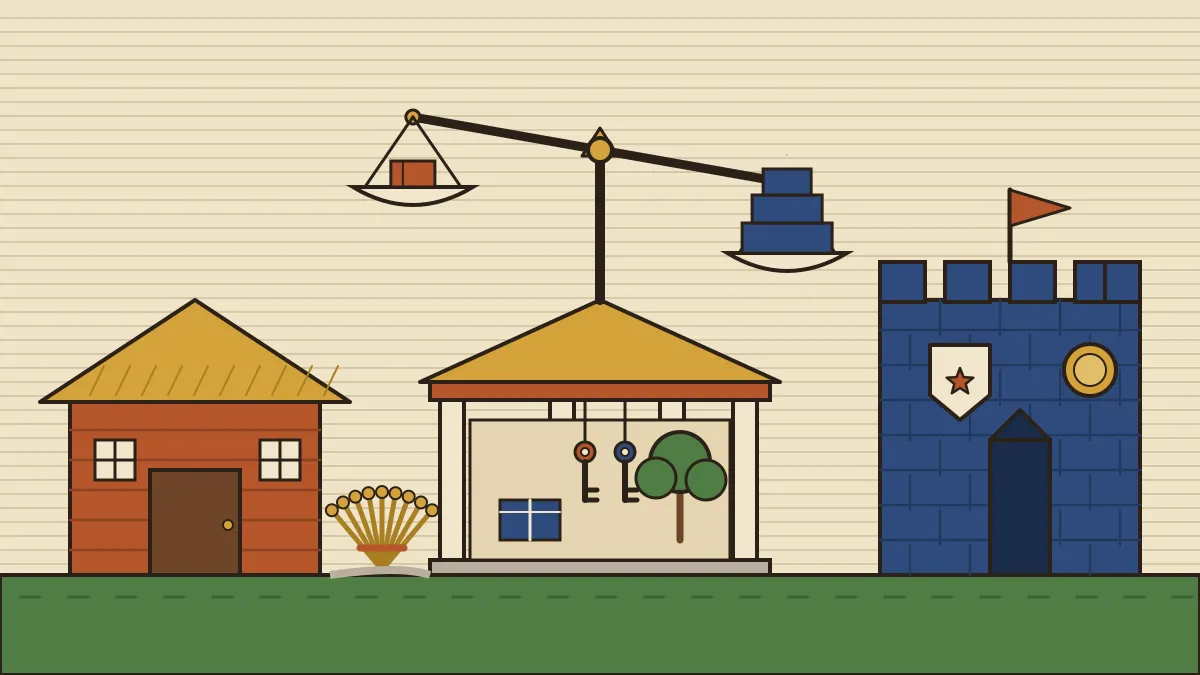
The Constitution settles overlaps in a fixed order. Article 246 begins with the words "notwithstanding anything in clauses (2) and (3)", and that opening gives the Union List priority over both of the others. Concurrent beats State. So the order of strength is Union > Concurrent > State. When a law seems to touch two lists, courts apply the doctrine of pith and substance: they ask what the law is really about, and a slight spill-over into another list does not invalidate it. Under the doctrine of colourable legislation, a legislature may not do indirectly what it cannot do directly.
Place each of these: (1) running a district police force, (2) a law on marriage and divorce, (3) a licence for an atomic power plant.
Census and insurance are Union subjects (CDS 2021 and 2025 both tried to mislead on these). Forests and education are Concurrent, not State. Police and public order are State subjects, but criminal law is Concurrent, so "criminal law is exclusively a State subject" is false (CDS 2024-II). Economic and social planning is Concurrent, which is why CDS 2026-I used it as the "not in the State List" option.
The 42nd Amendment (1976) shifted five subjects from the State to the Concurrent List: education, forests, weights and measures, protection of wild animals and birds, and administration of justice (except the Supreme Court and High Courts). It is one of the changes catalogued in our landmark amendments page.
Five Doors Through Which Parliament Enters the State List
The state list is "exclusive" only in normal times. The Constitution lets Parliament legislate on a State List subject in five situations. Learn them as a set, with their article numbers and what happens afterwards.
| Article | Trigger | How long does the law last? | Can the state still legislate? |
|---|---|---|---|
| 249 | Rajya Sabha resolution, passed by two-thirds of members present and voting, that it is in the national interest | Resolution lasts one year, renewable year by year; the law ends six months after the resolution lapses | Yes, but a clash is won by Parliament |
| 250 | A national emergency (Article 352) is in force | Ends six months after the emergency ends | Yes, but a clash is won by Parliament |
| 252 | Two or more states ask by resolution | Permanent; only Parliament can amend or repeal it | No: the asking states give up the subject. Other states may adopt it later |
| 253 | To carry out an international treaty or agreement | Permanent | No: Parliament's treaty power overrides the lists |
| 356-357 | President's Rule in a state | Continues after President's Rule ends | The state legislature may repeal, alter or re-enact it afterwards |
Each door has a classic example. Under Article 252, several states asked Parliament to legislate, which produced the Wild Life (Protection) Act, 1972, the Water (Prevention and Control of Pollution) Act, 1974 and the Transplantation of Human Organs Act, 1994. Under Article 253, Parliament passed the Geneva Conventions Act, 1960 and the Anti-Hijacking Act, 1982, because India had signed the treaties and "foreign affairs" and "treaty implementation" are Union subjects. For the emergency door in Article 250, see our article on the 1975 national emergency.
Article 249 is the only door that only Rajya Sabha can open. The Lok Sabha does not vote on the resolution (CDS 2019-II). Article 252 is the only door that closes behind the state: once a state surrenders the subject, only Parliament can change the law.
Clashes, Presidential Assent and the Centre's Check on State Bills
When a state law and a central law collide on a Concurrent List subject, Article 254 decides. Clause (1): the central law prevails and the state law is void to the extent of the repugnancy. Clause (2) is the exception that students forget. If the state bill was reserved for the President and received his assent, the state law prevails in that state. But Parliament may still override it later by passing a law on the same subject. Repugnancy needs direct inconsistency; two laws that can be obeyed together do not clash.
The Centre also keeps a lever over state legislation:
- Reserved bills. The Governor may reserve certain bills for the President's consideration (Article 200). The President may give assent, withhold it, or return a bill that is not a money bill.
- Previous sanction. Some state bills, such as those restricting the freedom of trade within the state, can be introduced only with the President's prior sanction (Article 304).
- Financial emergency. During a financial emergency (Article 360), the Centre may direct states to reserve money bills and other financial bills for the President.
The Sarkaria Commission (1983-88) accepted the case for a strong Centre as a device to avoid legal chaos: if every state could pass its own law on a national subject, a citizen could not know which rule applied. Its work led to the Inter-State Council (1990).
How the Line Has Moved Since 1950
The lists are not frozen. Three modern examples show how the balance shifts.
- The GST exception (2016). The 101st Amendment inserted Article 246A, which lets both Parliament and state legislatures legislate on goods and services tax. Only Parliament may legislate on GST for supplies in the course of inter-state trade. Article 279A created the GST Council, in which the Union holds one-third of the voting weight and all the states together two-thirds, and decisions need a three-fourths majority. GST began on 1 July 2017. It is the clearest example of cooperative federalism written into the text.
- Labour. Trade unions, labour disputes, social security and welfare of labour are Concurrent entries (22, 23 and 24). That is why Parliament could consolidate 29 laws into four codes, while states frame their own rules under them. The full story is in our article on the four labour codes.
- Cooperatives. Cooperative societies are a State List subject. The 97th Amendment (2011) added Part IXB for them without getting ratification from half of the states, so in Union of India v. Rajendra N. Shah (2021) the Supreme Court held the part invalid for state-registered societies. Our page on cooperative societies and Part IXB has the details.
How UPSC Has Asked It: Past Papers Solved
Most questions ask for a list entry or for the legislative route. Always ask yourself: Union, State or Concurrent, and which article opens the door?
Rajya Sabha has exclusive jurisdiction in
(a) creation of new States (b) declaring a war (c) financial emergency (d) authorizing Parliament to legislate on a subject in the State List
Answer: (d). Article 249 needs a Rajya Sabha resolution by two-thirds of those present and voting. New states are created by Parliament as a whole (Article 3), and financial emergency is approved by both Houses.
Which one of the following is not correct? (a) Taxes on agricultural income is a subject under the State List (b) Price control is a subject under the Concurrent List (c) Insurance does not come under the Union List (d) Forests is a subject under the Concurrent List
Answer: (c). Insurance is on the Union List, so the statement that it is not is the incorrect one. The other three are correct.
Which one of the following is not a characteristic feature of Indian Federalism? (a) The federating units consented to form a union (b) Residuary powers vest with the Centre (c) Single citizenship (d) An extensive Union and Concurrent list
Answer: (a). The Indian Union is not a union of consenting states, and the states cannot secede. The other three are real features.
As per the State List under the Seventh Schedule, the States have jurisdiction over agricultural land in connection with which of the following subjects? 1. Taxes on agricultural income 2. Duties in respect of succession of agricultural land 3. Estate duty in respect of agricultural land
(a) 1 and 2 only (b) 2 and 3 only (c) 1 and 3 only (d) 1, 2 and 3
Answer: (d). Agricultural income tax, succession duties and estate duty on agricultural land all sit in the State List. The Centre taxes non-agricultural income and property.
Which one among the following pairs of Subjects and Lists under the Seventh Schedule is not correctly matched? (a) Forest : Concurrent List (b) Taxes on land and building : State List (c) Insurance : Union List (d) Census : Concurrent List
Answer: (d). Census is a Union List subject (entry 69). The other three pairs are correct.
Which one among the following items is not included in the State List of the Constitution of India? (a) Public Order (b) Economic and Social Planning (c) Land (d) Local Government
Answer: (b). Economic and social planning is a Concurrent entry. Public order, land and local government are State subjects.
Most of these questions were an odd-one-out on a list entry. The same dozen subjects keep returning: census, insurance, forests, education, planning, criminal law, police, agriculture and land. Memorise them and most questions fall.
Practice MCQs (with answers)
- The residuary power of legislation under Article 248 is vested in
- the State legislatures
- the Supreme Court
- Parliament
- the President acting alone
- A State law on a Concurrent List subject conflicts with a Central law. The State bill had been reserved for the President and received his assent. In that State
- the State law prevails, though Parliament may later override it
- the Central law always prevails
- whichever was passed earlier prevails
- both laws are void
- For Parliament to legislate on a State List subject under Article 249, the Rajya Sabha resolution must be passed by
- a simple majority of members present
- a majority of its total membership
- two-thirds of its total membership
- two-thirds of members present and voting
- Which of these Acts was made under Article 252, at the request of states?
- The Geneva Conventions Act, 1960
- The Wild Life (Protection) Act, 1972
- The Anti-Hijacking Act, 1982
- The Central GST Act, 2017
- Which pair of subjects was moved from the State List to the Concurrent List by the 42nd Amendment?
- Police and public order
- Agriculture and land
- Local government and fisheries
- Forests and protection of wild animals and birds
- Which of the following is correctly matched?
- Preventive detention for state security : Concurrent List
- Census : State List
- Insurance : State List
- Fisheries : Union List
- A law made by Parliament for a State on a State List subject during President's Rule
- lapses the moment President's Rule ends
- continues afterwards, but the State legislature may repeal or alter it
- lapses six months after President's Rule ends
- can be repealed only by Parliament
- Which feature separates the Indian Union from the American federation?
- A written Constitution
- Division of powers between two levels
- The units did not form the Union by agreement and cannot secede
- An independent judiciary
1-c, 2-a, 3-d, 4-b, 5-d, 6-a, 7-b, 8-c. Q4: the Geneva and Anti-Hijacking Acts came under Article 253 (treaties). Q7: unlike Articles 249 and 250, the law does not end with the trigger. Q8: a written Constitution, two levels and an independent judiciary are shared by both countries.
Quick Revision
- Article 1: Union of States; no right to secede (Ambedkar); Parliament can redraw states (Article 3). Constitution adopted 26 Nov 1949; Constitution Day since 2015.
- Three lists from the 1935 Act; residuary power with Parliament (Article 248, Union entry 97), like Canada. Originally 97 / 66 / 47 entries; Laxmikanth now counts 100 / 61 / 52 (totals differ by source).
- Priority: Union > Concurrent > State.
- Union: defence, atomic energy, foreign affairs, banking, insurance, census. State: public order, police, agriculture, land, local government, agricultural-income tax. Concurrent: criminal law and procedure, preventive detention, forests, education, planning, labour, price control, electricity.
- 42nd Amendment moved five subjects to Concurrent: education, forests, weights and measures, wild animals and birds, administration of justice.
- Five doors: 249 Rajya Sabha (2/3 present and voting, 1 year); 250 national emergency; 252 states' request; 253 treaties; 356-357 President's Rule. 249 and 250 laws end six months after the trigger; 252 and 253 are permanent.
- Article 254: Concurrent clash, Centre wins unless the state law has presidential assent, which Parliament can still override.
- 101st Amendment: Article 246A (GST for both), 279A (GST Council, 1/3 Union, 2/3 states, three-fourths majority). GST from 1 July 2017.
Frequently asked questions
What is the Seventh Schedule of the Indian Constitution?
The Seventh Schedule divides law-making subjects between Parliament and the state legislatures into three lists: the Union List, the State List and the Concurrent List. Article 246 gives it effect. Parliament has exclusive power over the Union List, states over the State List, and both over the Concurrent List.
Who has the residuary power of legislation in India?
Parliament holds the residuary power under Article 248 and entry 97 of the Union List. This follows the Canadian model, not the American one, where the states keep the leftover powers. Under the Government of India Act, 1935, the residuary power was given to the Governor-General instead.
In what situations can Parliament make laws on State List subjects?
There are five. Parliament may legislate on a State List subject if the Rajya Sabha passes a resolution by two-thirds of members present and voting (Article 249), during a national emergency (Article 250), when two or more states request it (Article 252), to implement an international treaty (Article 253), and during President's Rule in a state (Articles 356 and 357).
What happens when a state law and a central law clash on a Concurrent List subject?
Under Article 254, the central law prevails and the state law is void to the extent of the repugnancy. The exception is a state law that was reserved for the President and received his assent. It then prevails in that state, although Parliament may later pass a new law on the same subject to override it.
How did GST change Centre-State legislative relations?
The 101st Amendment, 2016, inserted Article 246A, giving both Parliament and state legislatures the power to make laws on goods and services tax. Parliament alone legislates when the supply takes place in the course of inter-state trade. The GST Council under Article 279A, in which states hold two-thirds of the voting weight, takes the decisions.
Related CDS / OTA Polity topics
Polity questions reward exact entries, not general ideas
Cavalier's CDS/OTA batches teach the Constitution article by article, with weekly PYQ tests and a revision sheet for every schedule.