On 21 and 22 November 2026, the Union Labour Ministry held a two-day Chintan Shivir of state and Union Territory labour ministers in Gandhinagar, Gujarat. The meeting fell almost exactly one year after the four Labour Codes took effect on 21 November 2025, and its theme was how states should apply them on the ground. Minister Mansukh Mandaviya also launched the NCS ONE portal with a new Occupational Shortage Index, an e-Shram Livelihood Profile module and eight Career Lounges. For a defence-exam candidate the codes matter because they are the biggest change in Indian labour law since Independence, because UPSC has already asked which code covers which Act, and because they join three parts of the syllabus: the economy, the Constitution and modern history.
Why 29 Laws Became Four Codes
By Hitendra Deswal · Economics faculty, The Cavalier
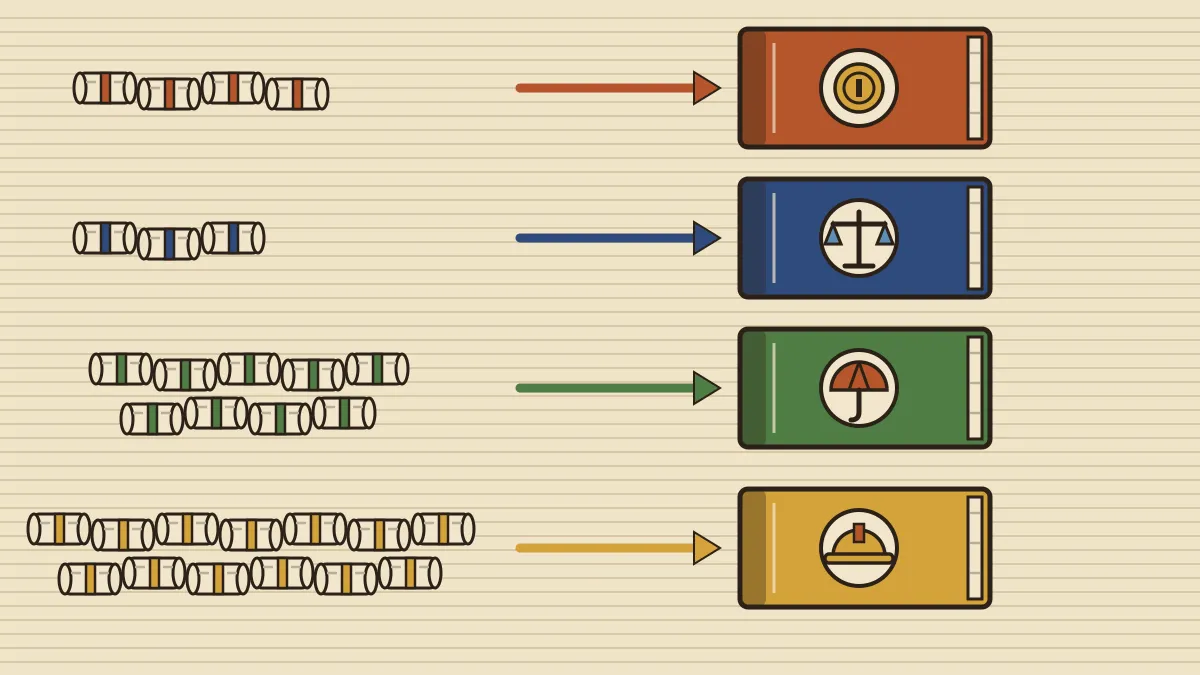
Until 2025, India's labour rules sat in 29 separate central Acts, many framed in the 1930s to 1950s for a very different economy. A firm could face multiple registrations, licences and returns, each with its own definition of "wages" or "employee". Whole groups of workers, from gig riders to contract labourers, fell between the Acts. The government's answer was to codify: merge the Acts by subject into four Codes.
Labour is a Concurrent List subject. Entries 22, 23 and 24 of List III cover trade unions and industrial disputes, social security and employment, and the welfare of labour including conditions of work and provident funds. Both Parliament and the states can legislate on it. That is why the Chintan Shivir mattered: the Centre passed the Codes, but states frame many of the rules.
| Code | Passed | Old laws merged | Subject | Main Acts replaced |
|---|---|---|---|---|
| Code on Wages | 2019 | 4 | Pay | Payment of Wages Act 1936, Minimum Wages Act 1948, Payment of Bonus Act 1965, Equal Remuneration Act 1976 |
| Industrial Relations Code | 2020 | 3 | Unions, strikes, disputes | Trade Unions Act 1926, Industrial Employment (Standing Orders) Act 1946, Industrial Disputes Act 1947 |
| Code on Social Security | 2020 | 9 | Insurance, pension, gratuity | EPF Act 1952, ESI Act 1948, Maternity Benefit Act 1961, Payment of Gratuity Act 1972, Employees' Compensation Act 1923 and others |
| OSH and Working Conditions Code | 2020 | 13 | Safety, health, hours | Factories Act 1948, Mines Act 1952, Plantations Labour Act 1951, Contract Labour Act 1970, Inter-State Migrant Workmen Act 1979 and others |
4 + 3 + 9 + 13 = 29. The Wages Code is the oldest of the four (2019); the other three were passed together in 2020. All four came into force together on 21 November 2025.
Questions ask which code absorbed which Act. A safety Act (Factories, Mines, Plantations, Contract Labour) goes to the OSH Code. Provident fund, ESI, gratuity and maternity go to Social Security. Strikes and unions go to Industrial Relations. Minimum wage and bonus go to Wages. CDS 2022-II tested exactly this (see below).
The Code on Wages: A Floor, a Definition and a Deadline
Under the old Minimum Wages Act, the minimum wage applied only to scheduled employments, so large groups of workers were uncovered. The Code on Wages gives every worker a statutory right to a minimum wage and to timely payment. The Centre also fixes a national floor wage, and no state minimum may fall below it. Other changes:
- Overtime must be consent-based and paid at at least double the normal rate.
- Equal pay for equal work: discrimination on grounds of gender is barred, and the ban explicitly covers transgender persons.
- Timely pay: wages for IT and ITES staff, for example, must be released by the 7th of every month.
- One definition of "wages", used for wages, provident fund, gratuity and bonus alike.
That last point hides the Code's best-known rule, the 50 per cent rule. "Wages" means basic pay, dearness allowance and retaining allowance. Allowances such as house rent are excluded, but if the excluded items add up to more than half of total remuneration, the excess is added back into wages. In other words, wages cannot be less than 50% of the pay package.
A clerk's total monthly package is ₹60,000. Basic pay and DA are ₹24,000 and the rest (₹36,000) is allowances. Gratuity is worth 15 days' wages for each completed year, and a day's wage is the monthly wage divided by 26. Find the gratuity for 5 years under the rule.
The practical effect is that a larger wage base raises provident-fund contributions and gratuity, which helps savings, and it can lower take-home pay. Our article on EPFO, provident fund and social security explains how that provident-fund contribution works.
The Industrial Relations Code: Unions, Strikes and Layoffs
The Industrial Relations Code merged three Acts into one rulebook for how employers and workers bargain and settle disputes. Its headline numbers show up in news reports and explanations of the reform.
| Provision | Rule under the Code |
|---|---|
| Permission for layoff, retrenchment or closure | Required only in establishments with 300 or more workers (earlier 100); states may raise the limit further |
| Standing orders (conditions of service) | Threshold raised from 100 to 300 employees |
| Notice before a strike | 14 days in all establishments (earlier a notice rule applied mainly to public utility services) |
| Bargaining union | A single union is recognised; where there are several, the union with at least 51% of the muster roll becomes the sole negotiating union |
| Dispute settlement | Two-member Industrial Tribunals; workers can approach the tribunal directly after conciliation fails |
| Retrenched workers | A Worker Re-Skilling Fund helps them retrain |
| Fixed-term employment | Recognised: fixed-term staff get the same wages, leave and benefits as permanent staff, and gratuity after one year instead of five |
Employers say the higher threshold lets firms restructure without waiting for permission; unions say the 300 mark leaves most factory workers unprotected and that the wider strike-notice rule makes strikes harder. That debate is an interview theme; the numbers above are what the paper asks.
The enforcement style also changes. Labour inspectors become Inspector-cum-Facilitators, who are meant to guide and advise before they punish.
The Code on Social Security: Gig Workers and the 64 Per Cent
The Social Security Code brings nine Acts together and widens who is covered. Its most-discussed change is that, for the first time, the law defines gig work, platform work and aggregators. Companies that run platforms must contribute 1 to 2% of annual turnover, capped at 5% of the amount they pay or owe to gig and platform workers, into a Social Security Fund. A worker's Aadhaar-linked Universal Account Number makes benefits portable across states. How the national board for these workers is built is in our note on the Social Security Board for gig workers.
| Scheme | Coverage rule under the Code |
|---|---|
| EPFO (provident fund and pension) | All establishments employing 20 or more employees |
| ESIC (health and injury insurance) | Mandatory for establishments with more than 10 employees; voluntary below that; compulsory even for one employee in hazardous processes; extended pan-India, not only notified areas |
| Gratuity | Fixed-term employees qualify after one year |
| Migrant workers | Definition widened to include those hired through contractors and those who migrate on their own; annual lump-sum travel allowance and portability of benefits |
The government says the share of the workforce with some social protection rose from about 19% in 2015 to more than 64% in 2025. The registry behind that effort is e-Shram, the national database of unorganised workers. The new e-Shram Livelihood Profile launched at Gandhinagar tracks the five protections the ministry calls Panch Suraksha: food security, health protection, life insurance, accident and disability protection, and pension security.
The OSH Code: Safety, Hours and Who Can Work at Night
The Occupational Safety, Health and Working Conditions Code is the biggest merger, 13 Acts, and the one UPSC chose to test. It covers factories, mines, plantations, docks, contract labour and inter-state migrant workers.
- Appointment letters for every worker, stating designation, wages and social-security entitlements.
- A free annual health check-up for workers above 40 years.
- Women may work at night and in all types of work, including underground mining, with their consent and with safety measures.
- Hours: 8 to 12 per day within a ceiling of 48 per week; overtime is paid at least double.
- Plantations are covered if they have more than 10 workers or a holding of 5 hectares or more.
- Safety committees are mandatory in establishments with 500 or more workers; a National OSH Board sets common standards.
- One registration, one licence and one return replace the many earlier filings.
Behind the code is a long history. The first Factories Act of 1881 mainly addressed child labour. The first union in the full sense, the Madras Labour Union, was founded in 1918 under B.P. Wadia. The All India Trade Union Congress followed in 1920, and the Trade Unions Act of 1926 gave registered unions legal status. By the late 1920s unions were running big strikes, such as the Bombay textile strike of 1928, in which nearly 150,000 workers stopped work for over five months. Women organisers like Anasuya Sarabhai in Ahmedabad and Prabhabati Dasgupta in the Bengal jute belt were part of that story.
The NCS ONE portal and the Occupational Shortage Index aim at matching jobs to skills; the index tracks gaps between labour demand and supply. The measurement side is in our article on measuring unemployment: PLFS, LFPR and the CWS approach.
How UPSC Has Asked It: Past Papers Solved
These are actual CDS questions since 2020. They split into one direct question on the Codes, two on labour history, and two on the labour market.
Which one of the following Labour Codes notified by the Government of India incorporated various provisions of the Central Labour Acts such as the Factories Act, 1948 and Plantations Labour Act, 1951?
(a) The Occupational Safety, Health and Working Conditions Code, 2020 (b) The Industrial Relations Code, 2020 (c) The Code on Wages, 2019 (d) The Code on Social Security, 2020
Answer: (a). Both Acts are about safety and conditions inside the workplace. The Industrial Relations Code covers unions and disputes, Wages covers pay, and Social Security covers insurance and pensions.
Which one among the following was India's first trade union in the proper sense of the term?
(a) Bombay Labour Union (b) Ahmedabad Labour Union (c) Madras Labour Union (d) Allahabad Labour Union
Answer: (c). The Madras Labour Union was founded in 1918 by B.P. Wadia. The Ahmedabad Textile Labour Association, linked to Gandhi and Anasuya Sarabhai, is another landmark early union, but the standard answer to "first trade union in the proper sense" is Madras.
Who among the following was not a woman labour leader who organised workers in the strikes in the 1920s?
(a) Sarala Devi Chaudhurani (b) Ushabai Dange (c) Prabhabati Devi (d) Anasuya Behn
Answer: (a). Sarala Devi Chaudhurani was a Bengali writer and nationalist associated with women's organisations, not a strike organiser. Anasuya Sarabhai (Ahmedabad) and Prabhabati Dasgupta (Bengal jute) are well-documented organisers, and Ushabai Dange was a communist active among Bombay textile workers.
The mismatch in the regional or occupational pattern of job vacancies and the pattern of worker availability results in
(a) Structural unemployment (b) Disguised unemployment (c) Altered unemployment (d) Cyclical unemployment
Answer: (a). A mismatch of skills or location is structural unemployment. Disguised unemployment means surplus workers who add nothing to output (common in farming), and cyclical unemployment follows the business cycle. This is the problem the Occupational Shortage Index is built to measure.
If Labour Force Participation Rate (LFPR) is 50% and Worker Population Ratio (WPR) is 45%, what is the Unemployment Rate?
(a) 5% (b) 10% (c) 15% (d) Cannot be determined
Answer: (b). The unemployment rate is the share of the labour force that is jobless, not of the population. Out of every 100 people, 50 are in the labour force and 45 are working, so 5 are unemployed: 5 ÷ 50 = 10%. Choosing 5% is the tempting error, because it divides by the population.
Labour questions usually ask which statute or code, what is the oldest or first, and how is a rate calculated. Now that all four codes are in force, expect the next set to ask about gig workers, the national floor wage, or the number of Acts replaced.
Practice MCQs (with answers)
- How many central labour laws were merged into the four Labour Codes?
- 19
- 24
- 29
- 44
- Which Code replaced the Trade Unions Act, 1926 and the Industrial Disputes Act, 1947?
- Code on Wages
- Code on Social Security
- Occupational Safety, Health and Working Conditions Code
- Industrial Relations Code
- The Employees' State Insurance Act, 1948 and the Payment of Gratuity Act, 1972 now sit in the
- Code on Social Security
- Code on Wages
- Industrial Relations Code
- OSH Code
- Under the Industrial Relations Code, prior government permission for layoff, retrenchment or closure is needed in establishments with at least how many workers?
- 100
- 200
- 300
- 500
- For a gig-platform company, the contribution to the Social Security Fund is
- 1 to 2% of annual turnover, capped at 5% of the amount paid to gig workers
- 10% of every ride fare
- a flat sum per worker per year
- nothing, since gig workers are not covered
- Under the Code on Wages, total remuneration is ₹80,000 and basic plus DA is ₹30,000. What is the wage for calculating gratuity and provident fund?
- ₹30,000
- ₹35,000
- ₹50,000
- ₹40,000
- Fixed-term employees under the new codes become eligible for gratuity after
- 6 months
- 1 year
- 3 years
- 5 years
- If the LFPR is 60% and the WPR is 54%, the unemployment rate is
- 6%
- 10%
- 9%
- 12%
1-c, 2-d, 3-a, 4-c, 5-a, 6-d, 7-b, 8-b. Q6: half of ₹80,000 is ₹40,000, and the excluded items are ₹50,000, so ₹10,000 is added back to ₹30,000, giving ₹40,000. Q8: (60 − 54) ÷ 60 = 10%, not 6%; the unemployment rate divides by the labour force. Q7: before the Code a worker needed five years of continuous service; for fixed-term staff the Code cuts it to one year.
Quick Revision
- 29 laws → 4 codes: Wages 2019 (4 laws), Industrial Relations 2020 (3), Social Security 2020 (9), OSH 2020 (13). All in force from 21 November 2025. Labour is on the Concurrent List (Entries 22-24).
- Wages: universal minimum wage and timely pay, national floor wage, overtime at least double, equal pay (transgender persons included), 50% wage-definition rule.
- IR Code: permission for layoff or closure at 300+ workers (was 100); 14-day strike notice for all; 51% for sole negotiating union; two-member tribunals; Worker Re-Skilling Fund.
- Social Security: gig and platform workers defined; aggregators pay 1-2% of turnover (cap 5% of payouts); EPFO at 20+ employees; ESIC at more than 10; gratuity after 1 year for fixed-term staff; coverage 19% (2015) to over 64% (2025).
- OSH: appointment letters; free health check-up above 40; women at night with consent; 48-hour week; plantations above 10 workers or 5 ha; safety committee at 500+; National OSH Board; one licence, one return.
- History: Factories Act 1881 (child labour); Madras Labour Union 1918 (Wadia); AITUC 1920; Trade Unions Act 1926.
- 22 Nov 2026: Gandhinagar Chintan Shivir; NCS ONE portal, Occupational Shortage Index, e-Shram Livelihood Profile (Panch Suraksha), eight Career Lounges.
Frequently asked questions
Which four Labour Codes came into force on 21 November 2025?
The Code on Wages, 2019, the Industrial Relations Code, 2020, the Code on Social Security, 2020 and the Occupational Safety, Health and Working Conditions Code, 2020 all came into force on 21 November 2025. Together they rationalise 29 earlier central labour laws.
How many old laws did each Labour Code replace?
The Code on Wages replaced four laws, the Industrial Relations Code three, the Code on Social Security nine and the Occupational Safety, Health and Working Conditions Code thirteen. These add up to the 29 central laws that the codes consolidated.
What does the Code on Wages change for workers?
It gives every worker a statutory right to a minimum wage and to timely payment, and the Centre fixes a national floor wage. Overtime has to be paid at least at double the normal rate, discrimination in pay on grounds of gender is barred, and a single definition of wages applies, under which wages cannot be less than 50% of total remuneration.
Are gig and platform workers covered by the Labour Codes?
Yes. The Code on Social Security defines gig work, platform work and aggregators for the first time and brings these workers into social-security coverage. Aggregators contribute 1 to 2% of annual turnover, capped at 5% of the amount paid to gig and platform workers, to a Social Security Fund.
Why are states involved in applying the Labour Codes?
Labour is on the Concurrent List of the Seventh Schedule, so both Parliament and the states can legislate on it, and the states frame many of the rules under the Codes. The two-day Chintan Shivir of state labour ministers on 21 and 22 November 2026 was held to share ground-level experience and speed up implementation.
Related CDS / OTA Economics topics
Economy questions reward current-affairs-linked facts
Cavalier's CDS/OTA batches teach Indian economy with tables, worked numericals and weekly PYQ tests.