On 21 November 2026 the Prime Minister attended the Platinum Jubilee of IIT Kharagpur, the first of the IITs, which opened in 1951. In his address, according to the PIB text, he told students that the institute "stands on a site that was once a detention camp for freedom fighters", and recalled that freedom fighters imprisoned there in 1925-27 pledged to win independence. PIB does not name the camp. It is usually identified as the Hijli Detention Camp near Kharagpur, where the British held political detainees in the freedom-struggle years; that name comes from the institute's own history and not from the PIB release, so treat the detail as background. This article follows the national movement that filled such camps in 1930-34, from the Lahore pledge of December 1929 to its quiet end in 1934. UPSC asks about it regularly, and the questions are mostly about order: which came first, who was Viceroy, who was present.
Lahore 1929: Purna Swaraj and the Eleven Demands
By Narendra Singh · GS faculty, The Cavalier · 15 years teaching GS
The nationalist mood had been rising since 1927. The all-white Simon Commission was greeted with black flags (see our page on the Simon Commission and the Nehru Report), and in October 1929 Viceroy Lord Irwin promised only that dominion status was the goal, without a date or a conference that the Congress could trust. At its Lahore session in December 1929, held on the bank of the Ravi under the presidency of Jawaharlal Nehru (his father Motilal had presided the year before), the Congress passed the Purna Swaraj resolution: complete independence was now the goal. The new tricolour was hoisted at midnight on 31 December 1929, and 26 January 1930 was fixed as the first Independence Day, to be marked by a pledge that submitting any longer to British rule was "a crime against man and God". The Congress authorised a civil disobedience movement but left its form to Gandhi. NDA 2026-II put the Lahore details into a statement question.
| Date | Event |
|---|---|
| Oct 1929 | Irwin's statement on dominion status as the goal of British policy |
| 31 Dec 1929 | Lahore: Purna Swaraj resolution; tricolour hoisted; Nehru president |
| 26 Jan 1930 | First "Independence Day" pledge |
| 30–31 Jan 1930 | Gandhi publishes the Eleven Demands |
| 2 Mar 1930 | Gandhi's letter to Irwin: accept these or I begin civil disobedience |
| 12 Mar 1930 | Dandi March begins from Sabarmati |
| 6 Apr 1930 | Salt law broken at Dandi |
| 5 May 1930 | Gandhi arrested near Dandi |
| 12 Nov 1930 | First Round Table Conference opens in London (Congress absent) |
| 5 Mar 1931 | Gandhi–Irwin Pact |
| Mar 1931 | Karachi session of the Congress |
| Sep–Dec 1931 | Second Round Table Conference (Gandhi alone for the Congress) |
| Jan 1932 | Movement resumed; Gandhi arrested again |
| Aug–Sep 1932 | Communal Award; Poona Pact |
| 1933–34 | Movement suspended in 1933, withdrawn in 1934 |
Why salt? Gandhi's Eleven Demands covered the ground of the peasant, the worker and the businessman: cut land revenue and military spending by half, lower official salaries, prohibition, a lower rupee-sterling rate, protection for textiles and Indian coastal shipping, release of political prisoners, reform of the police intelligence service, and abolition of the salt tax. Irwin ignored them. Gandhi then picked the one demand that every Indian, rich or poor, felt every day. The British held a monopoly on making salt under the Salt Act of 1882 and taxed it. Nobody could shrug off a tax on a pinch of salt in a poor man's meal.
The Salt March and the Movement Spreads
On 12 March 1930 Gandhi set out from Sabarmati Ashram near Ahmedabad with 78 chosen followers. They walked about 385 km (some 240 miles) in 24 days through the villages of Gujarat, and the crowds grew at every halt. On the morning of 6 April he picked up a lump of natural salt on the beach at Dandi, in Navsari district, and broke the law. The act was tiny; the message, as Bipan Chandra puts it, was a refusal to live under British-made laws and so under British rule. The march is the subject of CDS 2020-I (which substance?) and NDA 2020-I (which Viceroy?). The Viceroy was Lord Irwin.
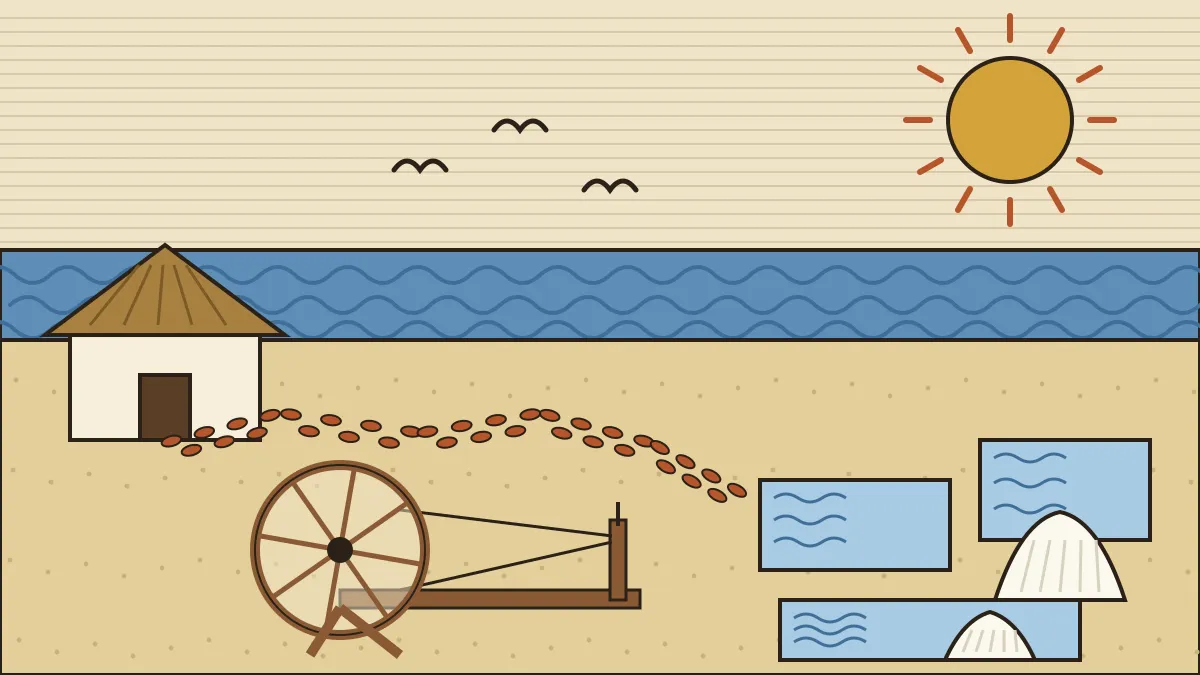
Every coastal region now copied him. The movement rarely stayed at salt; within weeks it was a general refusal of the Raj's rules.
| Place | What happened |
|---|---|
| Vedaranyam (Tamil Nadu) | C. Rajagopalachari led a salt march from Trichinopoly to Vedaranyam on the Tanjore coast, mid-April 1930 |
| Payyanur (Kerala) | K. Kelappan led marchers from Calicut to break the salt law on the Malabar coast |
| Sanikatta (Karnataka) | Salt works that became a site of salt satyagraha |
| Dharasana (Gujarat) | 21 May 1930: with Gandhi in jail, Sarojini Naidu led some 2,500 volunteers to the salt works. Police clubbed them in rows as they walked up without raising a hand. The journalist Webb Miller's account was printed in newspapers across the world |
| Peshawar | Under Khan Abdul Ghaffar Khan's Khudai Khidmatgars (Red Shirts), the city rose in April 1930. Two platoons of the Garhwal Rifles refused to fire on the crowd |
| Sholapur (Maharashtra) | Textile workers and townspeople drove out the authorities for some days in May 1930 |
| Chittagong (Bengal) | 18 April 1930: Surya Sen's group raided the armoury (the revolutionary stream, see our page on Anushilan and Jugantar) |
| Bengal, Bihar, Central Provinces | Refusal to pay the chaukidari (village-watch) tax; forest laws broken |
| Nagaland | Rani Gaidinliu rose against the British and was imprisoned in 1932 |
Women were the surprise. Thousands left their homes to picket liquor and foreign-cloth shops, and the Dandi plans themselves changed because of one of them. Kamaladevi Chattopadhyay persuaded Gandhi not to restrict the salt satyagraha to men (CDS 2021-I). The Government answered with lathi charges and firing. Bipan Chandra counts over 90,000 satyagrahis imprisoned in the first phase, the Congress declared illegal, and the press gagged. Detention camps and jails across the country were used to hold them.
The Non-Cooperation Movement (1920–22) called for renouncing voluntary association with the Government (CDS 2021-II) and ended at Chauri Chaura. The Civil Disobedience Movement (1930–34) broke laws (salt, forest, tax). The Quit India Movement (1942) demanded the immediate end of British rule (NDA 2023-II). Martyrs asked about by name: Matangini Hazra and Lakshman Naik, Kanaklata Barua belong to Quit India, not to the salt movement. For the Gandhian phase as a whole, see our page on the Gandhian phase.
Round Table Conferences, the Pact and Karachi
While Gandhi and thousands of others were in jail, the British called the First Round Table Conference in London (November 1930 to January 1931) to discuss the Simon Commission's report. The Congress boycotted it. A conference on India without the Congress had little credibility. It achieved nothing, and the Government began to look for a settlement.
The result was the Gandhi–Irwin Pact of 5 March 1931. Its terms, in a nutshell:
| The Congress agreed to | The Government agreed to |
|---|---|
| Suspend the Civil Disobedience Movement | Release political prisoners who had not been violent |
| Take part in the Second Round Table Conference | Permit people on the coast to make salt for their own use |
| Give up the boycott of British goods as a political weapon | Allow peaceful picketing of liquor and foreign-cloth shops; withdraw the emergency ordinances |
The pact was a truce, not a victory, and the young left wing hated it. The Government had not agreed to commute the death sentence of Bhagat Singh, Sukhdev and Rajguru, who were hanged on 23 March 1931. Gandhi nevertheless believed in giving the opponent every chance to show a change of heart. When the Congress met at Karachi that month under Vallabhbhai Patel, Gandhi carried the pact, but the delegates greeted him with black flags. The session is remembered for its resolution on Fundamental Rights and National Economic Programme: civil liberties, adult franchise, protection of minority languages and scripts, and state ownership or control of key industries (NDA 2019-I). It also settled the design of the tricolour with the charkha. Our page on fundamental rights traces how these ideas reached the Constitution. For Patel's later role, see our note on Rashtriya Ekta Diwas and the integration of the states.
In April 1931 Lord Willingdon replaced Irwin as Viceroy. He would turn out to be the hard man of the story; NDA 2019-I asked which Viceroy said it would be "a beautiful world if it wasn't for Gandhi", and the answer is Willingdon. Gandhi sailed to London as the sole Congress representative at the Second Round Table Conference (September to December 1931). Britain refused the basic nationalist demand of immediate dominion status, and the conference broke down over the communal question (CDS 2024-II). Gandhi came home empty-handed.
The Second Phase and the End, 1932 to 1934
Back in India, Congress workers felt that the Government was not keeping the spirit of the pact, and local clashes continued. After the failure in London, Gandhi was arrested again on 4 January 1932, the Congress was banned, and ordinances replaced normal law. Over a lakh of satyagrahis were jailed, property was confiscated and nationalist books were banned. The movement had less energy this time.
Meanwhile the issue of separate electorates reached its climax. The Communal Award of August 1932 gave the Depressed Classes separate electorates, Gandhi fasted in Yerwada jail, and the Poona Pact of 24 September 1932 replaced the separate electorate with reserved seats in joint electorates; our page on Ambedkar and the Depressed Classes tells it in full. A Third Round Table Conference met in November 1932, again without the Congress, and its discussions fed into the Government of India Act, 1935 (see constitutional development under British rule).
Repression, together with divisions among Indians on communal and other questions, wore the movement down. The Congress suspended it officially in May 1933 and withdrew it in 1934, and Gandhi stepped back from active politics. Yet the movement had changed India. It reached women, peasants, merchants, tribal people and even soldiers; it took the Congress into the villages, and it gave the party the experience of jail and mass organisation that it would use in 1937, when it won the provincial elections.
Lahore (Dec 1929) → Dandi (Mar–Apr 1930) → First RTC (Nov 1930) → Gandhi–Irwin Pact (Mar 1931) → Karachi (Mar 1931) → Second RTC (Sep–Dec 1931) → movement resumed (Jan 1932) → Communal Award and Poona Pact (1932) → suspended 1933, withdrawn 1934. Chronology questions cost marks here every year.
How UPSC Has Asked It: Past Papers Solved
These are real CDS and NDA questions. Notice how many are about sequence.
On 31st December, 1929, in which one of the following Congress Sessions was proclamation of Purna Swaraj made?
(a) Ahmedabad (b) Calcutta (c) Lahore (d) Lucknow
Answer: (c). Lahore, under Nehru, on the bank of the Ravi. Calcutta, option (b), was the 1928 session at which Gandhi returned to active politics.
Which one of the following statements about the Gandhi-Irwin Pact of 1931 is correct?
(a) The Government would not release those prisoners who had been non-violent. (b) The Government would not release those prisoners who had indulged in the peaceful picketing of liquor and foreign cloth shops. (c) The Congress did not agree to the suspension of the Civil Disobedience Movement. (d) The Congress agreed to take part in the Second Round Table Conference.
Answer: (d). The other three statements reverse the real terms: non-violent prisoners were to be freed, peaceful picketing was allowed, and the Congress suspended the movement.
Consider the following events: 1. Muslim League Resolution for Pakistan 2. Gandhi-Irwin Pact 3. Dandi March 4. Second Round Table Conference. Which one of the following is the correct chronological order of the given events (earliest to latest)?
(a) 2, 3, 1, 4 (b) 3, 2, 4, 1 (c) 3, 4, 2, 1 (d) 2, 3, 4, 1
Answer: (b). Dandi (March 1930), then the Pact (March 1931), then the Second Round Table Conference (September 1931), and the Lahore Resolution of the Muslim League only in March 1940. Options (a) and (d) put the Pact before Dandi.
Which of the following statements is/are correct? 1. During the Second Round Table Conference held in London in 1931, the British Government refused to accept the basic nationalist demand for freedom. 2. India was granted dominion status in 1932. 3. Viceroy Lord Willingdon adopted a policy of reconciliation with Congress. 4. The Civil Disobedience Movement was started with the breaking of salt laws.
(a) 2 and 3 only (b) 4 only (c) 1 and 4 only (d) 1, 2 and 4
Answer: (c). Statements 1 and 4 are correct. Dominion status was not granted until 1947, and Willingdon followed a policy of repression, not reconciliation.
Consider the following historical events: 1. Gandhi-Irwin Pact 2. Second Round Table Conference 3. Peasant Movement in Bardoli 4. Peasant Movement in Kheda. Which one of the following is the correct chronological order (starting from the earliest) of the above events?
(a) 4-1-3-2 (b) 4-3-1-2 (c) 3-1-2-4 (d) 1-2-4-3
Answer: (b). Kheda (1918), Bardoli (1928), the Pact (March 1931), the Second Round Table Conference (late 1931). Bardoli came after Kheda and before the salt movement, which is the usual place for a slip.
Practice MCQs (with answers)
- Who presided over the Lahore session of the Congress in 1929?
- Motilal Nehru
- Jawaharlal Nehru
- Vallabhbhai Patel
- Mahatma Gandhi
- The salt march from Trichinopoly to Vedaranyam in April 1930 was led by
- K. Kelappan
- T. Prakasam
- C. Rajagopalachari
- Sarojini Naidu
- Which of the following was NOT a term of the Gandhi-Irwin Pact?
- Release of non-violent political prisoners
- Salt for domestic use on the coast
- Congress to attend the Second Round Table Conference
- Commutation of Bhagat Singh's death sentence
- The Karachi session of the Congress in 1931 was presided over by
- Vallabhbhai Patel
- Jawaharlal Nehru
- Mahatma Gandhi
- Sarojini Naidu
- The Prime Minister noted on 21 November 2026 that one IIT campus stands on the site of a former detention camp for freedom fighters. It is
- IIT Bombay
- IIT Madras
- IIT Kharagpur
- IIT Kanpur
- Which Viceroy was in office when Gandhi attended the Second Round Table Conference?
- Lord Linlithgow
- Lord Irwin
- Lord Wavell
- Lord Willingdon
- Which is the correct chronological order?
- Lahore session, Dandi March, Gandhi-Irwin Pact, Poona Pact
- Dandi March, Lahore session, Poona Pact, Gandhi-Irwin Pact
- Gandhi-Irwin Pact, Dandi March, Lahore session, Poona Pact
- Lahore session, Gandhi-Irwin Pact, Dandi March, Poona Pact
- Two platoons of the Garhwal Rifles refused to fire on a crowd in 1930 at
- Chittagong
- Peshawar
- Dharasana
- Sholapur
1-b, 2-c, 3-d, 4-a, 5-c, 6-d, 7-a, 8-b. Q1: Motilal Nehru presided in 1928 (Calcutta), Jawaharlal in 1929. Q3: the Government refused to commute Bhagat Singh's sentence; he was hanged on 23 March 1931. Q4: Patel presided at Karachi; Sarojini Naidu presided at Kanpur in 1925. Q6: Willingdon replaced Irwin in April 1931, before the conference. Q8: the soldiers refused at Peshawar, in the North-West Frontier Province.
Quick Revision
- Lahore, 31 Dec 1929: Purna Swaraj, Nehru president, tricolour hoisted; first Independence Day 26 Jan 1930. Eleven Demands, incl. abolition of salt tax.
- Dandi: 12 March 1930, from Sabarmati, 78 marchers, about 385 km, 24 days; salt law broken 6 April 1930. Viceroy Irwin. Kamaladevi got women included.
- Spread: Rajaji (Vedaranyam), Kelappan (Payyanur), Sanikatta, Dharasana (21 May 1930, Sarojini Naidu), Peshawar (Khudai Khidmatgars, Garhwal Rifles), Sholapur, Chittagong armoury (18 Apr 1930), Rani Gaidinliu.
- First RTC: Nov 1930–Jan 1931, Congress absent. Gandhi–Irwin Pact: 5 March 1931: movement suspended, Congress to attend 2nd RTC; non-violent prisoners freed, domestic salt-making, peaceful picketing allowed.
- Bhagat Singh, Sukhdev, Rajguru hanged 23 March 1931. Karachi (Mar 1931): Patel president; Fundamental Rights and Economic Programme.
- Willingdon Viceroy from April 1931. 2nd RTC: Sep–Dec 1931, Gandhi alone, no result. Movement resumed Jan 1932; Communal Award Aug 1932; Poona Pact 24 Sep 1932; 3rd RTC Nov 1932.
- Suspended May 1933, withdrawn 1934. Led to the Government of India Act 1935 and the 1937 provincial victory.
- IIT Kharagpur (opened 1951; Platinum Jubilee 21 Nov 2026) stands on the site of a former detention camp for freedom fighters (PM, PIB); the camp is usually identified as Hijli.
Frequently asked questions
Why did Gandhi choose salt for the Civil Disobedience Movement?
The Salt Act of 1882 gave the Government a monopoly on making salt and let it tax every household. Salt is a daily necessity of the rich and the poor alike, so the tax touched everyone and could be broken by a simple act at any beach. Gandhi had also made the abolition of the salt tax one of his Eleven Demands, and Irwin ignored them all.
What were the main terms of the Gandhi-Irwin Pact of 1931?
Signed on 5 March 1931, the pact ended the civil disobedience campaign for the time being. The Congress agreed to suspend the movement and to attend the Second Round Table Conference. The Government agreed to release non-violent political prisoners, allow coastal people to make salt for domestic use, permit peaceful picketing of liquor and foreign-cloth shops, and withdraw the emergency ordinances.
Why did the Congress boycott the First Round Table Conference?
The Conference met in London from November 1930 while the Civil Disobedience Movement was at its height and most Congress leaders, including Gandhi, were in jail. The Congress would not discuss India's future while its leaders were imprisoned and the Government would not accept the demand for full independence. Because the main nationalist party was missing, the conference achieved nothing.
What happened at the Karachi session of the Congress in 1931?
The Karachi session, held under Vallabhbhai Patel in March 1931, approved the Gandhi–Irwin Pact. It also passed a historic resolution on Fundamental Rights and the National Economic Programme, which promised civil liberties, adult suffrage, protection for minority languages and state control of key industries. The session came days after Bhagat Singh was hanged, and Gandhi was met with black-flag protests.
When and how did the Civil Disobedience Movement end?
After the failure of the Second Round Table Conference, Gandhi was arrested in January 1932 and the Congress was banned. Heavy repression and divisions among Indians slowly drained the movement. The Congress suspended it officially in May 1933 and withdrew it in 1934, and the party then turned to contesting elections under the Government of India Act, 1935.
Related CDS / OTA History topics
The Gandhian phase is worth several marks every paper
Cavalier's CDS/OTA batches teach Modern India as one connected story, with timelines, maps of events and weekly PYQ tests.