Mahaparinirvan Diwas falls on 6 December, the day Dr B.R. Ambedkar died in Delhi in 1956. Ten days earlier, on 26 November, the country marks Constitution Day, the day the document he steered through the Drafting Committee was adopted in 1949. The two dates frame one life. Before Ambedkar drafted rights for everyone, he spent thirty years fighting for the right of a fifth of Hindu society to draw water from a public tank, to enter a temple and to vote for its own representatives. UPSC asks about this journey in every cycle: who did what, where, and in which year.
Before Ambedkar: Phule, Narayana Guru and Shahu Maharaj
By Narendra Singh · GS faculty, The Cavalier · 15 years teaching GS
At the bottom of the caste ladder stood the "untouchables", later called the Depressed Classes and, after 1935, the Scheduled Castes. They made up roughly a fifth of the Hindu population. Their touch was thought to pollute, they were kept away from wells, tanks, temples and often schools, and they were pushed into work such as scavenging and tanning. British rule loosened the system without breaking it: railways, factories and cities forced mixed company, but the government feared offending orthodox opinion and did little directly.
The first sustained challenge came from within society (see socio-religious reform movements). Three names matter here.
| Leader | Place | What he did |
|---|---|---|
| Jyotiba Phule | Pune | Opened a school for girls in 1848; founded the Satyashodhak Samaj in 1873; wrote Gulamgiri (1873), attacking Brahmin domination |
| Shahu Maharaj | Kolhapur | In 1902 reserved 50 per cent of state posts for backward classes; backed Ambedkar's early work |
| Sri Narayana Guru | Kerala | Consecrated a Shiva idol at Aruvippuram in 1888, a defiance of Brahmin monopoly in worship; founded the SNDP Yogam in 1903; "one caste, one religion, one God for humankind" |
In the south, E.V. Ramaswamy's Self-Respect Movement (1920s) ran alongside, and in Kerala the Vaikom Satyagraha (1924–25) demanded that lower castes be allowed to use the roads around a temple. Ambedkar's difference was that he came from the community itself and used law, newspapers and elections as weapons.
The Man in One Table: A Timeline to Memorise
Ambedkar was born on 14 April 1891 at Mhow into a Mahar family. He studied at Columbia University and the London School of Economics and was called to the bar at Gray's Inn in 1922. Keep this table in your head: most questions are just a date and a name.
| Year | Event |
|---|---|
| 1920 | Starts the fortnightly Mook Nayak ("Leader of the Voiceless") at Bombay, with Shahu Maharaj's help |
| 1924 | Bahishkrit Hitakarini Sabha founded in Bombay (20 July): "educate, agitate, organise" |
| 1927 | Starts Bahishkrit Bharat; Mahad Satyagraha (20 March); burning of the Manusmriti (25 December) |
| 1930 | Kalaram temple entry movement, Nashik (2 March); First Round Table Conference begins in London (November) |
| 1931 | Second Round Table Conference: Gandhi and Ambedkar clash over separate electorates |
| 1932 | Communal Award (16 August); Gandhi's fast; Poona Pact (24 September) |
| 1936 | Independent Labour Party founded; Annihilation of Caste published |
| 1942 | All India Scheduled Castes Federation formed at Nagpur (July); joins the Viceroy's Executive Council as Labour Member (to 1946) |
| 1947–49 | First Law Minister; chairman of the Drafting Committee (29 August 1947); Constitution adopted 26 November 1949 |
| 1956 | Embraces Buddhism at Nagpur (14 October); dies on 6 December |
Organise and Agitate: Mook Nayak, Mahad and Kalaram
Ambedkar's first move was to give the community a voice. Mook Nayak (1920) and later Bahishkrit Bharat (1927) carried its grievances to print. The Bahishkrit Hitakarini Sabha (1924) took up schools, hostels and libraries. Its motto sets the method for the whole movement: educate, agitate, organise. Janata (1930) followed.
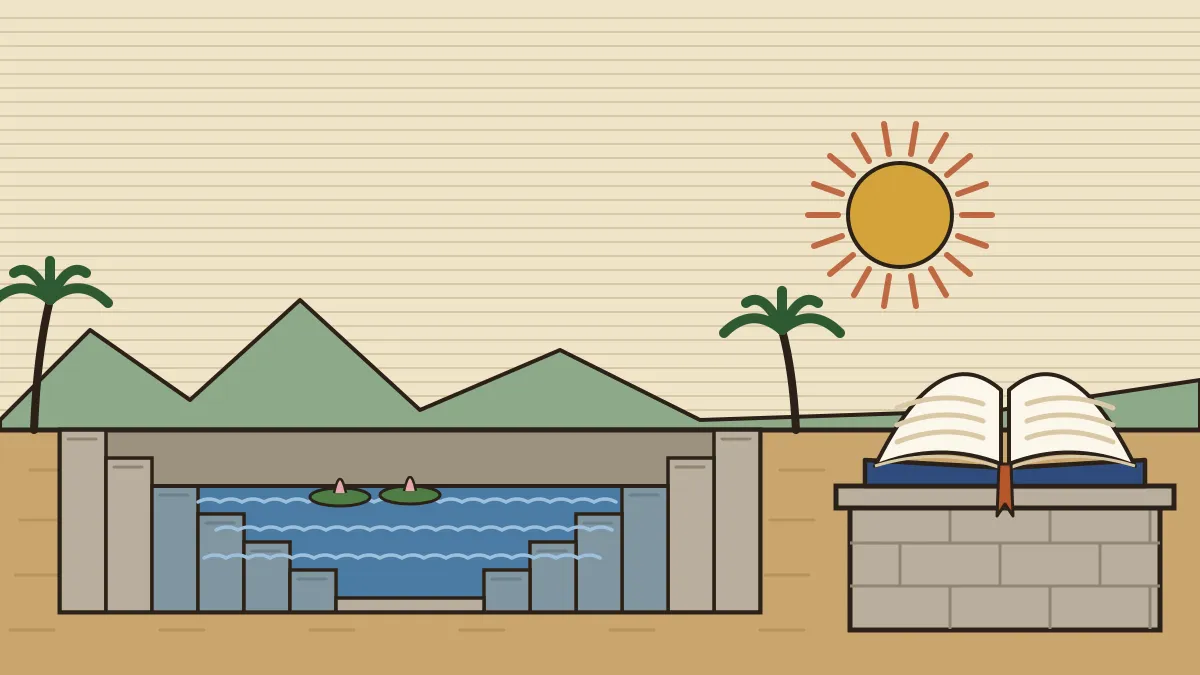
Mahad (1927). In 1923 the Bombay Legislative Council passed a resolution that public water sources and facilities maintained with public money must be open to all, and in 1924 the Mahad municipality (in Kolaba district, now Raigad) declared its Chavdar tank open. In practice, caste Hindus kept the Depressed Classes away. A conference at Mahad on 19–20 March 1927 ended with Ambedkar leading thousands to the tank, where he drank from it. Caste Hindus later "purified" the tank, and the municipality reversed its earlier resolution in August 1927.
A second conference in December 1927 met while a court case over the tank was pending, so the marchers stayed away from it. On 25 December the delegates publicly burnt the Manusmriti, the ancient law book that justified graded inequality. The resolution was moved by a Brahmin associate of Ambedkar, G.N. Sahasrabuddhe, which showed that the target was an idea and not a community. Maharashtra observes 20 March as Social Empowerment Day.
Kalaram (1930). On 2 March 1930 Ambedkar and thousands of followers began a satyagraha to enter the Kalaram temple at Nashik, on the bank of the Godavari. The temple stayed closed, and the struggle dragged on for years. In 1935, at Yeola, Ambedkar declared that he was born a Hindu but would not die one.
Mahad = water (Chavdar tank, 1927, Manusmriti burnt). Kalaram = temple (Nashik, 1930). Vaikom = temple roads (Kerala, 1924–25, not led by Ambedkar). Examiners swap these three. Both Mahad and Kalaram are in Maharashtra.
Separate Electorates: Round Tables, Communal Award, Poona Pact
The fight now moved from tanks to legislatures. The Simon Commission's report led the British to call the Round Table Conferences in London (1930–32). Ambedkar attended all three as a leader of the Depressed Classes. He demanded separate electorates: seats for the community, voted for by the community alone. His argument was that a socially separated group needed political protection too. Our page on constitutional development under British rule gives the wider setting.
At the Second Round Table Conference (1931), Gandhi claimed that the Congress spoke for all Indians, including the untouchables. Ambedkar, along with the Muslim League and the princes, challenged that claim. Gandhi opposed separate electorates for the Depressed Classes. He feared they would cut them off from Hindu society for ever. His anti-untouchability work grew into the Harijan Sevak Sangh (1932). The conference ended without agreement, and the British Prime Minister announced his own decision.
The Communal Award of 16 August 1932, announced by Ramsay MacDonald, gave separate electorates to Muslims, Sikhs, Indian Christians, Anglo-Indians and Europeans, and also to the Depressed Classes. They were also to vote in the general constituencies (a "double vote"). Their share was 71 seats in the provincial legislatures. Gandhi, in Yerwada jail in Pune, began a fast unto death on 20 September 1932. Within days, talks between Ambedkar and Hindu leaders led by Madan Mohan Malaviya produced the Poona Pact, signed on 24 September 1932. Gandhi ended his fast on 26 September.
| Feature | Communal Award (16 Aug 1932) | Poona Pact (24 Sept 1932) |
|---|---|---|
| Electorate | Separate electorate, plus a vote in the general constituency | Joint (general) electorate with reserved seats |
| Provincial seats | 71 | 148 (more than double) |
| Central legislature | No special share fixed in the Award | 18 per cent of the general seats for British India |
| Choosing candidates | Community elects its own member | A primary election among Depressed Class voters picks a panel of four, and the general electorate then chooses one |
| Duration | Not fixed | The panel system for 10 years, unless ended earlier by agreement |
| Also promised | - | Fair share in public services; money for education from the grant |
The Pact was folded into the Government of India Act, 1935. Both sides gained something: Ambedkar won twice as many seats, and Gandhi kept the Depressed Classes inside the Hindu electorate. Ambedkar's later complaint was that winners of the general election would depend on caste-Hindu votes. Remember that the Pact was an agreement, not a British award.
Ambedkar wanted separate electorates and the Communal Award granted them. Gandhi's fast forced the Poona Pact: joint electorate, reserved seats raised from 71 to 148. Reserved seats for Scheduled Castes survive today.
Party, Pen and Constitution: 1936 to 1950
After 1932 Ambedkar widened the movement from caste to class. He founded the Independent Labour Party in 1936. It spoke for workers and tenants of all castes and did well in the 1937 elections to the Bombay legislature. In 1936 he also published Annihilation of Caste. It was written as a presidential address for a caste-reform body in Lahore; the organisers asked him to cut passages, he refused, the meeting was cancelled, and he printed it himself. Its central claim is that caste is not a division of labour but a division of labourers. In July 1942 he formed the All India Scheduled Castes Federation at Nagpur.
The Viceroy also made him Labour Member of the Executive Council (1942–46). In the Constituent Assembly he sat first for Bengal and, after Partition, for Bombay. On 29 August 1947 he became chairman of the Drafting Committee, and he was also independent India's first Law Minister. The committee system is on our page on Constituent Assembly committees.
Article 17 abolishes untouchability, Article 15 bars discrimination, Part XVI provides reserved seats, and Article 341 lets the President list the Scheduled Castes (see equality and protections). He called Article 32, the right to move the Supreme Court, the "heart and soul" of the Constitution. In his closing speech on 25 November 1949 he warned that on 26 January 1950 India would enter a life of contradictions: equality in politics but inequality in social and economic life. He resigned as Law Minister in 1951 when his Hindu Code Bill, which sought equal rights for women, stalled.
Deeksha 1956 and What Survives Today
On 14 October 1956, the day of Ashoka Vijayadashami, Ambedkar embraced Buddhism at Nagpur with hundreds of thousands of followers. The spot is now Deekshabhoomi. He died about seven weeks later, on 6 December 1956, at his Delhi home, and was cremated at Mumbai at the place now called Chaitya Bhoomi. The Bharat Ratna was conferred on him posthumously in 1990.
Three legacies are examined: reserved seats (a descendant of the Poona Pact), the constitutional ban on untouchability, and education as the route to equality. For how scholarship money now reaches SC and OBC students, see our article on direct benefit transfer. The Gandhian side of the story is on our page on the Gandhian phase of the national movement.
How UPSC Has Asked It: Past Papers Solved
These are actual CDS and NDA questions: mostly one-line identification, one chronology sum and two Constitution links.
The Mahad Satyagraha of 1927 was organized by
(a) B. R. Ambedkar (b) Mahatma Gandhi (c) S. C. Bose (d) Lokmanya Tilak
Answer: (a). Ambedkar led the march to the Chavdar tank on 20 March 1927. Gandhi is the tempting option because he is linked with the anti-untouchability campaign, but the Mahad Satyagraha was Ambedkar's.
The Kalaram temple, known for temple entry movements in the early twentieth century, is located in which state of India?
(a) Maharashtra (b) Kerala (c) Tamil Nadu (d) Gujarat
Answer: (a). The temple is at Nashik. Kerala is tempting because of the Vaikom Satyagraha, which was about the roads around a temple, not Kalaram.
Which one among the following was demanded by the All India Depressed Classes Leaders' Conference at Bombay in 1931?
(a) Universal adult suffrage (b) Separate electorates for untouchables (c) Reserved seats for the minorities (d) A unitary State in India
Answer: (b). Separate electorates were the central demand. The Poona Pact of 1932 replaced them with reserved seats in joint electorates.
Who amongst the following organized the All India Scheduled Castes Federation?
(a) Jyotiba Phule (b) Periyar (c) B. R. Ambedkar (d) M. K. Karunanidhi
Answer: (c). Ambedkar formed it in 1942. Phule died in 1890 and Periyar led the Self-Respect Movement in the south.
Consider the following social movements: 1. Chipko Movement 2. Bardoli Satyagraha 3. Satyashodhak Samaj. Which one of the following is the correct chronological order (starting with the earliest) of the launch of the above social movements?
(a) 2, 1, 3 (b) 3, 1, 2 (c) 3, 2, 1 (d) 1, 2, 3
Answer: (c). Satyashodhak Samaj was founded in 1873, the Bardoli Satyagraha was in 1928, and the Chipko Movement began in the 1970s (1973). Tip: anchor each movement to a century.
According to B. R. Ambedkar, which one among the following Articles is the 'heart and soul' of the Constitution of India?
(a) Article 15 (b) Article 21 (c) Article 23 (d) Article 32
Answer: (d). Article 32 lets a citizen go straight to the Supreme Court to enforce a fundamental right. Article 21 is the most quoted right, which makes it the usual wrong pick.
Who among the following stated in the Constituent Assembly that on 26th January, 1950, India was going to enter a life of contradictions?
(a) Dr. B. R. Ambedkar (b) Jawaharlal Nehru (c) Mahatma Gandhi (d) S. P. Mukherjee
Answer: (a). The warning came in his concluding speech of 25 November 1949: political equality alongside social and economic inequality. Nehru's famous speech is the "tryst with destiny" of 1947.
Learn the dates in the timeline table and three phrases ("heart and soul", "life of contradictions", "educate, agitate, organise") and you can answer most of them.
Practice MCQs (with answers)
- The Mahad Satyagraha of March 1927 was launched to establish the right of the Depressed Classes to
- enter the Kalaram temple
- draw water from the Chavdar tank
- vote in separate constituencies
- study in government colleges
- The Poona Pact of 1932 raised the number of provincial seats for the Depressed Classes from
- 71 to 148
- 148 to 71
- 48 to 71
- 71 to 100
- Who announced the Communal Award in August 1932?
- Lord Irwin
- Lord Willingdon
- Ramsay MacDonald
- Clement Attlee
- Which of the following is correctly paired?
- Satyashodhak Samaj - Narayana Guru
- SNDP Yogam - Jyotiba Phule
- Mook Nayak - Shahu Maharaj alone, with no part for Ambedkar
- Bahishkrit Hitakarini Sabha - B.R. Ambedkar
- The Poona Pact replaced separate electorates for the Depressed Classes with
- reserved seats in a joint electorate
- nominated members
- a literacy-based franchise
- proportional representation
- Ambedkar's Annihilation of Caste was originally prepared as
- an editorial for Mook Nayak
- a petition to the Simon Commission
- a letter to Gandhi in Yerwada jail
- an undelivered presidential address for a caste-reform conference at Lahore
- The constitutional article that abolishes untouchability is
- Article 15
- Article 17
- Article 23
- Article 46
- Ambedkar embraced Buddhism in 1956 at
- Mhow
- Sarnath
- Nagpur
- Mumbai
1-b, 2-a, 3-c, 4-d, 5-a, 6-d, 7-b, 8-c. Q4: Satyashodhak Samaj is Phule's and SNDP Yogam is Narayana Guru's; Ambedkar began Mook Nayak, with Shahu Maharaj's help. Q7: Article 15 bars discrimination in general; Article 17 is the specific one on untouchability. Q8: Mhow is his birthplace; Sarnath is where the Buddha gave his first sermon.
Quick Revision
- Phule (Satyashodhak Samaj 1873), Shahu Maharaj (50% reservation, 1902), Narayana Guru (SNDP 1903).
- Ambedkar: born 14 April 1891 (Mhow); Mook Nayak 1920; Bahishkrit Hitakarini Sabha 1924 (educate, agitate, organise); Bahishkrit Bharat 1927.
- Mahad = water (20 March 1927; Manusmriti burnt 25 Dec). Kalaram = temple (Nashik, 1930).
- Round Table Conferences 1930-32; Communal Award 16 Aug 1932 (MacDonald); Gandhi's fast from 20 Sept; Poona Pact 24 Sept 1932: joint electorate, 71 to 148 seats, 18% of central general seats.
- ILP 1936; Annihilation of Caste 1936; Scheduled Castes Federation July 1942; Drafting Committee 29 Aug 1947.
- Article 17 (untouchability abolished); Article 32 = "heart and soul"; 25 Nov 1949 = "life of contradictions"; Constitution Day 26 Nov.
- Deeksha 14 Oct 1956 (Nagpur); died 6 Dec 1956; Bharat Ratna 1990.
Frequently asked questions
What was the Mahad Satyagraha?
The Mahad Satyagraha was a march led by B.R. Ambedkar on 20 March 1927 to the Chavdar tank at Mahad in Maharashtra. It asserted the right of the Depressed Classes to use public water. At a second conference in December 1927, delegates burnt the Manusmriti.
What is the difference between the Communal Award and the Poona Pact?
The Communal Award of August 1932 gave the Depressed Classes separate electorates and 71 provincial seats. The Poona Pact of September 1932 gave up separate electorates in favour of reserved seats in a joint electorate. It raised the provincial seats to 148 and reserved 18 per cent of the central general seats.
Why did Gandhi fast in 1932?
Gandhi feared that separate electorates would permanently divide the Depressed Classes from the rest of Hindu society. He began a fast unto death in Yerwada jail on 20 September 1932. It ended on 26 September, two days after the Poona Pact was signed.
What was Ambedkar's role in the Constitution?
He was chairman of the Drafting Committee, appointed on 29 August 1947, and independent India's first Law Minister. The Constitution was adopted on 26 November 1949. Article 17 abolishing untouchability and the reserved seats for Scheduled Castes reflect his work.
Why is 6 December observed as Mahaparinirvan Diwas?
Ambedkar died on 6 December 1956, about seven weeks after embracing Buddhism at Nagpur. In Buddhist tradition, the death of a great teacher who has attained liberation is called Mahaparinirvan. Followers gather every year at Chaitya Bhoomi in Mumbai, where he was cremated.
Related CDS / OTA History topics
Modern History is a steady scorer in CDS GS
Cavalier's CDS/OTA batches teach the national movement with timelines, comparison tables and weekly PYQ tests.