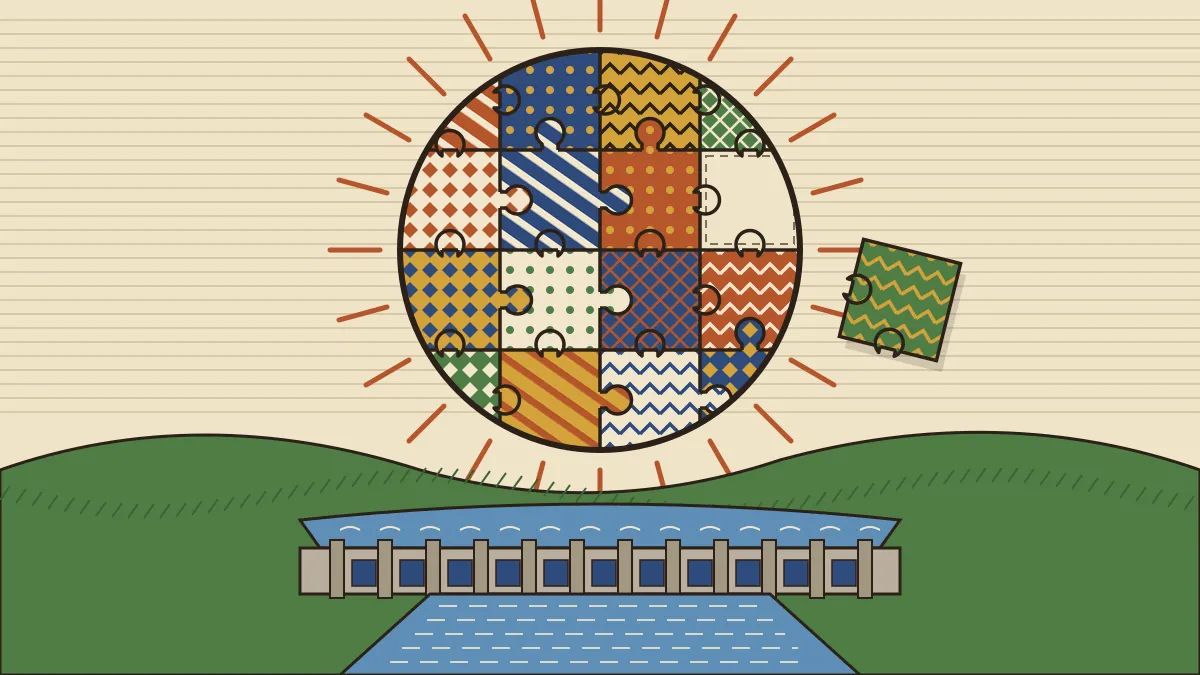
India marks Rashtriya Ekta Diwas (National Unity Day) on 31 October 2026, the 151st birth anniversary of Sardar Vallabhbhai Patel. The day has been observed every year since 2014.
This year's observance also closes a two-year nationwide celebration of Patel's 150th birth anniversary, which the Ministry of Home Affairs announced in October 2024 to run from 2024 to 2026.
Prime Minister Narendra Modi is at Ekta Nagar (Kevadia) in Gujarat for the main event. According to a PIB release of 29 October:
- On 30 October, he inaugurates Bharat Parv 2026, a festival of the States' culture that runs until 15 November, and the Ekta Prakash Parv, an illumination festival.
- On 31 October, he pays floral tribute at the Statue of Unity and attends the Ekta Parade of the Central Armed Police Forces, State police forces and central police organisations.
- This year's parade gives special emphasis to the security forces' achievements against Left-Wing Extremism. A National School of Drama production on "Naxal Mukt Bharat" will feature about 2,000 artists from 126 districts affected by Left-Wing Extremism.
- The tableaux are themed on Vande Mataram, whose 150th year India has been commemorating since 7 November 2025.
Patel's life at a glance
| Year | Event |
|---|---|
| 1875 | Born on 31 October at Nadiad, Gujarat |
| 1910s | Studied law in London and practised as a barrister in Ahmedabad |
| 1918 | Kheda Satyagraha: led the peasants' campaign as Gandhi's deputy |
| 1924 | Elected President of the Ahmedabad Municipality; reformed its drainage, sanitation and water supply |
| 1928 | Bardoli Satyagraha against a land-revenue increase; earned the title "Sardar" |
| 1931 | President of the Indian National Congress at the Karachi session, which adopted the resolution on Fundamental Rights and Economic Programme |
| 1947 | First Deputy Prime Minister and first Home Minister from 15 August; also in charge of Information and Broadcasting and the States Department |
| 1950 | Died on 15 December in Bombay |
| 1991 | Awarded the Bharat Ratna posthumously |
The two peasant campaigns made Patel's name. At Kheda in 1918, crops had failed and the peasants asked for land revenue to be suspended. At Bardoli in 1928, the Bombay Government had raised revenue sharply. Patel organised a no-revenue campaign so disciplined that the Government appointed an inquiry and cut the increase. For how these fit into the wider freedom movement, see our notes on the Gandhian era.
The problem of 1947
At Independence, India was made up of two very different kinds of territory:
- 17 provinces of British India, which passed directly to the new Government;
- more than 560 princely states, covering about two-fifths of the subcontinent's area, ruled by princes under British paramountcy.
The Indian Independence Act, 1947 ended paramountcy. Legally, each prince could join India, join Pakistan, or try to stay independent. If many had chosen independence, the new country would have been full of gaps, many of them in its middle.
The Government's answer was the States Department, set up on 5 July 1947 with Patel as its Minister and V.P. Menon as its Secretary. They worked in two stages.
Stage 1: accession
The princes were asked to sign an Instrument of Accession. Under it, they handed the Government of India only three subjects: defence, external affairs and communications. Everything else stayed with them for the moment.
A Standstill Agreement kept existing arrangements such as railways, posts and customs running while the details were settled. Patel combined persuasion, appeals to patriotism and firm pressure. By 15 August 1947, almost every state within India's borders had acceded.
Stage 2: integration
Accession only covered three subjects. Over the next two years, the states were merged fully:
- Some small states merged into the neighbouring provinces, as the Orissa and Chhattisgarh states did with Orissa and the Central Provinces.
- Others were grouped into new Unions of States, such as Saurashtra, Rajasthan, Madhya Bharat, PEPSU (Patiala and East Punjab States Union) and Travancore-Cochin.
- A few were run directly by the Centre.
In return, the princes received privy purses, annual payments guaranteed by the Constitution. These were abolished by the 26th Amendment in 1971.
When the Constitution came into force in 1950, the Unions of States, along with Hyderabad, Mysore and Jammu and Kashmir, became Part B states, most of them headed by a Rajpramukh. The States Reorganisation Act and the 7th Amendment of 1956 abolished the Part A, B and C categories and redrew States largely on linguistic lines.
Three hard cases
Three states did not accede by 15 August 1947. Each was settled differently.
| State | The problem | How it was settled |
|---|---|---|
| Junagadh (Kathiawar, Gujarat) | A Muslim Nawab ruling a mostly Hindu population declared accession to Pakistan | India took over its administration in November 1947. A plebiscite on 20 February 1948 voted overwhelmingly for India |
| Hyderabad (Deccan) | The Nizam wanted to stay independent. He signed a Standstill Agreement in November 1947, while the Razakar militia spread violence | Operation Polo, a police action, began on 13 September 1948. The Nizam's forces surrendered on 17 September |
| Jammu and Kashmir | Maharaja Hari Singh delayed his decision until tribal raiders from Pakistan invaded in October 1947 | He signed the Instrument of Accession on 26 October 1947. Indian troops were flown into Srinagar on 27 October, the date now marked as Infantry Day |
Patel's States Ministry led on Junagadh and Hyderabad. Kashmir became an international question after India took it to the United Nations in January 1948.
Patel in the Constituent Assembly
Patel was also one of the main architects of the Constitution. In the Constituent Assembly he chaired:
- the Advisory Committee on Fundamental Rights, Minorities and Tribal and Excluded Areas;
- the Provincial Constitution Committee.
He also fought for the All-India Services. Some leaders wanted them wound up as a colonial relic. Patel argued that a national civil service, recruited on merit and protected from political pressure, would hold the country together. The services are often called India's "steel frame", a phrase closely linked with his defence of them. They survived, and are now provided for in Article 312 of the Constitution.
Civil Services Day is observed on 21 April. It marks the day in 1947 when Patel addressed the first batch of probationers of the administrative services at Metcalfe House, Delhi.
The national police academy at Hyderabad is named after him: the Sardar Vallabhbhai Patel National Police Academy. For the Assembly's committees and how they worked, see our notes on the making of the Constitution.
How the day is marked
Rashtriya Ekta Diwas was introduced in 2014. The usual observances are:
- the Ekta Diwas pledge, taken in government offices, schools and colleges;
- the Run for Unity, organised across the country;
- the Ekta Parade at Ekta Nagar, with contingents of police and Central Armed Police Forces.
In 2019, the Ministry of Home Affairs instituted the Sardar Patel National Unity Award. It is the highest civilian award for contributions to the unity and integrity of India. It is conferred by the President, consists of a medal and a citation, and not more than three may be given in a year.
The Statue of Unity
| Fact | Detail |
|---|---|
| Height | 182 metres, the world's tallest statue |
| Unveiled | 31 October 2018 |
| Site | Sadhu Bet hillock on the Narmada, joined to the mainland by a 300-metre bridge |
| Nearby | The Sardar Sarovar Dam; the Satpura and Vindhya ranges form the backdrop |
| Location | Ekta Nagar (Kevadia), Narmada district, Gujarat |
| Sculptor | Ram V. Sutar |
Vande Mataram at 150
The theme of this year's tableaux is the national song Vande Mataram. Bankim Chandra Chattopadhyay wrote it in 1875. It was later included in his novel Anandamath (1882).
On 24 January 1950, the Constituent Assembly adopted Jana Gana Mana as the national anthem and declared that Vande Mataram would be honoured equally as the national song. The Government began a year-long commemoration of its 150th year on 7 November 2025, so the commemoration ends just after this year's Ekta Diwas.
Why this matters for an NDA aspirant
The integration of the princely states is the founding act of India's territorial unity, and it shows up across the NDA syllabus:
- History: the freedom movement, Independence and the years after it. Our notes on post-independence India cover the wider story.
- Polity: the Constituent Assembly, Article 312, and the reorganisation of States.
- Defence: Operation Polo, the 1947 airlift to Srinagar and Infantry Day.
At the SSB, Patel's handling of the states is a good example for a lecturette or a group discussion on leadership. He set a clear goal, used negotiation first and force only as a last resort, and relied on a small team he trusted.
🔑 Revision block
The occasion. Rashtriya Ekta Diwas, 31 October 2026, 151st birth anniversary; observed since 2014; closes the 2024-26 commemoration of the 150th; PM at Ekta Nagar; parade emphasis on Left-Wing Extremism; tableaux on Vande Mataram.
Life. Born 31 October 1875, Nadiad; Kheda 1918; Ahmedabad Municipality 1924; Bardoli 1928 ("Sardar"); INC President, Karachi 1931; first Deputy PM and Home Minister, 1947; died 15 December 1950; Bharat Ratna 1991.
Integration. 17 provinces + 560+ states (about two-fifths of the area); States Department from 5 July 1947 (Patel + V.P. Menon); Instrument of Accession = defence, external affairs, communications; Standstill Agreements; then mergers into provinces and Unions of States; privy purses ended by the 26th Amendment (1971).
Hard cases. Junagadh: plebiscite 20 February 1948. Hyderabad: Operation Polo, 13-17 September 1948. J&K: Instrument of Accession 26 October 1947; airlift 27 October (Infantry Day).
Constituent Assembly. Chaired the Advisory Committee on Fundamental Rights, Minorities and Tribal and Excluded Areas and the Provincial Constitution Committee; defended the All-India Services (Article 312); Civil Services Day, 21 April.
Memorials. Statue of Unity, 182 m, 31 October 2018, Sadhu Bet, Narmada; sculptor Ram V. Sutar; Sardar Patel National Unity Award (2019; up to 3 a year); SVPNPA, Hyderabad.
🎯 Practice MCQs
Q1. Rashtriya Ekta Diwas, observed on 31 October, marks the birth anniversary of: (a) Lal Bahadur Shastri (b) Sardar Vallabhbhai Patel (c) Subhas Chandra Bose (d) B.R. Ambedkar
→ (b) It has been observed since 2014; 2026 marks his 151st birth anniversary.
Q2. Sardar Patel presided over which session of the Indian National Congress? (a) Karachi, 1931 (b) Lahore, 1929 (c) Haripura, 1938 (d) Lucknow, 1916
→ (a) The Karachi session adopted the resolution on Fundamental Rights and Economic Programme.
Q3. Under the Instrument of Accession, the princely states handed the Government of India which subjects? (a) Defence, finance and education (b) Revenue, police and justice (c) Foreign affairs, trade and agriculture (d) Defence, external affairs and communications
→ (d) Full integration of the other subjects came later, through mergers and Unions of States.
Q4. Who was the Secretary of the States Department, working with Patel on the integration of the princely states? (a) Girija Shankar Bajpai (b) B.N. Rau (c) V.P. Menon (d) K.M. Panikkar
→ (c) B.N. Rau was the Constitutional Adviser to the Constituent Assembly.
Q5. "Operation Polo" (September 1948) is associated with the integration of: (a) Junagadh (b) Jammu and Kashmir (c) Travancore (d) Hyderabad
→ (d) It began on 13 September 1948, and the Nizam's forces surrendered on 17 September.
Q6. Consider the following statements: 1. A plebiscite held in Junagadh in February 1948 voted overwhelmingly for India. 2. The Maharaja of Jammu and Kashmir signed the Instrument of Accession on 26 October 1947. Which of the statements given above is/are correct? (a) 1 only (b) Both 1 and 2 (c) 2 only (d) Neither 1 nor 2
→ (b) Indian troops were flown into Srinagar the next day, 27 October, now Infantry Day.
Q7. In the Constituent Assembly, Sardar Patel chaired the: (a) Drafting Committee (b) Union Constitution Committee (c) Advisory Committee on Fundamental Rights, Minorities and Tribal and Excluded Areas (d) Steering Committee
→ (c) The Drafting Committee was chaired by Ambedkar; the Union Constitution and Steering Committees by Nehru and Rajendra Prasad.
Q8. The privy purses paid to former rulers of princely states were abolished by the: (a) 26th Amendment, 1971 (b) 7th Amendment, 1956 (c) 42nd Amendment, 1976 (d) 44th Amendment, 1978
→ (a) The 7th Amendment of 1956 reorganised the States and abolished the Part A, B and C categories.
Q9. The Statue of Unity stands on Sadhu Bet hillock on the river: (a) Tapi (b) Mahi (c) Narmada (d) Sabarmati
→ (c) It is near the Sardar Sarovar Dam at Ekta Nagar, in Narmada district of Gujarat.
Q10. Civil Services Day on 21 April commemorates: (a) The first UPSC examination (b) Patel's address to the first batch of administrative service probationers in 1947 (c) The passing of the All India Services Act (d) The founding of the Indian Civil Service in 1858
→ (b) He spoke at Metcalfe House, Delhi, on the role of the services in a free India.
📋 How this gets asked (PYQ pattern)
Sardar Patel and the integration of the princely states are among the most regular post-Independence items in NDA history. The questions take four forms.
The first is the movement question: which campaign is linked to Patel (Kheda, Bardoli), where it happened and what it was about. The trap is mixing up Champaran (Bihar, indigo, 1917) and Kheda (Gujarat, revenue, 1918).
The second is the integration question: what the Instrument of Accession covered, who V.P. Menon was, and how Junagadh, Hyderabad and Kashmir were settled. "Operation Polo" matched to the right state is a favourite.
The third is the Constituent Assembly question: which committee Patel chaired, against the committees chaired by Nehru, Ambedkar and Rajendra Prasad.
The fourth is the memorial question: the Statue of Unity's height, river and district, and the day Rashtriya Ekta Diwas is observed.
Preparing for NDA? Make a one-page timeline from 1947 to 1956, from the States Department to the States Reorganisation Act, with Junagadh, Hyderabad and Kashmir marked on it. Build the base with our NDA study material, follow the daily NDA current affairs, and train with serving-standard faculty in the upcoming Cavalier courses in Delhi.
Source: PIB / Prime Minister's Office, "PM to Visit Gujarat on 30-31 October", 29 October 2026; PIB / Ministry of Home Affairs backgrounder "National Unity Day" (October 2024) and release on the two-year 150th anniversary commemoration (23 October 2024). Historical facts cross-checked with standard references on the integration of the princely states and the Constituent Assembly.
✍️ Written by Col D.N. Sharma — Science & general-studies faculty at The Cavalier. Reviewed by the Cavalier Faculty Desk.