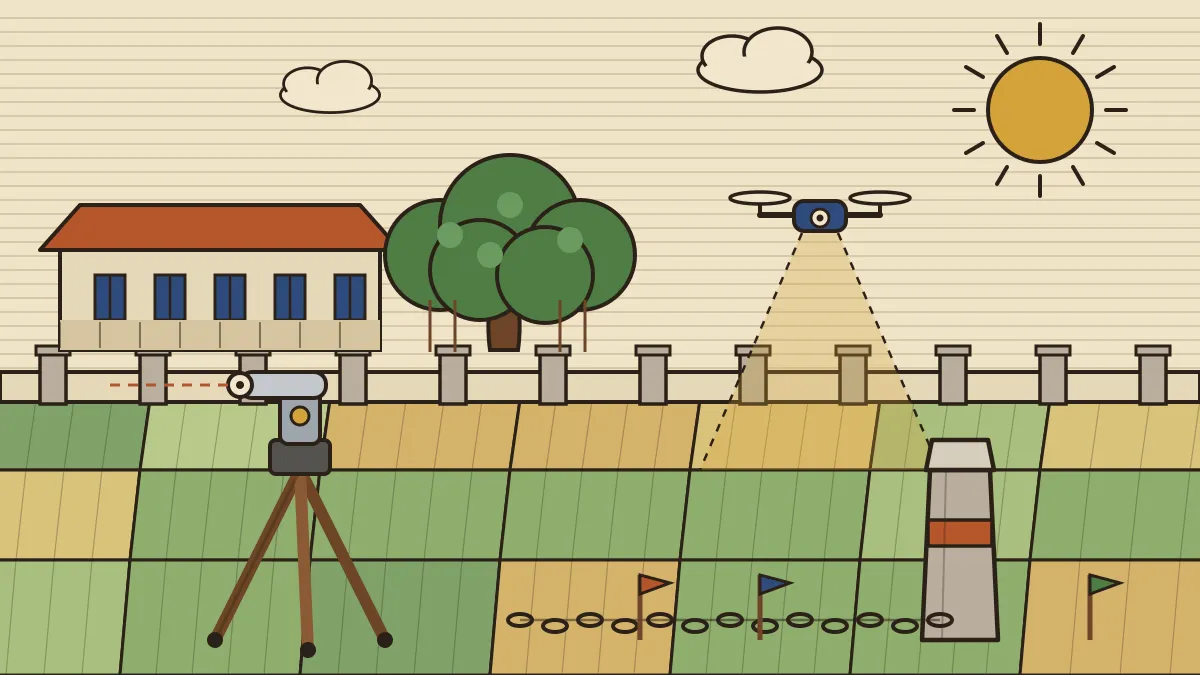
Behind every firing range, depot, airfield and parade ground there is a plot of land, and someone has to know exactly where it begins and ends. For a hundred years that someone has been the Defence Estates Organisation (DEO) of the Ministry of Defence. On 20 November 2026, at the organisation's centenary celebrations in New Delhi, Lok Sabha Speaker Shri Om Birla delivered the Defence Estates Centenary Lecture 2026 and asked it to use modern technology, digitisation and Artificial Intelligence (AI) to protect that land.
The speech is a good excuse to understand an organisation that rarely makes headlines but touches almost every part of military life: who owns the land the armed forces use, who keeps the records, who runs the civil towns called cantonments, and how a hundred-year-old department is now using drones and satellites. This article covers the history, the structure, the land figures, the survey and the live policy debates.
What the Speaker said on 20 November
According to the release from the Lok Sabha Secretariat:
- He called on the DEO to strengthen the management and protection of defence land through technology, digitisation and AI, stressing that accurate, secure and accessible land records are vital for governance.
- He noted that the organisation's mandate covers more than 1.7 million acres of defence land, and named encroachment as a key concern. He appreciated its surveys and measurements, while asking it to avoid unnecessary disputes or hardship for civilians.
- He said timely access to land for the operational needs of the armed forces must remain a top priority, because it bears directly on national security.
- On cantonments, he asked that their original character, green cover, forests and heritage be protected even as they adapt to modern needs, with development planned so that the "distinct identity" of military cantonments survives rapid urban growth.
- He praised civic work for cantonment residents: schools, healthcare, computer education, skill training, water conservation and recycling.
- He urged officers to study the laws and rules built up over the century and to pair that institutional memory with the technical skills of younger staff.
In a post on X the Speaker also mentioned AI, GIS, drone technology and digital records, and efforts such as e-Chhawani and Smart, Green and Sustainable Cantonments.
A century in one timeline
The story starts well before 1926, with the East India Company's military towns. The dates below come from Ministry of Defence releases and the Directorate General Defence Estates (DGDE) history page.
| Year | Milestone |
|---|---|
| 1765 | Barrackpore (West Bengal) becomes the first cantonment |
| 1766 | Danapur (Bihar) follows |
| 1803 | Meerut established |
| 1843 | Ambala established |
| 1889 | Cantonments Act (Act XIII of 1889) creates cantonment authorities |
| 1915 | Delhi cantonment |
| 1924 | Cantonments Act, 1924, bringing elected civilian representation and taxation |
| 16 Dec 1926 | Department formalised; today observed as Defence Estates Day |
| 1983 | Military Estates Officer redesignated Defence Estates Officer |
| 1985 | Service renamed the Indian Defence Estates Service (IDES) |
| 2006 | Cantonments Act, 2006 (Act No. 41 of 2006, 13 September 2006) replaces the 1924 Act |
Two points are worth holding on to. First, the Cantonments Act, 2006 repeals the 1924 Act in its Section 360, and its stated purpose is "greater democratisation" of cantonment administration along with a stronger financial base. Second, the 1926 date marks the formalising of a dedicated land and cantonment department, separate from the fighting formations, in charge of military land and cantonment administration.
Why the armed forces need an estates department at all
A military unit's first need is space: ranges where guns can be fired safely, depots for ammunition, grounds for training, airfield approaches that must stay clear. All of it is land, and land has owners, records, tenants and neighbours.
The Constitution places the subject squarely with the Union. In the Seventh Schedule, Union List Entry 3 covers the delimitation of cantonment areas, local self-government in such areas, and the constitution and powers of cantonment authorities. Entry 4 covers naval, military and air force works. That is why cantonment boards fall under the Union government and not under a state urban department, a point explained in our earlier article on what a cantonment board actually does.
The DEO therefore does two very different jobs:
- Land management. It records, surveys, protects and, where permitted, leases or transfers defence land; it deals with encroachments and land disputes in the courts.
- Municipal administration. Through cantonment boards, it supplies water, roads, schools, hospitals and sanitation to the civilians who live in cantonments.
How the organisation is built
The Directorate General Defence Estates (DGDE) is the headquarters, at Raksha Sampada Bhawan, Delhi Cantonment. PIB describes the set-up in 2025 as:
- six Commands, with Principal Directorates (for example at Western Command);
- 38 Defence Estates Circles, headed by Defence Estates Officers (DEOs);
- 61 Cantonment Boards.
The head is the Director General Defence Estates, an officer of the Indian Defence Estates Service. PIB records that Smt Shobha Gupta, a 1990-batch IDES officer, took charge as DGDE on 30 September 2025. IDES officers also serve as Chief Executive Officers (CEOs) of cantonment boards, which is why a cantonment's executive head and its military head, the Station Commander who is the board's President, are two different people.
Each year on Defence Estates Day (16 December) the Raksha Mantri presents the Raksha Mantri Awards for Excellence in defence land management and municipal administration. In December 2025, categories included cleanliness (Deolali, Barrackpore, Varanasi), cantonment hospitals (Khadki, Lansdowne) and school management (Ahilyanagar, Lucknow).
The land: how big, and why the figures differ
The numbers quoted for defence land vary slightly from release to release, and an exam candidate should know why.
| Source | Figure |
|---|---|
| MoD records, PIB, January 2022 | About 17.99 lakh acres in all |
| of which inside 62 notified cantonments | About 1.61 lakh acres |
| of which outside cantonments | About 16.38 lakh acres, spread across many pockets |
| PIB, September 2025 (DGDE profile) | Approximately 18 lakh acres |
| Lok Sabha Secretariat, 20 November 2026 | "More than 1.7 million acres" |
The three headline figures all describe the same estate, roughly 17 to 18 lakh acres. One lakh equals a hundred thousand, so 17 lakh acres is 1.7 million. The differences most likely come from rounding and from land being added to or deleted from the records; the 2022 release itself notes that about 18,000 acres of the outside-cantonment land was either state-hired or proposed for deletion after transfer to other departments. The releases do not reconcile the figures, so quote each with its date. Note too that the number of cantonments has come down, from 62 in the 2022 release to 61 boards in 2025.
Most defence land, then, is outside cantonments: ranges, depots and training areas in pockets across the country, including very large tracts in Rajasthan, where the drone survey of lakhs of acres was done.
The survey that changed the record
Ownership means little if boundaries are unclear. The DGDE began a survey of all defence land in October 2018. By January 2022 it had completed surveying 17.78 lakh acres: about 1.61 lakh acres inside cantonments and 16.17 lakh acres outside.
The PIB account is worth reading for the detail examiners like:
- PIB called it the first time since independence that the entire defence estate had been surveyed with modern technology, in many places jointly with state revenue authorities.
- It covered roughly 4,900 pockets, many in remote or inaccessible terrain.
- It used Electronic Total Stations (ETS) and Differential GPS (DGPS), supported by drone imagery (used at scale for the first time in Rajasthan, with the Surveyor General of India, in a matter of weeks rather than years) and satellite imagery.
- For hilly land, 3D models were built from a Digital Elevation Model with the Bhabha Atomic Research Centre (BARC).
- A pilot for real-time change detection from time-series satellite images, to spot encroachments, was started with imagery from the National Remote Sensing Centre, Hyderabad.
Later steps built on this base. In 2025 a Special Land Audit Report for the North Eastern Region covered nearly 50,000 acres of Army-occupied land across eight states. A Ministry of Home Affairs request also led the DGDE to survey land for the Custodian of Enemy Property for India, the first survey it had done outside the defence ministry.
From files to platforms: the technology list
PIB releases from 2020 to 2025 describe a steady move from paper to portals:
- e-Chhawani (inaugurated by the Raksha Mantri in February 2021): online civic services for cantonment residents. By December 2025 PIB said 100% of municipal services were online for about 20 lakh residents. It was also integrated with an accrual-based accounting system with BEL.
- Raksha Bhoomi: the centralised platform that now serves as the single repository of all defence land records, after complete digitisation of legacy records.
- DEMAP (Defence Estates Mapping Portal): a GIS platform linked to Raksha Bhoomi and, from 2025, integrated with PM GatiShakti, the national infrastructure planning platform.
- Bhoomi Raksha (launched December 2022): a module for removing encroachments; the DGDE also built AI-based software to detect unauthorised construction on defence land from imagery.
- CORS-enabled DGPS and GIS tools, plus a Centre of Excellence on Satellite and Unmanned Remote Vehicle applications that uses AI and machine learning.
- Telemedicine from Delhi Cantonment General Hospital, set up with AIIMS Delhi, extended to all 61 cantonment boards.
Do not mix up the two similar names: Raksha Bhoomi is the land-record database, Bhoomi Raksha is the encroachment-removal module.
Cantonments and the excision debate
Cantonment boards are statutory bodies under the Cantonments Act, 2006. Under Section 12 they are sorted into four categories by population: Category I above 50,000; Category II 10,000 to 50,000; Category III 2,500 to 10,000; Category IV up to 2,500.
The board is a mix of elected and nominated members. In a Category I cantonment it has eight elected members, three nominated military officers, and ex-officio members including the Station Commander, the Chief Executive Officer, the Health Officer, the Executive Engineer and a nominee of the District Magistrate. The Station Commander is President, the Vice-President is elected by the elected members from among themselves (except in Category IV), and an elected member's term is five years. The rules framed under Section 31 may reserve wards for Scheduled Castes, Scheduled Tribes and women.
There is a live policy question about whether civilian areas should remain under such a board at all. In a Rajya Sabha reply of 24 July 2023, the Raksha Rajya Mantri said that, to bring uniformity between municipal laws in cantonments and adjoining areas, the government had decided to consider excising the civil areas of certain cantonments and merging them with neighbouring state municipalities. Broad modalities had been shared with state governments for 58 cantonments. Khas Yol (Himachal Pradesh) had already been de-notified with effect from 27 April 2023. The reply added that it involves consultation and concurrence of the states, so no time-frame could be given. The fall from 62 notified cantonments in the 2022 release to 61 boards in 2025 is consistent with the Yol de-notification.
The Speaker's remarks on 20 November, asking that cantonments keep their identity while serving residents well, sit exactly on this fault line between a military heritage town and a modern civic unit.
Challenges the Raksha Mantri has named
At Defence Estates Day on 16 December 2025, the Raksha Mantri set out the agenda in a form that previews the Speaker's speech:
- Litigation: build a system showing the timing, status and next hearing of every defence-land case in one place, moving from "reactive litigation management to preventive land governance".
- Annual Challenge Statements: each year, invite officers, young staff and outside experts to propose solutions to old problems such as rent recovery and lease-compliance disputes.
- Citizen Satisfaction Index for cantonments, based on measurable service outcomes.
- Strong records, early dispute resolution and better coordination with civil authorities.
Why it matters for the armed forces
A soldier or a cadet sees the result without seeing the department. The range that is still available for firing is there because its boundary was marked and defended; the cantonment school and hospital exist because a board collected taxes and spent them; the depot that stays clear of encroachment is a matter of operational safety.
Land is also a scarce strategic resource. It is needed for new ranges, for border infrastructure, and for the stations of every command listed in our Defence GK page on Army commands. Decisions about releasing a plot to a state or a railway line are therefore always weighed against operational need, and clear records are what make such decisions fast. Defence land is also increasingly used for non-military purposes where it does not compromise security, as the 250 MW solar-BESS project at Sitapur showed.
What to watch next
- 16 December 2026 is the 100th Defence Estates Day, the formal end of the centenary year; expect new awards and portals.
- The excision proposals for 58 cantonments depend on state governments; any new de-notification would be a clear signal.
- AI-based encroachment detection moving from pilots to routine use.
- Further land audits, following the North Eastern Region report.
🔑 Revision block
The event. Defence Estates Centenary Lecture by Lok Sabha Speaker Om Birla, New Delhi, 20 November 2026; urged AI, digitisation, GIS and drones; land of "more than 1.7 million acres".
History. First cantonment Barrackpore, 1765; Danapur 1766; Cantonments Act 1924; Department formalised 16 December 1926 (Defence Estates Day); IDES named in 1985; Cantonments Act, 2006 (Act 41 of 2006) repeals the 1924 Act (Section 360).
Structure (PIB 2025). DGDE at Delhi Cantonment; 6 Commands, 38 Defence Estates Circles, 61 Cantonment Boards; head is the Director General Defence Estates (IDES).
Land. About 17.99 lakh acres (2022): 1.61 lakh inside 62 cantonments, 16.38 lakh outside. Survey from October 2018, 17.78 lakh acres done by January 2022; ETS, DGPS, drones, satellite, DEM with BARC.
Platforms. e-Chhawani (Feb 2021; about 20 lakh residents), Raksha Bhoomi (land records), DEMAP (with PM GatiShakti), Bhoomi Raksha (encroachments).
Cantonment boards. Four categories (above 50,000; 10,000 to 50,000; 2,500 to 10,000; up to 2,500); Station Commander is President; elected term 5 years; Union List Entry 3.
Excision. 58 cantonments proposed (Rajya Sabha, 24 July 2023); Khas Yol de-notified 27 April 2023.
🎯 Practice MCQs
Q1. The Defence Estates Department traces its formal origin to:
(a) 16 December 1926
(b) 15 August 1947
(c) 26 January 1950
(d) 1985
→ (a)
PIB records that the Department was formalised on 16 December 1926, which is why that date is observed as Defence Estates Day. 1985 is when the service became the IDES.
Q2. The first cantonment in India, established in 1765, was:
(a) Meerut
(b) Ambala
(c) Barrackpore
(d) Danapur
→ (c)
Barrackpore in West Bengal came first. Danapur followed in 1766, Meerut in 1803 and Ambala in 1843.
Q3. The cadre that supplies Defence Estates Officers and the Chief Executive Officers of cantonment boards is:
(a) Indian Administrative Service
(b) Indian Defence Estates Service
(c) Indian Ordnance Factories Service
(d) Indian Defence Accounts Service
→ (b)
The service was renamed the Indian Defence Estates Service in 1985 and its head is the Director General Defence Estates.
Q4. Local self-government in cantonment areas falls under which entry of the Seventh Schedule?
(a) State List, Entry 5
(b) Concurrent List, Entry 20
(c) State List, Entry 18
(d) Union List, Entry 3
→ (d)
Union List Entry 3 covers cantonment areas and local self-government in them, which is why cantonment boards are under the Ministry of Defence and not a state urban department.
Q5. Consider the following statements about the defence land survey that PIB reported in January 2022:
1. It began in October 2018 and covered about 17.78 lakh acres.
2. Drone imagery was used at scale for the first time in Rajasthan.
Which of the statements given above is/are correct?
(a) 1 only
(b) 2 only
(c) Both 1 and 2
(d) Neither 1 nor 2
→ (c)
Both are correct. The Surveyor General of India helped complete the Rajasthan drone survey in weeks rather than years.
Q6. Which portal provides online municipal services to the residents of cantonments?
(a) DEMAP
(b) Srijan
(c) Raksha Bhoomi
(d) e-Chhawani
→ (d)
e-Chhawani, launched in February 2021, serves about 20 lakh residents. DEMAP is the GIS mapping portal and Raksha Bhoomi the land-record repository.
Q7. The centralised repository of all defence land records is called:
(a) Raksha Bhoomi
(b) Bhoomi Raksha
(c) Srijan
(d) SUVIDYA
→ (a)
Bhoomi Raksha is a different module, for removing encroachments. SUVIDYA manages cantonment board schools.
Q8. Which cantonment was de-notified with effect from 27 April 2023?
(a) Ramgarh
(b) Khas Yol
(c) Ajmer
(d) Kasauli
→ (b)
The Raksha Rajya Mantri told the Rajya Sabha on 24 July 2023 that Khas Yol had been de-notified, and that modalities for excising civil areas had been shared for 58 other cantonments.
📋 How this gets asked (PYQ pattern)
Questions on defence land and cantonments are rare but follow a few steady shapes.
The first is administration: which ministry, which cadre, which official. The trap is confusing the DGDE with the Army's own engineering or the Military Engineer Services, so remember that the Defence Estates Organisation handles land and municipal affairs, while the MES builds and maintains.
The second is constitutional placement: cantonments sit in the Union List and fall outside the state urban local body scheme. Expect a statement to be judged true or false.
The third is "first" and "oldest": the first cantonment (Barrackpore, 1765), the date of the Cantonments Act, and which Act replaced which. This is a one-mark favourite.
The fresh 2026 hooks are the centenary of the Department, the 16 December 1926 date, the 61 cantonment boards, and the technology names e-Chhawani, Raksha Bhoomi and DEMAP. We describe the recurring pattern, not any exact past question.
Preparing for NDA? Cantonments sit where polity meets defence, so revise both. Start with local government in our NDA polity notes, follow the daily NDA current affairs, and learn with our ex-officer faculty in the upcoming Cavalier courses in Delhi.
Source: PIB / Lok Sabha Secretariat, "Lok Sabha Speaker calls for modern technology and AI to strengthen defence land management", 20 November 2026 (Release ID 2338993). PIB / Ministry of Defence releases: Defence Estates Day preview and address, 15 and 16 December 2025 (Release IDs 2204164, 2204699); DGDE reform review, 30 September 2025 (2173168); new DGDE, 1 October 2025 (2173591); defence land survey, 9 January and 10 February 2022 (1788667, 1797128); Defence Estates Day, 16 December 2022 (1884073); Rajya Sabha reply on cantonment excision, 24 July 2023 (1942023). Cantonments Act, 2006 (Sections 12, 14, 19, 31, 360) and the DGDE "Historical Perspective" page on dgde.gov.in.
✍️ Written by Maj Sunil Chopra — Veteran, Indian Army; defence-studies & current-affairs faculty at The Cavalier. Reviewed by the Cavalier Faculty Desk. The Cavalier, founded by ex-Army officers, has trained NDA/CDS/SSB aspirants since 2001 (Facebook · YouTube).