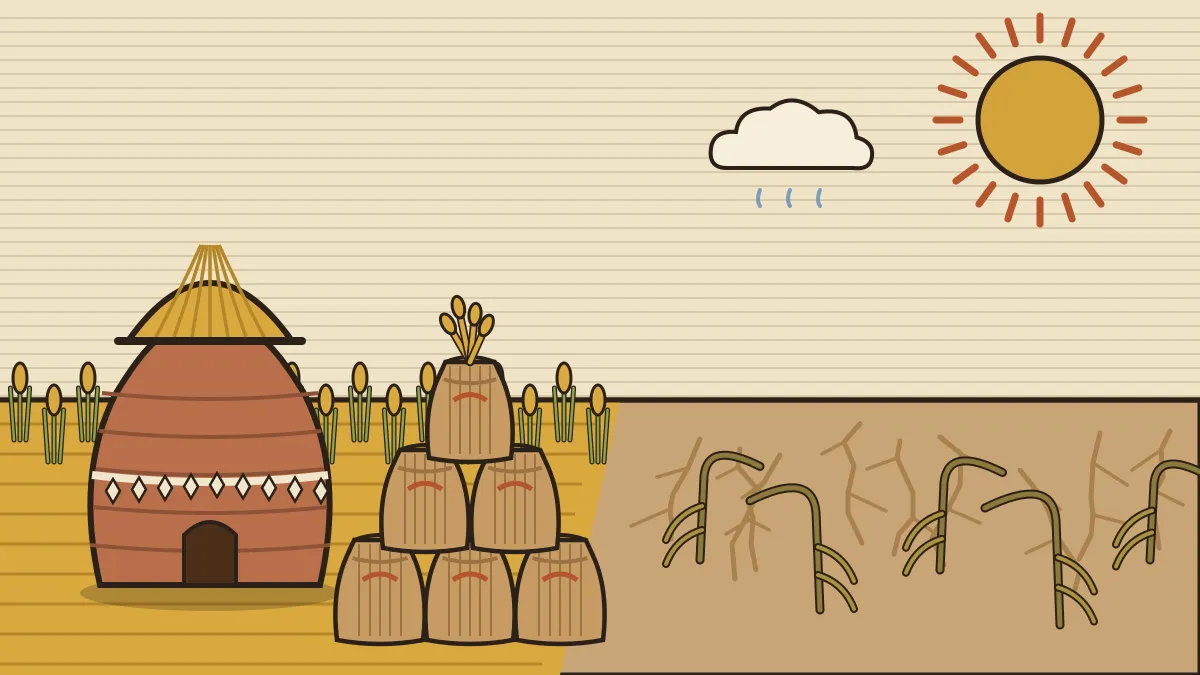
The country's farms produced more foodgrain in 2025-26 than in any earlier year. On 26 November 2026, Union Agriculture Minister Shivraj Singh Chouhan released the final production estimates of major agricultural crops for 2025-26 and the first advance estimates for the 2026-27 kharif season at a press conference in New Delhi.
The final figure for foodgrain is 3,785.38 lakh tonnes, which is about 378.5 million tonnes. That is 208.06 lakh tonnes more than the 3,577.32 lakh tonnes of 2024-25, a rise of about 5.8%. The first advance estimate for the kharif crop now being harvested is 1,671.43 lakh tonnes, a figure reached despite a return of El Niño, a late monsoon and rainfall that the Minister described as 35 to 40 per cent below normal.
A "lakh tonne" is 100,000 tonnes, so 3,785.38 lakh tonnes is 378.538 million tonnes. Exams use both units, so be ready to convert. This article takes the two parts of the release in turn: the settled numbers for last year, and the early numbers for this year. It then explains why the two kinds of estimate differ and what the government's pulses and oilseeds missions have to do with them.
2025-26 final estimates: crop by crop
All figures are in lakh tonnes unless stated. The 2025-26 figures are from the 26 November 2026 release, and so are the 2024-25 comparisons. The percentage changes are calculated by The Cavalier from the published figures.
| Crop | 2025-26 (final) | 2024-25 | Change |
|---|---|---|---|
| Foodgrain (total) | 3,785.38 | 3,577.32 | +208.06 (+5.8%) |
| Rice | 1,551.54 | 1,501.84 | +49.70 (+3.3%) |
| Wheat | 1,220.64 | 1,179.45 | +41.19 (+3.5%) |
| Maize | 550.25 | 434.09 | +116.16 (+26.8%) |
| Nutri-cereals and coarse cereals (total) | 740.80 | not given | of which Shri Anna (millets): 172.09 |
| Pulses (total) | 272.40 | 256.83 | +15.57 (+6.1%) |
| Oilseeds (total) | 432.55 | 429.89 | +2.66 (+0.6%) |
| Groundnut | 131.71 | 119.42 | +12.29 (+10.3%) |
| Rapeseed and mustard | 137.66 | 126.67 | +10.99 (+8.7%) |
| Soybean | 126.36 | not given | |
| Sugarcane | 5,037.29 | not given | |
| Cotton (lakh bales of 170 kg) | 280.06 | not given | |
| Jute and mesta (lakh bales of 180 kg) | 94.28 | not given |
Three things stand out.
Maize did the heavy lifting in cereals. Rice and wheat each grew by 3 to 4 per cent, but maize jumped by more than a quarter, adding 116 lakh tonnes in one year. That is more than rice and wheat added together (90.89 lakh tonnes). The release's four groups add up to the total: rice, wheat, nutri-cereals and pulses give 1,551.54 + 1,220.64 + 740.80 + 272.40 = 3,785.38.
Pulses had a good year. The pulse total rose by 6.1% to 272.40 lakh tonnes. Within it, moong reached a new record of 43.96 lakh tonnes, gram stood at 125.13 and tur (arhar) at 35.99. These three crops together account for 205 lakh tonnes, three-quarters of the whole pulse crop.
Oilseeds reached a record but barely grew. The total of 432.55 lakh tonnes is a record, but only 0.6% above the year before. The record is carried by groundnut (a new high of 131.71) and rapeseed and mustard (a new high of 137.66). Soybean at 126.36 lakh tonnes sits between them.
How "final" differs from "advance"
Students often mix up the different estimates, and CDS questions on agricultural statistics depend on knowing the sequence. The ministry releases a series of estimates for each agricultural year. The first advance estimate covers kharif. The second covers kharif and rabi. The third adds the summer crop, and the final estimate comes last, after yield data from the harvest is in.
The 2025-26 numbers show how the estimates moved as the picture sharpened. The third advance estimates were released on 27 May 2026, and the table compares them with today's final numbers (the third-advance figures were released in million tonnes and are converted here).
| Item (lakh tonnes) | Third advance (27 May 2026) | Final (26 Nov 2026) | Change |
|---|---|---|---|
| Foodgrain | 3,765.63 | 3,785.38 | +19.75 |
| Rice | 1,540.24 | 1,551.54 | +11.30 |
| Wheat | 1,206.57 | 1,220.64 | +14.07 |
| Maize | 550.93 | 550.25 | −0.68 |
| Oilseeds | 430.59 | 432.55 | +1.96 |
| Sugarcane | 5,000.63 | 5,037.29 | +36.66 |
The estimates did not move far. The final foodgrain number is only about half a per cent above the third advance estimate. Maize is the single item in the table that came down, and only slightly.
How the numbers are put together. The release says the estimates use information from the states and Union Territories, validated against several independent sources:
- Remote sensing (satellite data on crop area).
- The weekly Crop Weather Watch Group (CWWG), which tracks weather and crop conditions.
- The Digital Crop Survey and the Digital General Crop Estimation Survey, which record crops plot by plot on the ground.
- Crop-cutting experiments (CCEs), in which a small, randomly chosen plot is harvested and weighed to estimate yield. The final estimates and the later kharif estimates rely on actual yield data from these experiments.
- A three-tier process of validation and triangulation, and consultations with industry.
The Digital Crop Survey is now large. A February 2026 release says it covered 604 districts and more than 28.5 crore plots in kharif 2025. For the horticulture side of the same machinery, and a fuller explanation of what an advance estimate is, see our explainer on the horticulture third advance estimates.
Kharif 2026-27: the first advance estimates
The kharif season is the monsoon crop, sown from June and harvested from about September. This year's figures come with an unusual backdrop. The Minister said that sowing was affected by the return of El Niño, a delay in the monsoon in June, and rainfall 35 to 40 per cent below normal. Low soil moisture and drought-like conditions in Maharashtra, Karnataka, Telangana and Andhra Pradesh hit the sowing of paddy, maize, tur, soybean and cotton.
El Niño is the periodic warming of the surface water of the central and eastern equatorial Pacific Ocean. In many years it goes with a weaker Indian monsoon. The mechanism is in our note on the Indian monsoon.
Even so, the first advance estimate of kharif foodgrain production is 1,671.43 lakh tonnes. The ministry says this is 97.67 lakh tonnes above the average of the previous five years. That implies a five-year average of about 1,573.76 lakh tonnes. Here are the crop-wise figures.
| Kharif 2026-27 (first advance), lakh tonnes | Estimate |
|---|---|
| Foodgrain (total) | 1,671.43 |
| Rice | 1,219.05 |
| Nutri-cereals and coarse cereals | 381.05 |
| — Maize / bajra / jowar / ragi / small millets | 260.64 / 89.43 / 14.79 / 12.48 / 3.71 |
| Pulses | 71.32 |
| — Tur / moong / urad / other | 31.22 / 16.59 / 14.49 / 9.02 |
| Oilseeds | 239.47 |
| — Groundnut / soybean / castor / sesame / sunflower / niger | 111.68 / 102.44 / 18.97 / 4.91 / 1.17 / 0.30 |
| Sugarcane | 4,543.39 |
| Cotton (lakh bales of 170 kg) | 248.66 |
| Jute and mesta (lakh bales of 180 kg) | 97.06 |
The parts add up to the whole: 1,219.05 + 381.05 + 71.32 comes to the foodgrain total of 1,671.43 (allowing for rounding).
Set against last year. In March 2026 the ministry's second advance estimates had put kharif foodgrain for 2025-26 at 1,741.44 lakh tonnes, with kharif rice at 1,239.28 and kharif maize at 302.47. Against those numbers the new kharif estimate is about 70 lakh tonnes (4%) lower, with rice about 20 lakh tonnes lower and maize about 42 lakh tonnes lower. These are The Cavalier's calculations from two releases. The March figures were themselves advance estimates, and a final kharif and rabi split for 2025-26 has not yet been published, so treat this as a guide to direction and not an exact year-on-year comparison.
The caution on the numbers. The Minister was clear that these are preliminary. They will be revised in the second and final estimates, once actual yields are known from crop-cutting experiments at harvest. In a year of uneven rain, the gap between a first estimate and the eventual number can be larger than usual.
What the stocks and the missions mean
The release stresses that, having built "substantial" stocks of wheat and rice, the government's focus is now on pulses and oilseeds, through national missions in mission mode. The background is worth knowing.
| Mission | Outlay | Period | Key target |
|---|---|---|---|
| Mission for Aatmanirbharta in Pulses | ₹11,440 crore | 2025-26 to 2030-31 | Pulse production of 350 lakh tonnes by 2030-31; assured procurement of tur, urad and masoor |
| National Mission on Edible Oils – Oilseeds (NMEO-Oilseeds) | ₹10,103 crore | 2024-25 to 2030-31 | Primary oilseed production from 39 to 69.7 million tonnes by 2030-31 |
The pulses mission uses the SATHI portal (Seed Authentication, Traceability and Holistic Inventory), which tracks seed from production to sale. It also plans 88 lakh free seed kits and 1,000 processing units (dal mills).
How far to go? The final pulses figure of 272.40 lakh tonnes leaves a gap of 77.6 lakh tonnes to the 350 lakh tonne target. That is about 28.5% growth in the five years left. Oilseeds are a harder case, because the mission's target is for the primary oilseed group and measured from a 2022-23 base, so do not subtract it from the 432.55 figure above, which uses a different scope. Our explainer on the first year of the pulses mission covers the mission's design in detail.
The release also lists the ministry's claims on global standing: India is first in the production of pulses, jute, millets and spices, second after China in wheat, cotton, groundnut, fruits and vegetables, and second after Brazil in sugarcane. These are the Ministry's own claims, so quote them as "according to the Ministry".
Why a record crop and a dry kharif can both be true
A student should hold two ideas together. The 2025-26 harvest is history: the numbers are final, they are records, and wheat and rice stocks are adequate. The 2026-27 kharif is a forecast made in a weak monsoon year, and its first estimate is lower than last year's. A good buffer protects consumers from one poor season. That is the logic of public stockholding, and it ties to the food security and buffer stock system of the FCI.
What to watch
- The rabi crop. After a weak kharif, the winter wheat crop, sown from October, decides the total. Soil moisture and reservoir levels are the first signals.
- The second advance estimates for 2026-27, which will bring in rabi sowing and the first harder yield data.
- Pulses and oilseeds prices and imports. The missions aim to cut import dependence, and a dry kharif tests them early.
- Revisions. The kharif number of 1,671.43 lakh tonnes will move. The direction depends on the late monsoon rain and on the yield data from the crop-cutting experiments.
🔑 Revision block
The release. 26 November 2026: final estimates 2025-26 and first advance estimates kharif 2026-27, by Agriculture Minister Shivraj Singh Chouhan.
2025-26 final. Foodgrain 3,785.38 lakh tonnes (+208.06, +5.8%, record). Rice 1,551.54; wheat 1,220.64; maize 550.25; nutri/coarse cereals 740.80 (Shri Anna 172.09); pulses 272.40 (moong 43.96 record); oilseeds 432.55 (groundnut 131.71, rapeseed-mustard 137.66, soybean 126.36); sugarcane 5,037.29; cotton 280.06 lakh bales; jute and mesta 94.28 lakh bales.
Kharif 2026-27 (first advance). Foodgrain 1,671.43 (+97.67 over five-year average); rice 1,219.05; nutri-cereals 381.05; pulses 71.32; oilseeds 239.47; sugarcane 4,543.39.
Why lower. El Niño, June monsoon delay, rainfall 35–40% below normal (Minister's statement); stress in Maharashtra, Karnataka, Telangana, Andhra Pradesh.
Method. State data + remote sensing + CWWG + Digital Crop Survey / DGCES; yields from crop-cutting experiments; three-tier validation. Sequence: first, second, third advance, then final.
Missions. Pulses mission ₹11,440 crore, 2025-26 to 2030-31, target 350 lakh tonnes. NMEO-Oilseeds ₹10,103 crore, 2024-25 to 2030-31, target 69.7 million tonnes.
🎯 Practice MCQs
Q1. According to the final estimates for 2025-26, India's total foodgrain production was about:
(a) 3,288 lakh tonnes
(b) 3,577 lakh tonnes
(c) 3,766 lakh tonnes
(d) 3,785 lakh tonnes
→ (d)
The final figure is 3,785.38 lakh tonnes. The 3,577 figure is 2024-25, and 3,766 was the third advance estimate of May 2026.
Q2. The final estimates of crop production in India are based mainly on:
(a) Sowing reports from the states alone
(b) Yield data from crop-cutting experiments at harvest, validated with remote sensing and digital surveys
(c) Customs data on foodgrain exports
(d) Arrivals of produce in wholesale markets
→ (b)
Area comes from the states and is checked against remote sensing and digital surveys, while yield comes from crop-cutting experiments.
Q3. Consider the following statements about the kharif 2026-27 estimates:
1. They are first advance estimates and will be revised in the second and final estimates.
2. They show kharif foodgrain production below the five-year kharif average.
Which of the statements given above is/are correct?
(a) 1 only
(b) 2 only
(c) Both 1 and 2
(d) Neither 1 nor 2
→ (a)
The estimate of 1,671.43 lakh tonnes is 97.67 lakh tonnes above the five-year average, so statement 2 is wrong.
Q4. Among rice, wheat and maize, which crop recorded the largest absolute increase in production in 2025-26 over 2024-25?
(a) Rice
(b) Wheat
(c) Maize
(d) All three increased by the same amount
→ (c)
Maize rose by about 116 lakh tonnes, against about 50 for rice and 41 for wheat.
Q5. The Mission for Aatmanirbharta in Pulses aims to raise pulse production by 2030-31 to about:
(a) 272 lakh tonnes
(b) 350 lakh tonnes
(c) 420 lakh tonnes
(d) 500 lakh tonnes
→ (b)
The six-year mission, with an outlay of ₹11,440 crore, targets 350 lakh tonnes. The 2025-26 final figure is 272.40 lakh tonnes.
Q6. El Niño refers to:
(a) A cold ocean current along the coast of Peru that always brings heavy rain to India
(b) A seasonal wind blowing from land to sea in winter
(c) A periodic warming of the central and eastern equatorial Pacific, often linked to a weaker Indian monsoon
(d) A permanent low-pressure belt over the Indian Ocean
→ (c)
The warming alters the atmospheric circulation, and in many years the Indian monsoon is weaker.
Q7. As per the final estimates for 2025-26, the production of rapeseed and mustard was about:
(a) 119 lakh tonnes
(b) 127 lakh tonnes
(c) 132 lakh tonnes
(d) 138 lakh tonnes
→ (d)
The record figure is 137.66 lakh tonnes, up 10.99 lakh tonnes from 126.67. The 119 and 132 figures are groundnut for 2024-25 and 2025-26.
Q8. Which body tracks weather and crop conditions every week as an input to the crop estimates?
(a) Crop Weather Watch Group
(b) NITI Aayog
(c) Commission for Agricultural Costs and Prices
(d) Food Corporation of India
→ (a)
The CWWG's weekly inputs are used with remote sensing and state data. The CACP recommends minimum support prices and the FCI handles procurement and stocks.
📋 How this gets asked (PYQ pattern)
Agriculture and its numbers appear in CDS economy and geography papers, and this release can be asked in four ways.
The first is definitions and sequence: what an advance estimate is, how many there are, and what the final estimate adds. The examiner likes the confusion between area (from states, checked by satellites) and yield (from crop-cutting experiments), as in Q2 and Q8.
The second is headline numbers: the total foodgrain figure, the leading crops and a record in a named crop. Options are usually spaced widely, so the first three digits are enough, as in Q1 and Q7.
The third is climate and crops: the effect of El Niño and a delayed monsoon, which states and crops are exposed, and the meaning of kharif and rabi. See Q6 and Q3.
The fourth is policy: the pulses and oilseeds missions, their outlays and targets, and the link to import dependence. The fresh hooks this cycle are 3,785.38 lakh tonnes, 1,671.43 lakh tonnes for kharif and the 350 lakh tonne pulses target.
Preparing for CDS? Make a three-column card: crop, 2024-25, 2025-26 final. It is the quickest way to hold the figures. Revise the background with our notes on agriculture in the economy and the geography of agriculture. Follow the daily CDS current affairs, and learn with experienced faculty in the upcoming Cavalier courses in Delhi.
Source: PIB / Ministry of Agriculture & Farmers Welfare, release of 26 November 2026 (final estimates 2025-26 and first advance estimates kharif 2026-27); Third Advance Estimates release of 27 May 2026; Second Advance Estimates release of 10 March 2026; release on the Mission for Aatmanirbharta in Pulses (1 October 2025); release on NMEO-Oilseeds (3 October 2024); release on digital agriculture initiatives (10 February 2026). Percentage changes, unit conversions and the comparison with the March 2026 kharif estimate are calculated by The Cavalier from the published figures.
✍️ Written by Aditya Tiwari — Economy & current-affairs faculty at The Cavalier. Reviewed by the Cavalier Faculty Desk.