Two announcements on 21 November 2026 belong together. At the fourth annual general meeting of the BRIC Society (the Biotechnology Research and Innovation Council), Dr Jitendra Singh said India's bioeconomy has grown from about USD 10 billion to over USD 195 billion, and should reach USD 300 billion by 2030 and USD 1 trillion by 2047. The same day, the Health Ministry reported that the National HPV Vaccination Campaign, launched in February 2026, had passed 1 crore doses in under nine months. That is nearly 87% of its yearly target of about 1.2 crore 14-year-old girls. The vaccine in those syringes is a piece of biotechnology: a protein shell that looks like the virus but carries none of its genes. For the exam, "vaccine" is never one thing. CDS has asked which vaccine is inactivated, which is a viral vector, and what a vaccine actually does. This article sorts the platforms.
What Every Vaccine Does: Teach, Then Remember
By Akanksha Kumari · Science faculty, The Cavalier · B.Tech, 15 years teaching Science
A vaccine shows the immune system an antigen (a protein or sugar that marks a pathogen) without giving the disease. Lymphocytes meet it and respond. B cells make antibodies, and T cells coordinate the attack. Some of both survive as memory cells. When the real pathogen arrives months or years later, memory cells recognise it at once, and the secondary response is faster, larger and longer than the first. That is the whole principle. It is active immunity, built by the body itself. Passive immunity means ready-made antibodies given from outside (antitetanus serum, snake antivenom, a mother's antibodies through the placenta). It works within hours but fades, because no memory is created.
Edward Jenner used cowpox against smallpox in 1796. Louis Pasteur made a rabies vaccine in 1885 from a deliberately weakened microbe. Smallpox, declared eradicated by the WHO in 1980, remains the only human disease ever eradicated.
A vaccine does not block the microbe at the door or kill it directly. It trains the body to make antibodies and memory cells. CDS 2024-I tested exactly this. CDS 2021-I asked a companion question: an antibiotic fails against a virus because a virus has no cell machinery of its own for the drug to block, whereas a vaccine works by preparing the immune system. Our immunity and vaccination page covers antibody classes; this article is about how the vaccine itself is built.
Whole-Pathogen Vaccines: Weakened and Killed
The oldest platforms use the whole microbe. Everything after them is an attempt to keep the teaching and drop the risk.
| Platform | What is inside | Examples | Watch-point |
|---|---|---|---|
| Live attenuated | Living but weakened microbe; it multiplies a little | BCG, oral polio (Sabin), measles, MMR, rotavirus, yellow fever, Qdenga (dengue) | One or two doses give long immunity; not for pregnancy or severe immune weakness |
| Inactivated (killed) | Whole microbe killed by heat or chemicals | Injectable polio (Salk), rabies, hepatitis A, Covaxin | Cannot multiply, so safer but weaker; needs boosters and an adjuvant |
| Toxoid | Bacterial toxin made harmless | Tetanus, diphtheria | Protects against the toxin, not the bacterium |
| Subunit / recombinant | Only a purified protein or particle | Hepatitis B, HPV, Corbevax | No genes of the pathogen at all |
| Conjugate | A sugar coat joined to a carrier protein | Hib, pneumococcal | Works in babies under two |
| Viral vector | A harmless virus carrying one gene of the pathogen | Covishield, Sputnik V | Body makes the antigen itself |
| DNA / mRNA | Genetic instructions only | ZyCoV-D (DNA); Pfizer-BioNTech, Moderna (mRNA) | mRNA breaks down quickly; needs lipid packaging |
Live attenuated vaccines are made by growing the microbe for many generations under unnatural conditions until it loses its power to cause disease while keeping its antigens. BCG (1921) is a weakened Mycobacterium bovis. Because the microbe still multiplies a little, protection usually lasts for years. The price is a small risk in people with weak immunity, and in rare cases the weakened strain can revert. That is why India moved from the trivalent to the bivalent oral polio vaccine in April 2016 and added an injectable (killed) polio dose. India was certified polio-free in March 2014.
Inactivated vaccines hold a dead microbe whose surface proteins still look right to the immune system. They cannot cause the disease, but they do not multiply, so the response is weaker and booster doses are needed. An adjuvant, usually aluminium salts, wakes up the immune cells. Covaxin, developed by Bharat Biotech with ICMR and the National Institute of Virology, Pune, is an inactivated whole-virus vaccine. A toxoid is a toxin treated with formaldehyde until harmless. Tetanus and diphtheria kill through their toxins, so a toxoid is enough.
Pieces of the Pathogen: Subunit, Conjugate and the HPV Shell
Why inject a whole microbe when only one protein is needed? A subunit vaccine contains only the part the immune system must see. The part is made not by growing the pathogen but by putting its gene into yeast or insect cells, the same cut-and-paste method described in our recombinant DNA article. The hepatitis B vaccine (licensed in 1986) was the first of this kind: the surface protein is made in yeast.
The HPV vaccine goes one step further. The virus's outer coat is built from a protein called L1. When yeast or insect cells are made to produce L1, the protein molecules assemble by themselves into hollow shells that match the real virus in shape and size. These virus-like particles (VLPs) contain no viral DNA, so they cannot infect or cause cancer, yet the immune system reacts to them as it would to the virus. Harald zur Hausen won a share of the 2008 Nobel Prize in Physiology or Medicine for showing that HPV causes cervical cancer. Types 16 and 18 account for about 70% of cases, and our cancer article traces how the infection becomes a tumour. India's first home-made HPV vaccine, Cervavac from the Serum Institute of India, protects against four types (6, 11, 16 and 18).
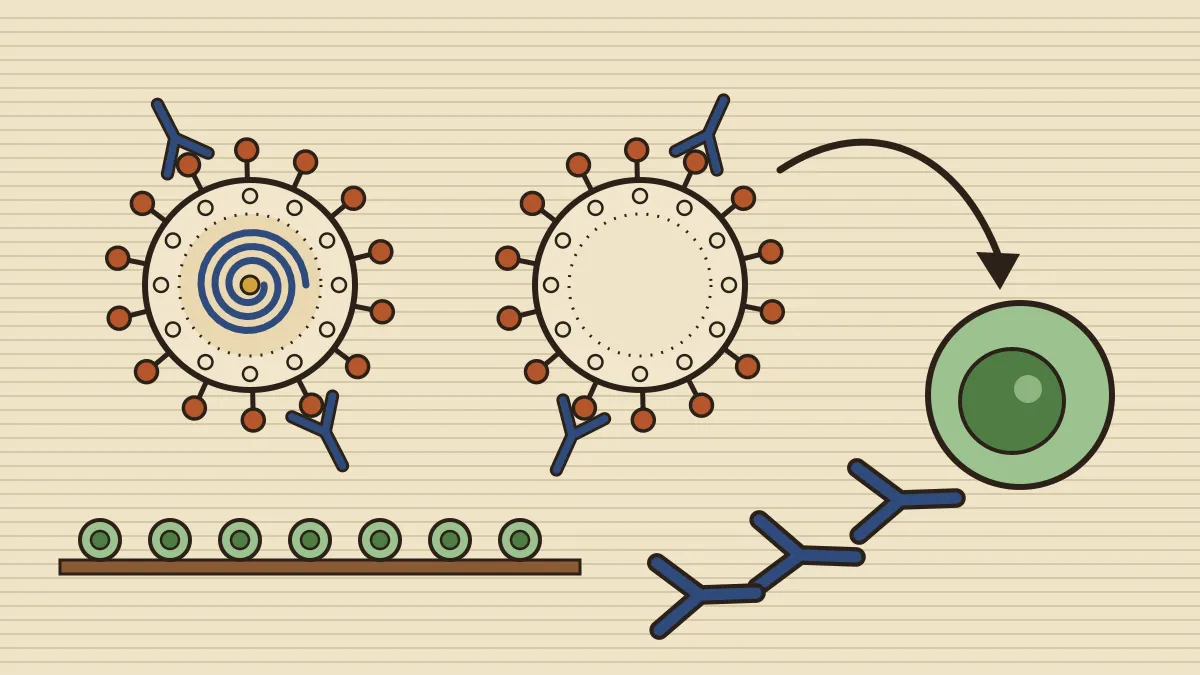
The campaign gives one dose, a schedule that WHO's expert group (SAGE) found in June 2022 to protect as well as two doses, and that the WHO's December 2022 position paper endorsed for girls aged 9 to 20. It is tracked on the U-WIN digital platform, which records vaccinations and issues digital certificates. Our September explainer covers the elimination targets. PIB's 21 November release adds that six states (Gujarat, Uttar Pradesh, Andhra Pradesh, Mizoram, Madhya Pradesh, Bihar) reached 100% of their target.
A conjugate vaccine solves a different problem. Some bacteria hide behind a sugar capsule, and a baby's immune system barely responds to sugar alone. Joining the sugar to a carrier protein brings T cells in, and infants then respond properly. India's pentavalent vaccine packs five protections into one injection: diphtheria, pertussis, tetanus, hepatitis B and Hib.
Instructions Instead of Antigen: Vector, DNA and mRNA
The newest platforms do not supply the antigen at all. They give the body's cells the recipe and let them make it.
In a viral vector vaccine, a harmless virus that cannot multiply is the delivery van. Covishield (Oxford-AstraZeneca, made in Pune by the Serum Institute) uses a chimpanzee adenovirus carrying the gene for the coronavirus spike protein. Sputnik V uses two human adenoviruses. A DNA vaccine uses a small ring of DNA called a plasmid. India's ZyCoV-D by Zydus, approved in 2021, was billed as the world's first DNA vaccine against Covid-19 and was given with a needle-free applicator.
An mRNA vaccine carries only the messenger RNA, wrapped in tiny fat droplets called lipid nanoparticles. Cells read it in the cytoplasm, make the spike protein, display it, and then break the mRNA down within days. The mRNA never enters the nucleus, so the DNA is unchanged. The 2023 Nobel Prize in Physiology or Medicine went to Katalin Karikó and Drew Weissman for the chemical modification that stopped mRNA from being destroyed by the body's alarms. India's Gemcovac-19 from Gennova is the first home-made mRNA vaccine.
Covishield is a viral vector vaccine, not mRNA. CDS 2022-I put "Covishield – mRNA" in a pair list to catch brand-name guessers. Remember: Covaxin = inactivated; Covishield and Sputnik V = vector; ZyCoV-D = DNA; Corbevax = subunit protein; Pfizer and Moderna = mRNA.
India's Vaccine Map: Programme, Cold Chain and Herd Immunity
India's Universal Immunisation Programme (1985) gives free vaccines against diseases such as tuberculosis (BCG), polio, hepatitis B, diphtheria, pertussis, tetanus, measles and rubella. The 2026 additions are the HPV campaign and the CDSCO approval, on 21 July 2026, of Qdenga, India's first dengue vaccine, which is live attenuated. The goal behind the BioE3 policy, explained in our bioeconomy article, is to make such products at home.
Cold chain. Most vaccines must be held at +2 to +8 °C from factory to arm. Heat spoils live vaccines (oral polio, measles). Freezing spoils those with an aluminium adjuvant (DPT, tetanus toxoid, hepatitis B). The first Pfizer mRNA vaccine needed storage near minus 70 °C.
Herd immunity is the indirect protection of those who are not immune when enough others are. The share that must be immune is 1 − 1/R₀, where R₀ is the number of people one case infects in a fully susceptible population.
A disease has R₀ = 4. A vaccine works in 90% of those who receive it. What coverage is needed?
Herd immunity does not protect against tetanus, which comes from soil and is not passed between people.
How UPSC Has Asked It: Past Papers Solved
Which of the following statements is/are correct about vaccination that provides protection against an infectious disease? 1. It blocks the entry of the infectious agent into body. 2. It produces antibodies against infection. 3. It kills the infectious agent when it enters in the body.
(a) 1 only (b) 2 only (c) 2 and 3 only (d) 1, 2 and 3
Answer: (b). A vaccine makes the body produce antibodies and memory cells. It does not stand guard at the entrance, and the killing is done later by the immune response, not by the vaccine.
An antibiotic is not useful against a virus whereas a vaccine is. Which one of the following is the most appropriate reason for this?
(a) An antibiotic can break RNA only, whereas virus has DNA. (b) An antibiotic is a carbohydrate in its chemical nature, whereas a vaccine is a protein which works well to kill a virus. (c) Only a vaccine can break the genetic material of a virus. (d) A virus does not use biochemical pathways which can be blocked by an antibiotic. But a vaccine can boost an immune system to fight the virus.
Answer: (d). Antibiotics block bacterial machinery, and a virus has none of its own. Option (b) is the tempting wrong one: antibiotics are not carbohydrates, and vaccines do not kill viruses directly.
Consider the following pairs of vaccine and category/type: 1. Covaxin – Inactivated pathogen-based vaccine 2. Covishield – mRNA vaccine 3. Sputnik V – Viral vector-based vaccine. Which of the pairs given above is/are correctly matched?
(a) 1 only (b) 2 and 3 only (c) 1 and 3 only (d) 1, 2 and 3
Answer: (c). Covaxin is a killed whole virus and Sputnik V uses adenovirus vectors. Covishield is also a vector vaccine, so pair 2 fails.
Which one of the following statements is not correct with regard to genetically modified organisms?
(a) In this technique a gene from one organism is isolated and transferred to the cell of another organism. (b) This technique has applications only in plants. (c) Genes for insect resistance may spread from crop plants to wild plants. (d) To produce a transgenic animal the novel genes are inserted at a very early stage of development.
Answer: (b). The word "only" is the giveaway: the technique also makes insulin bacteria and transgenic animals.
Which of the following statements is/are associated with role of enzymes in genetic engineering? 1. Exonucleases remove nucleotides from the ends of DNA 2. Restriction endonucleases are used to form recombinant molecule of DNA
(a) 1 only (b) 2 only (c) Both 1 and 2 (d) Neither 1 nor 2
Answer: (c). Exonucleases nibble DNA from the ends, whereas restriction endonucleases cut at specific internal sites, and the cut pieces are joined into recombinant DNA.
Which one of the following platforms marks a transformative step in India's immunization efforts by digitizing vaccination records for pregnant women and children up to 16 years?
(a) U-WIN (b) PM-ABHIM (c) eSanjeevani (d) FDSI
Answer: (a). eSanjeevani is telemedicine, and PM-ABHIM is a health infrastructure mission.
Vaccine questions are matched pairs (name against platform) or "which is NOT correct" statements. Learn the five-name rule from the vector section and the idea that a vaccine teaches, it does not kill. Genetic-engineering questions come from the same chapter, so one revision covers both.
Practice MCQs (with answers)
- Which of the following is a live attenuated vaccine?
- Injectable polio vaccine (Salk)
- BCG
- Tetanus toxoid
- Hepatitis B vaccine
- The active ingredient of the HPV vaccine is
- hollow virus-like particles made of the L1 protein, with no viral DNA
- weakened HPV
- mRNA coding for HPV proteins
- killed HPV with its DNA intact
- Covishield is based on
- messenger RNA
- killed whole virus
- a purified spike protein
- a chimpanzee adenovirus carrying the spike gene
- Vaccines against tetanus and diphtheria use
- live bacteria
- killed whole bacteria
- toxoids
- messenger RNA
- Protection from a vaccine lasts mainly because it produces
- antibiotics
- interferons that never fade
- memory B and T cells
- antibodies borrowed from a donor
- For a disease with R₀ = 5, the share of the population that must be immune for herd immunity is
- 50%
- 60%
- 75%
- 80%
- Which statement about mRNA vaccines is correct?
- The mRNA is read in the cytoplasm and does not enter the nucleus
- The mRNA joins the cell's chromosomes
- They contain a weakened virus
- The mRNA stays in the body for life
- Which pair is correctly matched?
- Covaxin – mRNA
- ZyCoV-D – DNA plasmid vaccine
- Corbevax – live attenuated
- BCG – subunit
1-b, 2-a, 3-d, 4-c, 5-c, 6-d, 7-a, 8-b. Q1: BCG is a weakened bacterium; the others are not live. Q6: 1 − 1/5 = 80%. Q7: mRNA works in the cytoplasm and is degraded within days. Q8: Covaxin is inactivated, Corbevax is a protein subunit, and BCG is live attenuated. Only ZyCoV-D is correctly matched.
Quick Revision
- Vaccine = antigen without disease; makes antibodies and memory B and T cells. Active immunity lasts; passive (antiserum) does not. Jenner 1796; Pasteur 1885; smallpox eradicated 1980.
- Live attenuated: BCG, oral polio, measles, MMR, rotavirus, Qdenga. Inactivated: Salk polio, rabies, hepatitis A, Covaxin. Toxoid: tetanus, diphtheria. Conjugate: Hib, pneumococcal.
- Subunit: hepatitis B (yeast, 1986), HPV (L1 virus-like particles, no DNA), Corbevax. HPV 16 and 18 cause about 70% of cervical cancers; zur Hausen, Nobel 2008.
- Vector: Covishield (chimp adenovirus), Sputnik V. DNA: ZyCoV-D. mRNA: Pfizer, Moderna, Gemcovac-19; Nobel 2023 Karikó and Weissman. mRNA stays in the cytoplasm.
- Cold chain +2 to +8 °C. Herd immunity threshold = 1 − 1/R₀.
- HPV campaign: Feb 2026, single dose, 14-year-old girls, over 1 crore doses, about 87% of target. U-WIN records vaccinations. Bioeconomy: USD 195 billion now, USD 300 billion by 2030.
Frequently asked questions
How does a vaccine give long-lasting protection?
A vaccine shows the immune system an antigen without causing the disease. B cells make antibodies, and some B and T cells survive as memory cells. On a later infection these memory cells respond faster and more strongly, which is why protection can last for years.
What is the difference between Covaxin and Covishield?
Covaxin is an inactivated whole-virus vaccine developed by Bharat Biotech with ICMR and the National Institute of Virology. Covishield is a viral vector vaccine, in which a harmless chimpanzee adenovirus carries the gene for the coronavirus spike protein. Neither is an mRNA vaccine.
Why does the HPV vaccine contain no virus DNA?
It is made of virus-like particles. Yeast or insect cells produce the L1 coat protein, which assembles by itself into hollow shells that look like the virus. With no genome inside, the particles cannot infect, but they still trigger antibodies against the real virus.
Do mRNA vaccines change human DNA?
No. The mRNA is wrapped in lipid nanoparticles and read in the cytoplasm. It never enters the nucleus, where the DNA is kept, and the cell breaks it down within days.
Why are live vaccines avoided in some people?
The weakened microbe in a live vaccine still multiplies a little. A healthy immune system controls it, but in pregnancy or severe immune weakness it can cause illness, so killed or subunit alternatives are used.
Related CDS / OTA Science topics
Science is a third of the CDS GS paper
Cavalier's CDS/OTA batches teach physics, chemistry and biology from first principles, with numericals and weekly PYQ tests.