On 27 November 2026, Lok Sabha Speaker Om Birla paid floral tributes in the Central Hall of Samvidhan Sadan to Ganesh Vasudev Mavalankar on his birth anniversary. Mavalankar was born on 27 November 1888 in Baroda. He was elected the first Speaker of the Lok Sabha on 15 May 1952 and held the chair until his death on 27 February 1956. Before that he had already presided over the Bombay Legislative Assembly (1937 to 1946), the Sixth Central Legislative Assembly and the Provisional Parliament, so he spent two decades turning rules on paper into habits in the House. Those habits are what UPSC tests: how a House meets and ends, how questions are asked, and which motion can be used for what. Our page on the Speaker and the Chairman covers the chair itself. This article covers the toolkit that members use under that chair.
The Life of a House: Session, Sitting, Adjournment, Prorogation
By Aditya Tiwari · Polity faculty, The Cavalier · Lawyer, 10 years teaching law and Polity
The President summons each House from time to time, but the gap between the last sitting of one session and the first sitting of the next cannot exceed six months (Article 85). So Parliament must meet at least twice a year. In practice there are three sessions: the Budget Session (February to May), the Monsoon Session (July to September) and the Winter Session (November to December). A session runs from the first sitting of a House until its prorogation (or dissolution, for the Lok Sabha). The period between prorogation and the next session is the recess.
Each day's meeting is made of sittings, and a sitting can end in four ways. The words sound alike, and UPSC leans on exactly that.
| Term | What it ends | Who orders it | Effect on pending bills |
|---|---|---|---|
| Adjournment | Only that sitting, for hours, days or weeks | Presiding officer | None; business resumes where it stopped |
| Adjournment sine die | The sitting, with no date fixed for the next | Presiding officer | None |
| Prorogation | The whole session | The President | Bills survive; pending notices (except those to introduce bills) lapse |
| Dissolution | The life of the Lok Sabha itself | Automatic after five years, or by the President | Most business lapses (see below) |
Only the Lok Sabha can be dissolved. The Rajya Sabha is a permanent House, and one-third of its members retire every second year. The Lok Sabha's five-year term (Article 83) can be extended during a National Emergency, one year at a time. When the Lok Sabha is dissolved, the fate of a bill depends on where it was stuck:
| Position of the bill on dissolution | Lapses? |
|---|---|
| Pending in the Lok Sabha (whether it began there or came from the Rajya Sabha) | Yes |
| Passed by the Lok Sabha, pending in the Rajya Sabha | Yes |
| Pending in the Rajya Sabha, not yet passed by the Lok Sabha | No |
| Passed by both Houses, awaiting the President's assent | No |
| Returned by the President for reconsideration | No |
| Disputed bill for which the President has already notified a joint sitting | No |
The Lok Sabha dies and takes with it anything it was holding. A bill that the Rajya Sabha is holding, and that the Lok Sabha never touched, survives into the next Lok Sabha.
Quorum (Article 100) is one-tenth of the total membership of the House, counting the presiding officer. That is roughly 55 members in the Lok Sabha and 25 in the Rajya Sabha. If the quorum is missing, the presiding officer must adjourn the House or suspend the meeting until it is. The last session of an old Lok Sabha, held after a new one has been elected, is called a lame-duck session. The Monsoon Session of 2026 gave a live example of these terms, as our note on the session adjourning sine die shows.
Question Hour and Zero Hour
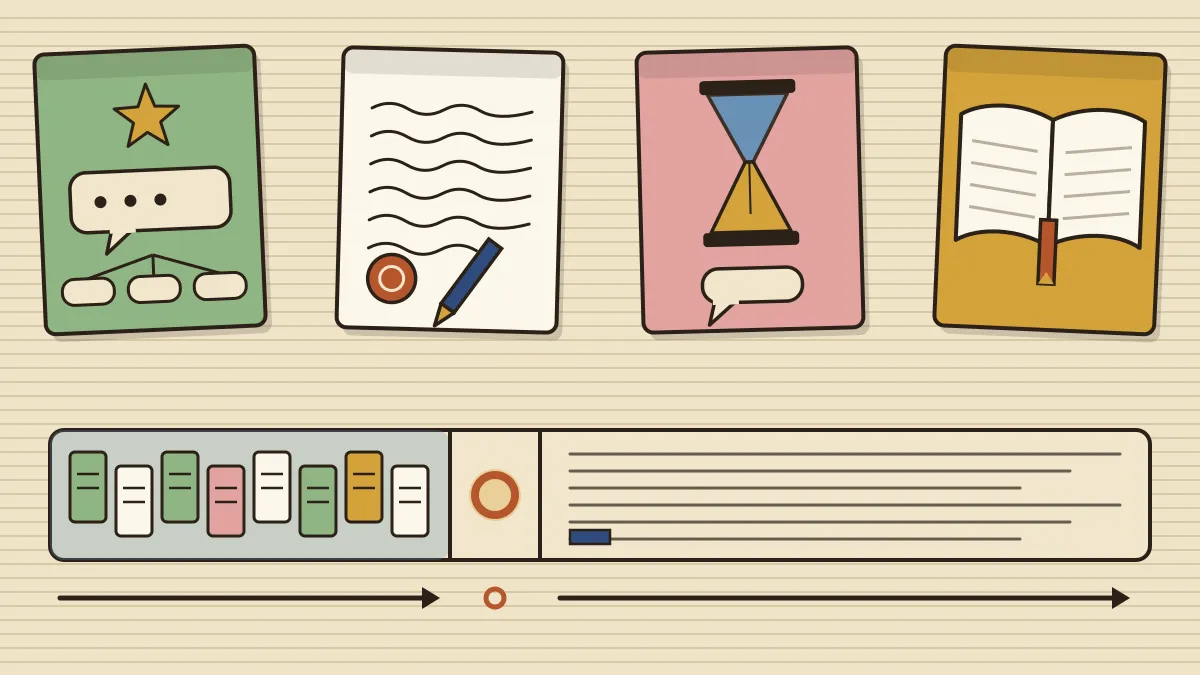
The first hour of every sitting is Question Hour. This is the member's main tool for holding the executive to account, because a minister must answer for the work of the department. Questions are of three kinds, and the printed lists are colour-coded.
| Type | Answer | Supplementaries? | List colour |
|---|---|---|---|
| Starred (marked with an asterisk) | Oral | Yes | Green |
| Unstarred | Written | No | White |
| Short notice (notice of less than ten days) | Oral | Yes | Light pink |
| To a private member (about a bill or resolution he or she is handling) | As for ministers | As for ministers | Yellow |
Zero Hour is the stretch from the end of Question Hour until the regular agenda begins. It is not mentioned in the Rules of Procedure. It is an informal device that lets members raise urgent matters without prior notice. It is an Indian innovation, and it has existed since 1962. Do not mistake it for the formal tools below.
| Device | What it is | Formal vote? |
|---|---|---|
| Calling attention | A member draws a minister's attention to a matter of urgent public importance and asks for an authoritative statement. An Indian procedural device of the 1950s, and it is in the Rules | No |
| Half-an-hour discussion | Clarifies a matter of fact on which an answer needs elucidation; the Speaker may allot up to three days a week | No |
| Short duration discussion | "Two-hour discussion" on an urgent public matter; in use since the early 1950s; up to two days a week | No |
| Notice (Mention) under Rule 377 in the Lok Sabha; Special Mention in the Rajya Sabha | Raises a matter that fits no other device | No |
Question Hour, Zero Hour, half-an-hour and short-duration discussions are not motions. No formal motion is moved and nothing is voted on. They give discussion without decision. A calling attention notice is a notice, not a vote either. The tools that end in a vote are the motions in the next section.
Motions: What Can Be Moved, and Against Whom
No discussion on a matter of general public importance can take place except on a motion made with the presiding officer's consent. The textbook grouping is by role. A substantive motion is self-contained (impeaching the President, removing the Chief Election Commissioner). A substitute motion proposes an alternative to an original one. A subsidiary motion makes no sense alone: it is ancillary, superseding, or an amendment. Examination questions, however, ask about the named motions.
| Motion | Purpose | Points to remember |
|---|---|---|
| Adjournment motion | Draws the House to a definite matter of urgent public importance | Needs 50 members to rise in support; at least 2 hours 30 minutes of discussion; an extraordinary device because it interrupts the day's business; carries an element of censure, so the Rajya Sabha cannot use it |
| No-confidence motion | Tests whether the Council of Ministers still has the Lok Sabha's confidence | Flows from Article 75(3); procedure in Rule 198 of the Lok Sabha rules; 50 members to be admitted; Lok Sabha only; need not state grounds; if passed, the ministry must resign |
| Censure motion | Condemns specific policies or actions | Must state reasons; can target one minister, a group or the whole Council; if passed, the Council need not resign |
| Confidence motion | The government itself asks the House to back it | Used with coalitions and thin majorities; if negatived, the government falls |
| Privilege motion | Alleges a minister breached the House's or a member's privilege by withholding or distorting facts | Its purpose is to censure that minister |
| Motion of Thanks | Discusses the President's address (Article 87) | Address is given at the first session after each general election and the first session of every year; the motion must be passed, or it counts as defeat of the government |
| No-day-yet-named motion | Admitted by the Speaker, but no date for discussion fixed yet | The Speaker later allots time, with the Business Advisory Committee |
| No-confidence motion | Censure motion | |
|---|---|---|
| Reasons stated? | Not needed | Needed |
| Against whom? | The entire Council of Ministers only | One minister, a group or the whole Council |
| Aim | To test the House's confidence | To condemn specific policies and actions |
| If passed | Government must resign | Government need not resign |
It must be definite, factual, urgent and of recent occurrence. It cannot cover more than one matter, revive a matter already discussed in the same session, raise a question of privilege, or touch a matter pending before a court. It must also concern the responsibility of the Union Government, so a purely State subject is out of order. The Chair keeps discretion to refuse consent.
Two more procedural tools matter. A point of order flags that the House is not following its own rules. It suspends proceedings, and no debate is allowed on it. A closure motion cuts a debate short, and it comes in four kinds:
- Simple closure: the matter "having been sufficiently discussed, be now put to vote".
- Closure by compartments: clauses of a long bill are grouped into blocks, and each block is debated and voted on as one.
- Kangaroo closure: only the important clauses are debated, and the clauses in between are skipped and taken as passed.
- Guillotine closure: when time runs out, the clauses not yet discussed are put to vote together.
A resolution differs from a motion: every resolution is a kind of substantive motion and must be voted on, while many motions are never put to the vote. Resolutions are private members' (Fridays), government (on other days) or statutory (moved under a provision of the Constitution or an Act).
When the Houses Disagree: Joint Sitting and Voting
Both Houses must pass an ordinary bill. If the second House rejects it, the Houses finally disagree on amendments, or six months pass without action, the President may summon a joint sitting (Article 108). Time when the other House is prorogued or adjourned for more than four consecutive days is not counted. Four rules decide most questions:
- Not for money bills or Constitution amendment bills. On a money bill, the Lok Sabha has the last word and the Rajya Sabha can only return it within 14 days. A Constitution amendment bill must pass each House separately.
- The Speaker presides, then the Deputy Speaker, then the Deputy Chairman of the Rajya Sabha. The Rajya Sabha's Chairman never presides because he is not a member of either House.
- The bill is passed by a majority of members present and voting at the joint sitting. The numbers usually favour the Lok Sabha.
- Since 1950 it has been used three times: the Dowry Prohibition Bill (joint sitting of 1961), the Banking Service Commission (Repeal) Bill (1978) and the Prevention of Terrorism Bill (2002).
Voting in general follows a simple pattern. Questions are decided by a majority of members present and voting, and the presiding officer does not vote in the first instance but uses a casting vote in a tie. Only a few matters named in the Constitution, such as impeaching the President, amending the Constitution or removing a presiding officer, need a special or an effective majority. If a member challenges the Speaker's ruling on a voice vote, the lobbies are cleared and a division is held, using the automatic vote recorder or slips. How Parliament scrutinises the government's spending is covered on our page on the financial committees of Parliament. Our anti-defection law page explains what happens when members cross the floor on exactly these votes.
How UPSC Has Asked It: Past Papers Solved
These are actual CDS and NDA questions. UPSC rarely asks "what is Zero Hour". It sets a statement and hides one wrong word, usually who can use it, how many members or what the House can do.
A motion of no-confidence is moved against
(a) an individual Minister. (b) the Council of Ministers. (c) the Prime Minister. (d) a political party.
Answer: (b). The Council of Ministers is collectively responsible to the Lok Sabha, so only the whole Council can face a no-confidence motion. An individual minister can be censured, which is the tempting wrong option.
Which one of the following statements about 'Motions' in the Parliament of India is correct?
(a) A Motion of No-Confidence can be admissible against an individual minister in the Council of Ministers. (b) A No-Confidence Motion must set out grounds on which it is based. (c) Rajya Sabha is not empowered to entertain a motion of No-Confidence. (d) A Censure Motion need not be based on specific grounds or charges.
Answer: (c). The Council answers only to the Lok Sabha. Option (a) is wrong because a no-confidence motion cannot target one minister. Options (b) and (d) are swapped: it is the censure motion that must state grounds, and the no-confidence motion that need not.
Which one among the following statements about an adjournment motion in the Parliament of India is not correct?
(a) Its objective is to draw attention of the House to any recent matter of urgent public importance. (b) Adjournment motion is an extraordinary procedure. (c) This motion can be invoked on any matter of urgent importance that may even be within the jurisdiction of a State Government. (d) The Chair has absolute discretion to refuse consent.
Answer: (c). The motion must concern the responsibility of the Union Government, so a matter within a State's jurisdiction is not admissible. Statements (a), (b) and (d) are true to the rules.
Which one among the following motions cannot be made while introducing an ordinary Bill in the Parliament?
(a) That the Bill be taken into consideration (b) That the Bill be circulated for the purpose of eliciting public opinion (c) That the Bill be referred to a Select Committee (d) That the Bill be referred to a Joint Committee of the House without the concurrence of the other House
Answer: (d). A joint committee involves both Houses, so one House cannot send a bill to it unilaterally. It needs the other House to agree. Taking a bill into consideration, circulating it and sending it to a Select Committee of the same House are all ordinary motions.
Which one of the following statements about a Bill for Amendment of the Constitution of India is not correct?
(a) It is governed by Article 368(2) of the Constitution of India. (b) Joint sitting can be resorted to for passing a Bill amending the Constitution of India. (c) The State Legislatures cannot initiate any Bill or proposal for amendment of the Constitution of India. (d) The previous sanction of the President of India is not required for introducing any Bill in the Parliament for amendment of the Constitution of India.
Answer: (b). A Constitution amendment bill must be passed by each House separately, with the required special majority. A joint sitting is available only for ordinary and financial bills.
Which one of the following statements regarding the Rajya Sabha is NOT correct?
(a) Its members are elected by the elected members of the Legislative Assembly of a State (b) The election follows the system of proportional representation by means of a single transferable vote (c) 1/3rd of its members retire after every two years (d) It is a permanent body, but can be dissolved earlier by the President
Answer: (d). The Rajya Sabha is a permanent House and is never dissolved. Only the Lok Sabha can be dissolved, either on completing five years or earlier by the President.
Which one of the following statements about the Parliament of India is correct?
(a) A majority of members of Rajya Sabha are elected by a system of proportional representation by means of single transferable vote (b) The Deputy Chairperson of the Rajya Sabha is nominated by the President from among the members of the Rajya Sabha (c) The Lok Sabha cannot be dissolved before the completion of its five year term (d) The members of Lok Sabha also vote in the election of the members of Rajya Sabha
Answer: (a). Elected members of the State legislatures choose most Rajya Sabha members by the single transferable vote. The Deputy Chairman is elected by the Rajya Sabha itself, the Lok Sabha can be dissolved early by the President, and Lok Sabha members do not vote for Rajya Sabha members.
Three habits cover most of these questions. Check the House: no-confidence and adjournment motions are Lok Sabha only. Check the target: no-confidence hits the whole Council, censure can hit one minister. Check the dissolution: only the Lok Sabha ends; the Rajya Sabha is permanent.
Practice MCQs (with answers)
- A starred question in Parliament requires
- a written answer only
- an oral answer, after which supplementary questions can follow
- no answer from the minister
- an answer only from the Speaker
- An adjournment motion can be admitted only if it is supported by at least
- 10 members
- 20 members
- 50 members
- 100 members
- Which of the following can be moved only in the Lok Sabha?
- A no-confidence motion
- A Motion of Thanks
- A calling attention notice
- A short duration discussion
- When the Lok Sabha is dissolved, which of the following bills does NOT lapse?
- A bill pending in the Lok Sabha
- A bill passed by the Lok Sabha but pending in the Rajya Sabha
- A bill from the Rajya Sabha pending in the Lok Sabha
- A bill pending in the Rajya Sabha that the Lok Sabha has not passed
- The maximum gap allowed between two sessions of Parliament is
- three months
- six months
- nine months
- twelve months
- Zero Hour in Parliament is
- a procedure laid down in the Constitution in 1950
- a period meant only for written answers
- a device available only in the Rajya Sabha
- an informal device that begins right after Question Hour and has existed since 1962
- A session of a House of Parliament is brought to an end by prorogation, which is done by
- the President
- the Speaker
- the Prime Minister
- the Chairman of the Rajya Sabha
- Under which kind of closure are the clauses of a bill that remain undiscussed when time runs out put to vote together?
- Simple closure
- Closure by compartments
- Guillotine closure
- Kangaroo closure
1-b, 2-c, 3-a, 4-d, 5-b, 6-d, 7-a, 8-c. Q3: the Council of Ministers is answerable only to the Lok Sabha, and a Motion of Thanks is moved in both Houses. Q4: only a bill that the Rajya Sabha holds and the Lok Sabha has not passed survives; the other three lapse. Q6: Zero Hour is not in the Rules of Procedure. Q8: kangaroo closure skips the in-between clauses, while the guillotine puts all the leftover clauses to vote together because time has run out.
Quick Revision
- G.V. Mavalankar: born 27 Nov 1888 in Baroda; first Speaker of the Lok Sabha, elected 15 May 1952; died 27 Feb 1956.
- Sessions: Budget (Feb to May), Monsoon (July to Sept), Winter (Nov to Dec). Gap between sessions: at most six months (Art 85). Quorum: one-tenth of the House, presiding officer included.
- Adjournment ends a sitting (presiding officer). Prorogation ends a session (President). Dissolution ends the Lok Sabha only; the Rajya Sabha is permanent.
- On dissolution, bills pending in the Lok Sabha, or passed by it and pending in the Rajya Sabha, lapse. A bill pending in the Rajya Sabha but not passed by the Lok Sabha, or awaiting assent, survives.
- Question Hour: starred (oral, green, supplementaries), unstarred (written, white), short notice (under 10 days, pink), private member (yellow). Zero Hour: informal, no notice, since 1962. Calling attention and short duration discussion: devices of the early 1950s.
- Adjournment motion: 50 members, Lok Sabha only, 2 hr 30 min, urgent matter of Union responsibility. No-confidence: Lok Sabha only, whole Council, no reasons needed, ministry resigns. Censure: reasons needed, one minister or more, no resignation.
- Closure: simple, compartments, kangaroo, guillotine. No debate on a point of order.
- Joint sitting (Art 108): ordinary and financial bills only; Speaker presides; used thrice (1961 Dowry Prohibition, 1978 Banking Service Commission, 2002 POTA).
Frequently asked questions
What is the difference between adjournment and prorogation?
Adjournment ends only a sitting and is ordered by the presiding officer of the House. Prorogation ends a whole session and is ordered by the President. Neither makes a pending bill lapse, although pending notices lapse on prorogation.
Is Zero Hour mentioned in the Constitution or the Rules of Procedure?
No. Zero Hour is an informal device that has existed in Indian practice since 1962. It starts right after Question Hour and lasts until the day's regular business begins, and members can raise urgent matters without prior notice.
What is the difference between a no-confidence motion and a censure motion?
A no-confidence motion is moved against the whole Council of Ministers in the Lok Sabha, need not state reasons, and the government must resign if it passes. A censure motion must state reasons, can be moved against one minister, a group or the whole Council, and the government need not resign if it passes.
Can the Rajya Sabha move an adjournment motion or a no-confidence motion?
No. The Council of Ministers is collectively responsible only to the Lok Sabha. Both motions carry an element of censure of the government, so the Rajya Sabha cannot use them.
Who was G.V. Mavalankar?
Ganesh Vasudev Mavalankar (born 27 November 1888 in Baroda) was the first Speaker of the Lok Sabha. He was elected on 15 May 1952 and held the post until he died on 27 February 1956. Earlier he had been Speaker of the Bombay Legislative Assembly and presided over the Central Legislative Assembly and the Provisional Parliament.
Related CDS / OTA Polity topics
Polity is a steady scorer in CDS GS
Cavalier's CDS/OTA batches teach Polity with a PYQ-first method, so statement questions on Parliament stop being guesswork.