Two PIB releases of 17 November 2026 put Parliament's chairs in the news. The Lok Sabha Speaker said that women's representation must extend from panchayats to Parliament, and hoped the Nari Shakti Vandan Adhiniyam would be implemented. In the Rajya Sabha, Chairman C.P. Radhakrishnan, who holds that chair as Vice-President, administered the oath to Shri Hardeep Singh Puri. Each House has its own presiding officer, and the two are chosen in very different ways. Examiners love the gap between them: a question such as "to whom does the Speaker resign" is won or lost on one rule. This article gives you the rules, the numbers and the traps.
Two Houses, Four Offices
By Aditya Tiwari · Polity faculty, The Cavalier · Lawyer, 10 years teaching law and Polity
The Constitution gives each House a pair of presiding officers. They are the Speaker and Deputy Speaker of the Lok Sabha (Articles 93 to 97) and the Chairman and Deputy Chairman of the Rajya Sabha (Articles 89 to 92).
| Office | Who chooses | Resigns to | Removed by |
|---|---|---|---|
| Speaker | Elected by the Lok Sabha from among its members; the President fixes the date | The Deputy Speaker | Resolution of the Lok Sabha passed by a majority of all the then members, with 14 days' notice |
| Deputy Speaker | Elected by the Lok Sabha after the Speaker; the Speaker fixes the date | The Speaker | Same resolution, same notice |
| Chairman, Rajya Sabha | The Vice-President of India, ex officio; not a member of the House | As Vice-President, to the President | Only by removal as Vice-President |
| Deputy Chairman | Elected by the Rajya Sabha from among its members | The Chairman | Resolution of the Rajya Sabha, majority of all the then members, 14 days' notice |
The offices have colonial roots. The Government of India Act, 1919 created a President and Deputy President for the central legislative assembly from 1921. In 1925 Vithalbhai J. Patel became its first Indian, and first elected, President. The 1935 Act renamed the posts Speaker and Deputy Speaker. G.V. Mavalankar was the first Speaker of the Lok Sabha (1952 to 1956) and M. Ananthasayanam Ayyangar the first Deputy Speaker.
| Speaker | Remember him or her for |
|---|---|
| G.V. Mavalankar | First Speaker of the Lok Sabha |
| Balram Jakhar | Longest-serving Speaker: two full terms, 1980 to 1989 |
| Meira Kumar | First woman Speaker (15th Lok Sabha, 2009 to 2014) |
The Speaker: Election, Tenure and Removal
The Speaker is elected "as soon as may be" after the new House first meets. Before that, the President appoints a Speaker pro tem, usually the senior-most member, and administers his oath himself. The pro tem presides over the first sitting, swears in the new members and helps the House elect its Speaker. When the Speaker is elected, the office of pro tem simply ceases to exist.
The Speaker normally stays for the whole life of the House. When the Lok Sabha is dissolved, the Speaker does not leave office but continues until the new House meets. The Speaker leaves earlier in only three cases:
- ceasing to be a member of the Lok Sabha;
- resignation, in writing to the Deputy Speaker;
- removal by a resolution passed by a majority of all the then members of the House, after 14 days' notice.
Under the rules, a motion to remove the Speaker is admitted only when at least 50 members support it. While it is under discussion the Speaker may not preside, but may attend, speak and even vote in the first instance (not in a tie).
The Lok Sabha has 543 seats, but three are vacant, so 540 members are in office. A resolution to remove the Speaker is moved. What is the smallest number of votes in favour that can carry it?
"Majority of all the then members" is an effective majority: higher than a simple majority of those present and voting. The Speaker, Deputy Speaker and Deputy Chairman are removed by this standard, and so is the Vice-President (with the Lok Sabha's agreement).
What the Speaker Decides
The Speaker is the head and spokesperson of the Lok Sabha and the guardian of its members' rights. The powers come from the Constitution, the House's Rules of Procedure and parliamentary convention. The most examinable are these:
- Order. The Speaker maintains order and decorum, and the courts cannot question how the House's proceedings are regulated.
- Money Bill. The Speaker decides whether a bill is a Money Bill and endorses a certificate on it. The decision is final, and the Rajya Sabha can only return such a bill, with or without recommendations, within 14 days.
- Joint sitting. Presides over a joint sitting of both Houses, called by the President to settle a deadlock on a bill.
- Defection. Under the Tenth Schedule the Speaker decides whether a Lok Sabha member is disqualified for defection. The Supreme Court held in 1992 (Kihoto Hollohan) that the decision can be reviewed by the courts, and said in 2020 that such petitions should ordinarily be decided within three months. See our anti-defection law page.
- Committees. The Speaker appoints committee chairmen and chairs the Business Advisory, Rules and General Purposes Committees.
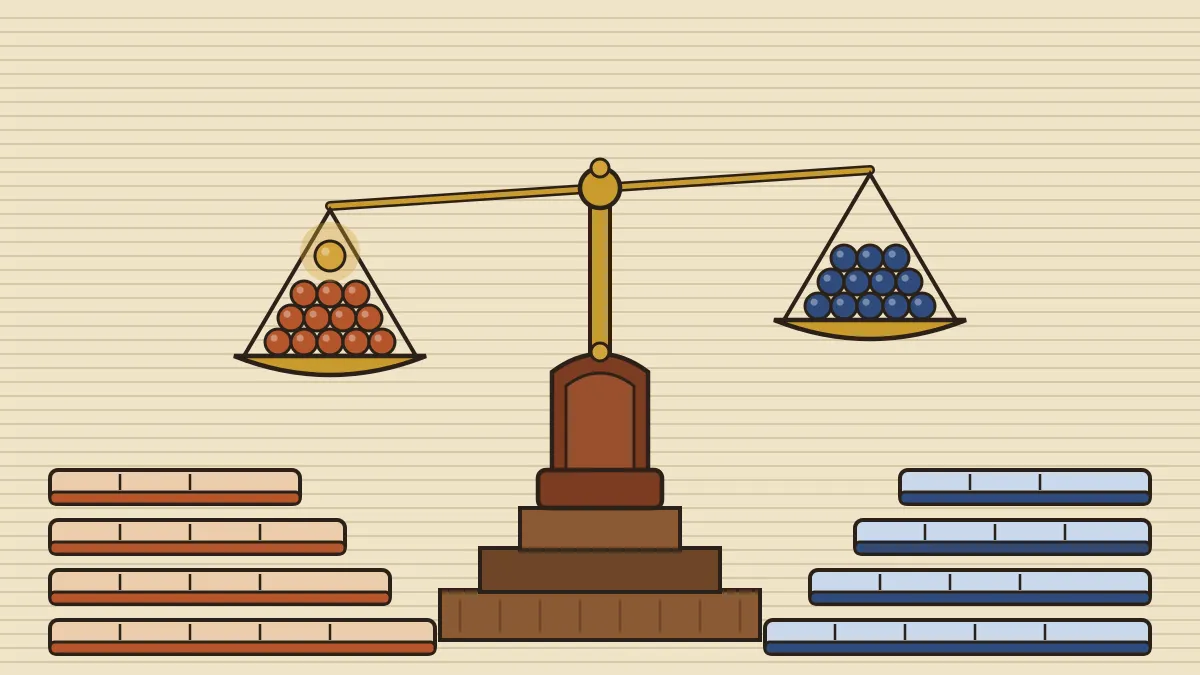
The casting vote. The Speaker does not vote in the first instance. If the House divides equally, the Speaker votes once. That is the casting vote (Article 100), and it exists to break a deadlock. Convention favours the status quo, so that a tie normally defeats a change, but this is a convention, not a rule, and the word "always" in an option should make you suspicious. The other three presiding officers have the same limit when in the chair.
Independence. A Speaker belongs to a party but must be impartial, so the office is protected. Removal needs the special resolution above. The salary is fixed by Parliament and charged on the Consolidated Fund, so there is no annual vote on it. The Speaker's conduct can be discussed only on a substantive motion, and the Speaker ranks seventh in the order of precedence, alongside the Chief Justice of India. In Britain the Speaker quits the party; in India the Speaker does not, and takes no separate oath as Speaker.
Deputy Speaker. The Deputy Speaker is elected after the Speaker and performs the Speaker's duties when the office is vacant or the Speaker is absent. He is not subordinate to the Speaker but directly responsible to the House. If he is appointed to a parliamentary committee he becomes its chairman automatically. By convention, since the early 1990s, the post has gone to a member of the main opposition party, though the convention is not always followed. The 17th Lok Sabha (2019 to 2024) ran its whole term without electing one. If both offices are vacant, a member named by the President acts as Speaker, and the panel of chairpersons (up to ten) cannot take over.
The Speaker's statement on women's seats ties to our Nari Shakti Vandan Adhiniyam page, and bills and joint sittings are on the parliamentary procedures page.
The Rajya Sabha Chairman: An Outsider in the Chair
The Rajya Sabha's chair is held by someone who is not its member. The Vice-President, elected by an electoral college of both Houses, is ex officio Chairman. The Chairman votes only in a tie, and is removed only if he ceases to be Vice-President: a resolution of the Rajya Sabha passed by a majority of all the then members and agreed to by the Lok Sabha, again with 14 days' notice. While such a resolution is under discussion he cannot preside and, unlike the Speaker, cannot vote even in the first instance, though he may speak. When the Vice-President acts as President, the Deputy Chairman performs the Chairman's duties.
| Point | Speaker, Lok Sabha | Chairman, Rajya Sabha |
|---|---|---|
| Member of the House? | Yes | No; the Vice-President |
| Certifies a Money Bill? | Yes | No |
| Presides over a joint sitting? | Yes | No |
| Votes | Casting vote only; may vote in the first instance while own removal is pending | Casting vote only; no vote at all while removal is pending |
| Removal | Resolution of the Lok Sabha | Only by removal as Vice-President |
| Salary | Fixed by Parliament and charged on the Consolidated Fund | |
The Deputy Chairman is chosen by the Rajya Sabha from its own members. He is not nominated by the President. The Rajya Sabha itself is a permanent House that is never dissolved, with one-third of its members retiring every second year.
Only the Speaker (1) certifies a Money Bill and (2) presides over a joint sitting. They are the usual "not a power of the Chairman" answer. Seat numbers and the two Houses' make-up are on our parliamentary composition page.
How UPSC Has Asked It: Past Papers Solved
These are actual CDS and NDA questions. The commonest traps are who receives the resignation, the first-instance vote, and who decides defection.
Which one of the following statements about the Speaker of Lok Sabha is not correct?
(a) He shall vacate his office if he ceases to be a member of the House of the People. (b) He may, at any time, resign by writing his resignation to the President of India. (c) He may be removed from his office by a resolution of the House of the People passed by majority of all the then members of the House. (d) While the office of the Speaker is vacant, the duties of the office shall be performed by the Deputy Speaker.
Answer: (b). The Speaker resigns by writing to the Deputy Speaker, not the President. The other three statements follow Articles 94 and 95.
Which of the following statements regarding the 'casting vote' in the Parliament is/are correct? • It is cast by the Speaker or a person acting as such. • It is cast in addition to voting in the first instance. • It is cast in the case of equality of votes. • It is always cast to maintain the status quo.
(a) 1, 2 and 3 only (b) 1 and 3 only (c) 2 and 4 only (d) 3 only
Answer: (b). Statements 1 and 3 are right. Statement 2 is wrong because the presiding officer does not vote at all in the first instance. Statement 4 is wrong because the status quo is a convention, not a rule that applies "always".
Consider the following: • M.A. Ayyangar • G.S. Dhillon • Balram Jakhar • P.A. Sangma. How many of them were the Speaker of the Lok Sabha?
(a) 1 (b) 2 (c) 3 (d) 4
Answer: (d). Ayyangar (1956 to 1962), Dhillon (1969 to 1975), Jakhar (1980 to 1989) and Sangma (1996 to 1998) all held the chair.
Any question pertaining to the disqualification of a member of the Lok Sabha on the ground of defection is decided by:
(a) The President of India (b) The Speaker of the Lok Sabha (c) The Supreme Court of India (d) The concerned Political Party
Answer: (b). The Tenth Schedule gives the decision to the Speaker (the Chairman for Rajya Sabha members). The Supreme Court can review the Speaker's order but does not decide in the first place.
Which one of the following statements about the Parliament of India is correct?
(a) A majority of members of Rajya Sabha are elected by a system of proportional representation by means of single transferable vote (b) The Deputy Chairperson of the Rajya Sabha is nominated by the President from among the members of the Rajya Sabha (c) The Lok Sabha cannot be dissolved before the completion of its five year term (d) The members of Lok Sabha also vote in the election of the members of Rajya Sabha
Answer: (a). Rajya Sabha members from the States are elected by the State legislative assemblies through the single transferable vote. Option (b) is false: the Deputy Chairman is elected by the Rajya Sabha. Option (c) is false because the Lok Sabha can be dissolved early. Option (d) is false because Lok Sabha members do not vote in these elections.
Questions here usually hang on one swapped word: resigns to the President (wrong) or Deputy Speaker (right); nominated (wrong) or elected (right); first instance (wrong) or tie (right).
Practice MCQs (with answers)
- The Speaker of the Lok Sabha submits his or her resignation to
- the President
- the Deputy Speaker
- the Prime Minister
- the Chairman of the Rajya Sabha
- Who presides over the first sitting of a newly elected Lok Sabha?
- The outgoing Speaker
- The Deputy Speaker
- The Speaker pro tem
- The Prime Minister
- A resolution to remove the Speaker must be passed by
- a simple majority of members present and voting
- two-thirds of members present and voting
- a majority of all the then members, without notice
- a majority of all the then members, after 14 days' notice
- The Chairman of the Rajya Sabha is
- the Vice-President of India, ex officio
- elected by the Lok Sabha
- nominated by the Prime Minister
- the senior-most member of the Rajya Sabha
- Which of these powers belongs to the Speaker but not to the Chairman of the Rajya Sabha?
- Casting a vote in a tie
- Certifying a bill as a Money Bill
- Maintaining order in the House
- Adjourning the House for want of quorum
- The Deputy Speaker
- is directly responsible to the House and is not subordinate to the Speaker
- is appointed by the Speaker
- is appointed by the President
- can never preside over the House
- The Lok Sabha has 540 members in office. At least how many votes are needed to carry a resolution to remove the Speaker?
- 180
- 270
- 271
- 361
- The Deputy Chairman of the Rajya Sabha resigns by writing to
- the President
- the Speaker
- the Secretary-General
- the Chairman
1-b, 2-c, 3-d, 4-a, 5-b, 6-a, 7-c, 8-d. Q3: an effective majority and 14 days' notice. Q5: the casting vote, order and quorum powers are shared by both presiding officers; only the Speaker certifies Money Bills. Q7: more than half of 540 is 271, and vacant seats are not counted. Q8: the Deputy Chairman writes to the Chairman, just as the Deputy Speaker writes to the Speaker.
Quick Revision
- Lok Sabha: Speaker and Deputy Speaker, both elected by the House (Articles 93-97). Rajya Sabha: Chairman (the Vice-President, ex officio, not a member) and Deputy Chairman (elected by the House) (Articles 89-92).
- Speaker resigns to the Deputy Speaker; the Deputy Speaker resigns to the Speaker. Removal: majority of all the then members, 14 days' notice, at least 50 members to admit the motion.
- After dissolution the Speaker stays on until the new House meets. The Speaker pro tem is appointed by the President, presides at the first sitting and swears in members.
- No vote in the first instance; casting vote in a tie (Article 100). The Speaker may vote in the first instance while the Speaker's own removal is pending, but the Chairman may not.
- Only the Speaker: certifies a Money Bill, presides at a joint sitting. Also decides Tenth Schedule disqualification (judicially reviewable, Kihoto Hollohan, 1992).
- Deputy Speaker is not subordinate to the Speaker; becomes chairman of any committee he joins. Salaries are charged on the Consolidated Fund. Speaker ranks seventh in precedence.
- First Speaker: Mavalankar. Longest-serving: Jakhar. First woman: Meira Kumar.
Frequently asked questions
Who elects the Speaker of the Lok Sabha?
The Lok Sabha elects its Speaker from among its own members soon after a new House first meets, on a date fixed by the President. The Speaker usually stays for the whole life of the House and continues after dissolution until the new House meets.
How can the Speaker be removed?
The Speaker can be removed by a resolution of the Lok Sabha passed by a majority of all the then members of the House, after 14 days' notice. A simple majority of those present is not enough. While the resolution is being discussed the Speaker cannot preside, though the Speaker can attend, speak and vote in the first instance.
What is a casting vote?
A casting vote is the vote the presiding officer casts only when the House divides equally. The Speaker, Deputy Speaker, Chairman and Deputy Chairman do not vote in the first instance, so the casting vote lets them break a tie without taking a side in every division.
Is the Chairman of the Rajya Sabha a member of the House?
No. The Vice-President of India is the ex officio Chairman of the Rajya Sabha and is not a member of it, unlike the Speaker, who is a member of the Lok Sabha. The Chairman can be removed only by being removed as Vice-President.
What are the special powers of the Speaker that the Chairman does not have?
The Speaker decides whether a bill is a Money Bill, and the decision is final. The Speaker also presides over a joint sitting of the two Houses. The Chairman of the Rajya Sabha has neither power, though most other powers of the two officers are similar.
Related CDS / OTA Polity topics
Polity is a fifth of the CDS GS paper
Cavalier's CDS/OTA batches teach polity article by article, with weekly PYQ tests and a revision file for every chapter.