On 27 November 2026 the Ministry of Environment, Forest and Climate Change announced that the National Biodiversity Authority (NBA) had paid out Rs 13.76 crore to 28 States and 4 Union Territories. The money came from AYUSH product companies that used 234 plant species commercially, including ashwagandha, guggul and black pepper. It is called Access and Benefit Sharing (ABS), and it is meant to flow to the places that conserve those plants. The release also ties the practice to the global framework agreed at the CBD COP-17 in Yerevan in October 2026. For the exam this is a chain of linked facts: a global treaty, a national law, three tiers of institutions and a payment rule. CDS and NDA ask about every link, and the commonest slips are the treaty names, the institutions and the location of their headquarters. This article joins the links in order.
The Global Layer: CBD, Nagoya and Cartagena
By Akanksha Kumari · Science faculty, The Cavalier · B.Tech, 15 years teaching Science
Before 1992, the world's wild genes were treated as a common heritage: anyone could collect a seed or a leaf in a forest and take it home. The Convention on Biological Diversity (CBD), opened for signature at the Rio Earth Summit in 1992 and in force since 29 December 1993, reversed this. Each country now has sovereign rights over the biological resources within its borders. The CBD has three objectives: conservation of biological diversity, sustainable use of its components, and fair and equitable sharing of the benefits of genetic resources. Two protocols and one framework add the details.
| Instrument | What it does | Key facts |
|---|---|---|
| Cartagena Protocol on Biosafety | Governs the safe transfer, handling and use of living modified organisms (GM organisms) | Adopted in 2000; in force 2003; named for Cartagena, Colombia |
| Nagoya Protocol on Access and Benefit Sharing | Turns the CBD's third objective into rules: prior informed consent of the source country and mutually agreed terms on sharing benefits | Adopted at COP-10 in Nagoya, Japan (2010); in force 12 October 2014; India ratified in October 2012, during COP-11 in Hyderabad |
| Kunming-Montreal Global Biodiversity Framework | The 2030 plan: 23 targets, including protecting 30 per cent of land and sea (30 by 30) | Adopted in December 2022 at COP-15; Target 13 is fair and equitable benefit sharing |
Cartagena is about biosafety (GM organisms). Nagoya is about access and benefit sharing (who gets paid for genetic resources). Kyoto is about greenhouse gases, and Ramsar about wetlands. UPSC has asked "where is the Biosafety Protocol from?" in both CDS and NDA.
The treaty story continues. The 2026 meeting in Yerevan (COP-17, 19 to 30 October) produced the Yerevan Pathway on resource mobilisation and faster implementation of the targets, and our note on India's statement at COP-17 explains where India stood.
Why India Needed a Law: Biopiracy
India holds about 8 per cent of the world's recorded species on roughly 2.4 per cent of its land, and it is one of the world's megadiverse countries. Four of the world's 36 biodiversity hotspots touch India: the Himalaya, the Indo-Burma region, the Western Ghats with Sri Lanka, and Sundaland (the Nicobar Islands). Much of that wealth is also knowledge: the uses of turmeric, neem, ashwagandha and thousands of other plants, handed down over generations.
The danger was biopiracy: patenting a use that local communities already knew. Two cases stand out.
- Turmeric. A US patent on the wound-healing use of turmeric was granted to a US university medical centre in the mid-1990s. India's CSIR challenged it with ancient Sanskrit and Hindi texts, and the patent was revoked in 1997.
- Neem. The European Patent Office granted a patent on a neem-based fungicide (to the US Department of Agriculture and a US company) in 1994. After a long challenge from Indian and international groups, it was revoked in 2000 and the revocation was upheld on appeal in 2005.
These cases pushed India to document its traditional knowledge in the Traditional Knowledge Digital Library (TKDL), begun in 2001, so that patent examiners can find prior art. They also pushed it to turn the CBD into domestic law: the Biological Diversity Act, 2002, with rules following in 2004. The Act sits beside the Wildlife Protection Act and the Forest Rights Act as one of the three pillars of India's biodiversity law. The first protects species, the second protects community rights, and this Act regulates commercial use and benefit sharing.
Three Tiers: NBA, State Biodiversity Boards and Biodiversity Management Committees
The Act builds a three-level structure, from Chennai to the village.
| Tier | Body | Job |
|---|---|---|
| National | National Biodiversity Authority (NBA), statutory and autonomous, set up in 2003, headquartered in Chennai, under the Environment Ministry | Approves access by foreign entities and applications for intellectual property rights; decides benefit-sharing terms; advises the Government |
| State | State Biodiversity Boards (SBBs); Union Territories have biodiversity councils | Receives notice from Indians who use resources commercially; regulates access in the State; advises on heritage sites |
| Local | Biodiversity Management Committees (BMCs) in every local body (panchayats and municipalities) | Conserves and sustainably uses local resources; prepares the People's Biodiversity Register, a record of local plants, animals and knowledge |
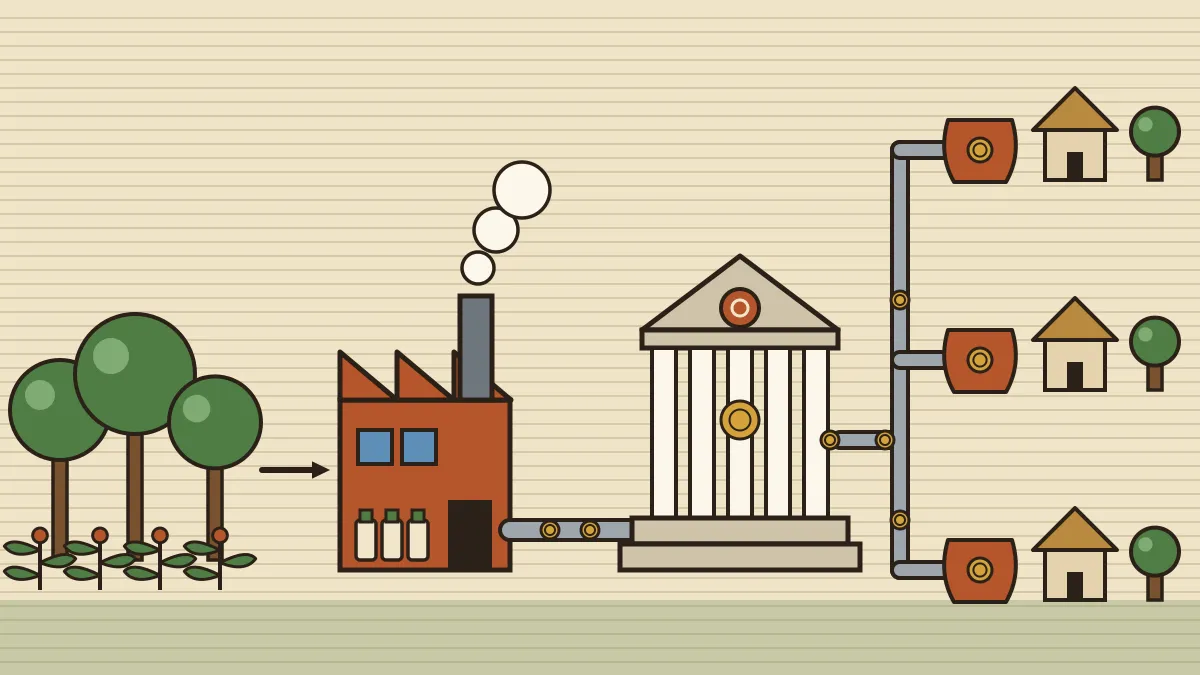
Two more provisions complete the structure. A State Government can notify an area of rich biodiversity as a Biodiversity Heritage Site (Section 37), in consultation with local bodies. The first was the Nallur Tamarind Grove near Bengaluru, in 2007. The Central Government can also notify threatened species (Section 38), and trade in them is then restricted. Note that a Heritage Site is not a protected area like a national park: it leaves ownership and use with the community.
NBA = national and in Chennai. SBB = State. BMC = village or town. The Authority decides the big approvals, the Board the State ones, and the committee keeps the register that proves who knows and conserves what.
Access and Benefit Sharing: Who Needs Approval
The Act separates who is asking from what they want to do.
| Who | For what | Requirement |
|---|---|---|
| Foreign nationals, NRIs, and companies not registered in India or with foreign participation in share capital or management | Obtaining a biological resource or its associated knowledge from India (research, commercial use, bio-survey) | Prior approval of the NBA (Section 3) |
| Anyone | Applying for an intellectual property right, in or outside India, on an invention using Indian biological resources | Prior approval of the NBA (Section 6; after the 2023 amendment, before the right is granted) |
| Indian citizens and companies | Commercial use of a biological resource | Prior intimation to the State Biodiversity Board (Section 7); the Board may impose benefit sharing |
| Local people and communities, growers, and traditional healers (vaids and hakims) | Using the resources for livelihood or practising indigenous medicine | Exempt |
When approval is given, the NBA fixes terms on benefit sharing (Section 21). The Act allows several forms: a monetary payment or royalty, joint ownership of the intellectual property, transfer of technology, setting up research or production units in the area, and involving Indian scientists. The aim is that the community that conserved a plant shares in the profit when someone sells a product made from it.
The Biological Diversity (Amendment) Act, 2023 loosened the regime, which is the part most likely to appear in a current-affairs question:
- Offences decriminalised. Jail terms were replaced by civil penalties, in a range of roughly Rs 1 lakh to Rs 50 lakh.
- More exemptions from benefit sharing: users of codified traditional knowledge, cultivated medicinal plants, and registered AYUSH practitioners.
- Intellectual property approval from the NBA is now needed before the right is granted, not before the application is filed. The aim stays the same: access in return for a share of the benefits.
(1) The NBA is in Chennai, not Delhi. (2) Foreign entities need the NBA; Indian companies only inform the State Board. (3) Local communities and vaids are exempt. (4) A Biodiversity Heritage Site is declared by the State Government, not the NBA. (5) The Act is 2002, the amendment is 2023, and the Nagoya Protocol is 2010.
The News: Where the Rs 13.76 Crore Goes
The 27 November release spells out how the payment rule works in practice. The Rs 13.76 crore comes from three ABS applications by AYUSH manufacturers covering 234 plant species. Because these plants came through traders and markets, the individual collectors could not be identified. So the NBA divided the money among States using State forest cover and the occurrence of medicinal plants, on the logic that most medicinal plants come from forest areas.
- Ten species account for Rs 6.45 crore of the total: guggul, ashwagandha, bhringraj, punarnava, sarpagandha, kalmegh, black pepper, Indian gooseberry (amla), gokhura and shalparni.
- The largest shares went to Maharashtra (about Rs 1.75 crore), then Arunachal Pradesh (about Rs 94 lakh), Andhra Pradesh (about Rs 88 lakh), Karnataka, Kerala and Odisha.
- The money can be used for strengthening BMCs, updating People's Biodiversity Registers, documenting traditional knowledge, community-led conservation, restoring degraded ecosystems and sustainable harvesting.
- In all, the NBA has collected about Rs 278 crore through ABS and disbursed about Rs 218.86 crore.
What fraction of the Rs 13.76 crore came from the ten species, and what share of the Rs 278 crore collected has been disbursed so far?
This payment is one of several. An earlier one, in July 2026, came from a company's research on cotton varieties; see our notes on the NBA and ABS in July 2026. For India's wider conservation geography, see our conservation page.
How UPSC Has Asked It: Past Papers Solved
UPSC does not ask for section numbers. It asks which convention does what, which index counts what, and which human practice helps or harms diversity.
Which one of the following cities is associated with Biosafety Protocol to the Convention on Biological Diversity (2000)?
(a) Geneva (b) Nairobi (c) Cartagena (d) Rio de Janeiro
Answer: (c). The Cartagena Protocol on Biosafety (2000) is the CBD's protocol on living modified organisms. Rio de Janeiro is the tempting option because the CBD itself was opened there in 1992.
The city of Cartagena, which is famous for Protocol on Biosafety, is located in
(a) Colombia (b) Venezuela (c) Brazil (d) Guyana
Answer: (a). Cartagena is a port city in Colombia, on the Caribbean coast.
Which one of the following statements about biodiversity is not correct?
(a) The term 'biodiversity' was coined by Walter G. Rosen in 1986. (b) The term 'biodiversity hotspots' was coined by Norman Myers in 1988. (c) The regions having richest biodiversity are called 'biodiversity hotspots'. (d) More than 100 hotspots of biodiversity are identified in the world.
Answer: (d). There are only 36 recognised hotspots, not more than 100. The other three statements are standard textbook facts.
Which one of the following is NOT a reason of decrease in biodiversity?
(a) Large scale deforestation (b) Exploitation of forest produce (c) Maintaining sacred groves (d) Encroachment in forest areas
Answer: (c). Sacred groves are patches of forest protected by communities on religious grounds, and they preserve biodiversity. The other three damage it.
Which organisation publishes worldwide list of endangered species?
(a) The International Union for Conservation of Nature (IUCN) (b) The World Wide Fund for Nature (WWF) (c) The United Nations Environment Programme (UNEP) (d) The United Nations Development Programme (UNDP)
Answer: (a). The IUCN's Red List grades species from Least Concern up to Extinct. WWF campaigns, but it does not keep the official list.
The 'Ramsar Convention' relates to which one of the following areas?
(a) Wetland preservation (b) Promote afforestation (c) Action plan on climate change (d) Combat desertification
Answer: (a). Ramsar (1971) protects wetlands of international importance. Desertification is the UNCCD, and climate action belongs to the UNFCCC.
Pair each treaty with its one word: CBD (diversity), Cartagena (biosafety, Colombia), Nagoya (access and benefit sharing, Japan), Ramsar (wetlands), CITES (trade in species), UNCCD (desertification), Kyoto (greenhouse gases). Most treaty questions can be solved from that list alone.
Practice MCQs (with answers)
- The National Biodiversity Authority is headquartered at
- New Delhi
- Bhopal
- Dehradun
- Chennai
- Under the Biological Diversity Act, the body set up at village and town level is the
- Biodiversity Management Committee
- State Biodiversity Board
- National Biodiversity Authority
- Gram Sabha Council
- The Nagoya Protocol deals with
- trade in endangered species
- protection of wetlands
- access to genetic resources and fair sharing of the benefits
- protection of the ozone layer
- The Cartagena Protocol is concerned with
- access and benefit sharing
- the safe handling of living modified organisms
- carbon emissions
- desertification
- Under the Act, a foreign company that wants to obtain a biological resource from India for research must first get approval from the
- National Biodiversity Authority
- local Biodiversity Management Committee alone
- Gram Panchayat
- Supreme Court
- A Biodiversity Heritage Site is notified by the
- National Biodiversity Authority alone
- IUCN
- President of India
- State Government, in consultation with local bodies
- In the 27 November 2026 release, the NBA divided the ABS money among States mainly on the basis of
- population
- area under agriculture
- State forest cover and occurrence of medicinal plants
- number of BMCs
- The first Biodiversity Heritage Site declared in India was
- Dialong Village
- Nallur Tamarind Grove
- Ameenpur Lake
- Majuli Island
1-d, 2-a, 3-c, 4-b, 5-a, 6-d, 7-c, 8-b. Q2: the BMC works in a panchayat or municipality, the SBB works at State level. Q4: Cartagena covers GM organisms, and Nagoya is the one for benefit sharing. Q5: foreign entities need NBA approval; Indian entities only inform the State Board. Q6: heritage sites are a State notification, not an NBA one. Q7: the release says forest cover and medicinal plants were used because the collectors could not be traced.
Quick Revision
- CBD: Rio 1992, in force 29 Dec 1993; three goals (conserve, use sustainably, share benefits). Countries have sovereign rights over their resources.
- Cartagena (2000, Colombia): biosafety, GM organisms. Nagoya (2010, Japan; in force 2014; India ratified 2012): ABS through prior informed consent and mutually agreed terms. Kunming-Montreal (2022): 23 targets, 30 by 30, Target 13 = benefit sharing.
- Act: Biological Diversity Act, 2002 (rules 2004); amended 2023.
- Tiers: NBA (national, Chennai, 2003), State Biodiversity Boards, Biodiversity Management Committees (local; keep the People's Biodiversity Register).
- Foreign entities and IPR applications: NBA approval (S3, S6). Indian entities: intimate the SBB (S7). Local communities and vaids: exempt. Benefit sharing: S21.
- Heritage sites: S37, State Government; first = Nallur Tamarind Grove (2007). Threatened species: S38.
- 2023 amendment: offences decriminalised (penalties); exemptions for codified traditional knowledge, cultivated medicinal plants and AYUSH practitioners.
- News: Rs 13.76 crore to 28 States and 4 UTs; 234 species; ten species = Rs 6.45 crore; Maharashtra largest; total collected about Rs 278 crore, disbursed about Rs 218.86 crore. Biopiracy: turmeric patent revoked 1997, neem 2000; TKDL since 2001. Hotspots: 36 in the world, 4 touch India.
Frequently asked questions
What is the Biological Diversity Act, 2002?
The Biological Diversity Act, 2002 is India's law to give effect to the Convention on Biological Diversity. It regulates access to India's biological resources and associated knowledge, requires fair sharing of the benefits, and sets up the National Biodiversity Authority, State Biodiversity Boards and local Biodiversity Management Committees.
What is access and benefit sharing (ABS)?
ABS is the rule that anyone who uses a biological resource or traditional knowledge from a country for research or commercial gain must get permission and share the resulting benefits with the country and the communities that conserved it. The Nagoya Protocol (2010) is the international instrument, and the Biological Diversity Act is the Indian one.
What is the difference between the Nagoya Protocol and the Cartagena Protocol?
Both are protocols to the Convention on Biological Diversity. The Cartagena Protocol (2000) is about biosafety and the movement of living modified organisms. The Nagoya Protocol (2010) is about access to genetic resources and the fair sharing of benefits from using them.
What are the National Biodiversity Authority, SBBs and BMCs?
The National Biodiversity Authority is the national statutory body, headquartered in Chennai. State Biodiversity Boards work at State level, and Biodiversity Management Committees are set up in every local body to conserve resources and prepare People's Biodiversity Registers.
Who is exempt from benefit sharing under the Act?
Local people and communities, including growers and cultivators, and traditional healers such as vaids and hakims are exempt. The 2023 amendment widened the exemptions to cover users of codified traditional knowledge, cultivated medicinal plants and registered AYUSH practitioners.
Related CDS / OTA Science topics
Environment questions appear in every CDS paper
Cavalier's CDS/OTA batches teach Science and Environment with a PYQ-first method, so conventions, acts and agencies stop being a jumble of names.