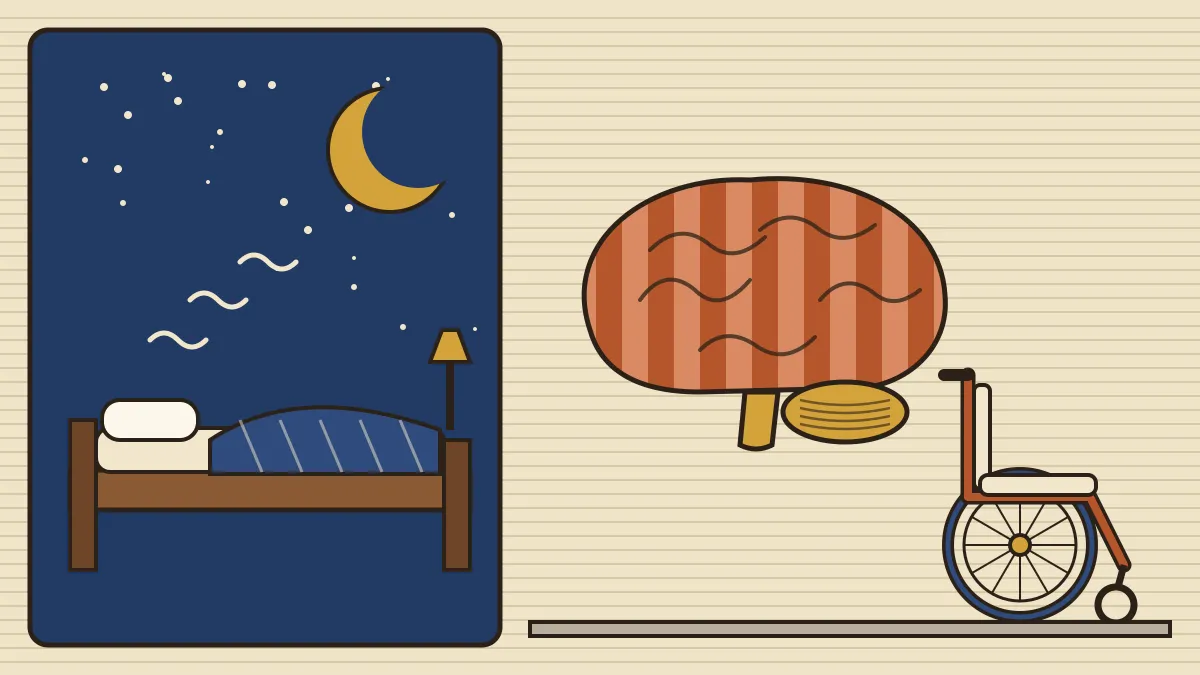
Medical research is often reported as a single breakthrough. A better picture of how a country builds its health science comes from a visit to one campus where many strands meet. On 22 November 2026, the Union Health Secretary, Smt. Punya Salila Srivastava, spent a day at the Indian Institute of Technology (IIT) Madras. She inaugurated a Sleep Study Facility and an Autism Lab, flagged off an E-cart Ambulance, and toured the Institute's brain-research, cancer-biobank and assistive-technology centres, according to a Press Information Bureau release.
For an exam candidate, the visit is a handy tour of five ideas: sleep science, a traditional-medicine research project, brain mapping, India-specific cancer genomics and affordable assistive devices. This article takes them one at a time and supplies the science that goes with each.
What was inaugurated
- Sleep Study Facility. It is housed in the Campus Health Centre and will assess, advise on and treat sleep-related disorders among students, faculty, staff and researchers. Specialists associated with Kauvery Hospitals, Chennai, support it. Subject to ethics approval and informed consent, it will also enable research on sleep patterns and the different types of sleep disorder, and the faculty intend to build indigenous, low-cost sensors for sleep monitoring.
- Autism Lab. It studies Integrated Varmam Therapy for children with Autism Spectrum Disorder (ASD). It is part of the groundwork for a planned Centre for Indian Medical Knowledge (CIMK) at IIT Madras.
- E-cart Ambulance. A campus wellness service at the Institute Hospital, meant for timely help and transport within the campus, especially for elderly members and patients needing assistance.
The release is careful to say that the autism work is a study: the Institute proposes to evaluate the therapy scientifically, and it carries the phrase "subject to requisite ethical approvals". That is worth remembering, because it describes research, not a proven treatment.
Sleep: why a campus needs a sleep clinic
Sleep is controlled by the body's internal clock, and exam preparation shows how fragile it is. NCERT's Class 11 Biology explains the hormonal side. The pineal gland secretes melatonin, which "plays a very important role in the regulation of a 24-hour (diurnal) rhythm of our body", including the sleep-wake cycle and body temperature. Other chemical messengers do other jobs. The adrenal medulla releases epinephrine and norepinephrine, which increase alertness and heart rate. The thyroid sets the basal metabolic rate. The pancreas controls blood sugar through insulin and glucagon.
The same textbook says the hypothalamus, a part of the forebrain, controls body temperature, eating and drinking. The brain, in other words, runs sleep through a mix of nerve centres and hormones, and either can go wrong.
The NCERT Class 12 Psychology text adds the human side. It lists change in sleeping habits among the life events that carry a stress score, and notes that people who are stressed "sleep less" and often adopt other health-damaging habits. A campus full of students facing examinations, night study and screen time is a natural place for a sleep clinic. The proposed low-cost sensors matter because sleep studies in hospitals use costly equipment, so a cheaper, indigenous device could widen access.
The Autism Lab and traditional knowledge
Autism Spectrum Disorder is a developmental condition, usually identified in childhood, that affects communication and social interaction. The word "spectrum" signals a wide range of needs. The PIB release does not describe the condition itself, so the explanation here is general and should be read as background.
The project's design, as described by PIB, has three parts:
- A traditional therapy under test. Integrated Varmam Therapy draws on traditional Indian medical knowledge, combined with clinical expertise and technology. India's Ministry of Ayush recognises six systems: Ayurveda, Yoga and Naturopathy, Unani, Siddha, Sowa-Rigpa and Homoeopathy.
- A partner with experience. IIT Madras plans to collaborate with the Paediatric Neurology team at AIIMS Jodhpur, which has used the integrated therapy on more than 800 children.
- Instruments and mechanisms. The lab intends to develop indigenous pressure-sensing gloves that give practitioners real-time feedback, and to look into possible genetic, molecular and epigenetic mechanisms behind the therapy.
The point for students is the method. Evidence-based evaluation of a traditional practice needs a protocol, a comparison group, ethical clearance and measurement, and the gloves are an attempt to turn a hands-on skill into something that can be measured.
The Brain Centre: maps at cellular resolution
The most ambitious unit the Health Secretary saw was the Sudha Gopalakrishnan Brain Centre. According to PIB, it develops high-resolution, three-dimensional digital maps of the human brain at cellular resolution. The Prime Minister dedicated it to the nation on 11 October 2026, during a visit to Chennai, and launched its mission to create cellular-resolution maps of more than 100 human brains, across different stages of life and including brain disease. He also released C-STROKE, described as the world's first human ischaemic stroke atlas, with over 1,000 annotated brain sections. At the Emerging Science, Technology and Innovation Conclave on 27 October, he recalled it as a "globally exemplary brain imaging technology platform".
Some biology helps here. NCERT divides the human brain into three parts: the forebrain (cerebrum, thalamus and hypothalamus), the midbrain and the hindbrain. The cerebrum is split into two hemispheres joined by the corpus callosum, and its outer layer of cell bodies, the cerebral cortex, is called grey matter. A cellular-resolution atlas goes down to the level of individual cells within these structures, which a normal scan cannot do.
An ischaemic stroke happens when a blood clot blocks an artery supplying the brain, so a part of the tissue is starved of blood. An atlas built from stroke brains lets researchers compare what damage looks like at the cell level, section by section, across many patients. The release gives the numbers, but not the findings, so the effect on treatment is still to come.
Cancer: a biobank and an Indian genome atlas
The Health Secretary also visited the National Cancer Tissue Biobank, a joint initiative of the Department of Science and Technology (DST) and IIT Madras. It collects and preserves cancer tissue samples with patients' informed consent for research into cancer biology, diagnosis and treatment. A biobank is an organised store of biological samples with linked clinical records. Its value depends on consent, careful labelling and long-term storage.
PIB links the biobank to the Bharat Cancer Genome Atlas, launched in February 2025, which aims to build an India-specific cancer genomic database for early diagnosis, targeted therapy and personalised treatment. Why India-specific? Genes vary between populations, and drugs and diagnostic markers tuned on one population may work differently in another. The same day, the Union Minister of State for Science and Technology, Dr Jitendra Singh, noted that the genomes of 10,000 Indians from 84 populations have been sequenced. A Parliament reply released on 30 July 2026 gives a matching milestone for the GenomeIndia project: over 10,000 Indian genomes sequenced and a national biobank set up. Our notes on cancer cells, causes and treatment give the underlying science.
The Health Secretary was also briefed on the Institute's Department of Medical Sciences and Technology, established in 2023, which brings together medicine, engineering and technology. It aims to train physician-scientists and engineering physiologists, with research in cardiovascular medicine, neurology, oncology, medical imaging, artificial intelligence in healthcare and medical devices.
Healthcare technology for everyone
Two more units show the emphasis on affordable, indigenous devices.
Healthcare Technology Innovation Centre (HTIC). PIB lists:
- a Mobile Eye Surgical Unit for cataract surgery in remote areas;
- 3nethra, for early detection of eye disease;
- a Neonatal Transport Unit;
- iQuant, for rapid diagnostic testing; and
- ArtSens, for assessing cardiovascular health.
National Centre for Assistive Health Technologies (NCAHT). It works on affordable aids for persons with disabilities and the elderly: lightweight wheelchairs, power-assisted mobility devices, swimming-pool lifts and walking aids for children with cerebral palsy. Its YD One is an ultra-lightweight active wheelchair meant to improve independent mobility.
Assistive technology matters for equity. Imported devices are expensive, and a wheelchair built for Indian roads and budgets can reach people who would otherwise go without. The same logic applies to cheap sleep sensors and indigenous gloves: design for local conditions, and make it affordable.
Where this fits in national policy
The visit reflects a trend that PIB describes repeatedly: research that moves from treatment to prevention and early detection, from generic to population-specific, and from imported to indigenous tools. Dr Jitendra Singh made the same point on 22 November, when he said that India's healthcare research was shifting towards prevention at the molecular and genetic levels, and mentioned precision medicine, rare diseases and metabolic disorders among younger people. That makes the IIT Madras units useful examples for an essay or a general-knowledge answer, but candidates should keep the claims attributed to PIB.
Our related notes on the nervous system and the endocrine system cover the biology, and our recent explainer on the BRIC annual meeting and India's biotech institutes covers the national research structure.
What to watch
- Results, not launches. Neither the sleep facility nor the autism lab has published findings. Parts of the autism research, such as the genetic and molecular studies, are subject to ethics approval.
- The AIIMS Jodhpur partnership. It is described as a proposal.
- Brain atlas outputs. Watch for the first maps of the 100-plus brains and for how the data are shared with other researchers.
- Cost of devices. The test of "affordable" is whether the devices reach public hospitals and rural districts.
🔑 Revision block
The visit. 22 November 2026, IIT Madras, by Union Health Secretary Smt. Punya Salila Srivastava (accompanied by Director Prof. V. Kamakoti).
Inaugurated. Sleep Study Facility (with Kauvery Hospitals, Chennai; indigenous sleep sensors planned); Autism Lab (Integrated Varmam Therapy; part of the planned Centre for Indian Medical Knowledge; AIIMS Jodhpur, 800+ children); E-cart Ambulance.
Brain Centre. Sudha Gopalakrishnan Brain Centre: cellular-resolution 3D maps, mission to map 100+ human brains; C-STROKE atlas, 1,000+ annotated sections.
Cancer. National Cancer Tissue Biobank (DST and IIT Madras); Bharat Cancer Genome Atlas (February 2025), India-specific database.
Devices. HTIC: Mobile Eye Surgical Unit, 3nethra, Neonatal Transport Unit, iQuant, ArtSens. NCAHT: lightweight wheelchairs, YD One, walking aids for cerebral palsy.
Science anchors. Pineal gland → melatonin → 24-hour rhythm; hypothalamus controls temperature, eating, drinking; cerebral cortex = grey matter.
🎯 Practice MCQs
Q1. The hormone that regulates the 24-hour sleep-wake rhythm of the body is secreted by:
(a) The thyroid gland
(b) The adrenal gland
(c) The pineal gland
(d) The pituitary gland
→ (c)
The pineal gland secretes melatonin, which regulates diurnal rhythms, including sleep and body temperature.
Q2. Which part of the forebrain controls body temperature, eating and drinking?
(a) Hypothalamus
(b) Cerebellum
(c) Medulla oblongata
(d) Pons
→ (a)
The hypothalamus is part of the forebrain, along with the cerebrum and thalamus. The cerebellum, pons and medulla belong to the hindbrain.
Q3. The layer of cell bodies covering the cerebral hemispheres is called the cerebral cortex and is known as:
(a) White matter
(b) Grey matter
(c) Corpus callosum
(d) Meninges
→ (b)
The neuron cell bodies concentrated in the cortex give it its greyish appearance. The corpus callosum is the tract joining the two hemispheres.
Q4. An ischaemic stroke is caused by:
(a) A blockage of an artery supplying part of the brain
(b) Rupture of the spinal cord
(c) Excess melatonin in the blood
(d) Failure of the thyroid gland
→ (a)
A blocked artery starves part of the brain of blood. C-STROKE, released with the IIT Madras Brain Centre, is described as an atlas of such strokes.
Q5. The Bharat Cancer Genome Atlas, mentioned in the IIT Madras release, was launched in:
(a) January 2023
(b) February 2025
(c) October 2026
(d) November 2026
→ (b)
PIB says it was launched in February 2025 and aims to create an India-specific cancer genomic database.
Q6. Consider the following statements about the Autism Lab at IIT Madras:
1. It studies Integrated Varmam Therapy for children with Autism Spectrum Disorder.
2. The Institute proposes to collaborate with the Paediatric Neurology team at AIIMS Jodhpur.
Which of the statements given above is/are correct?
(a) 1 only
(b) 2 only
(c) Both 1 and 2
(d) Neither 1 nor 2
→ (c)
Both are stated in the PIB release. The AIIMS Jodhpur team has used the integrated therapy on more than 800 children.
Q7. YD One, developed at IIT Madras's assistive-technology centre, is:
(a) A portable ECG device
(b) A neonatal transport incubator
(c) A rapid diagnostic kit
(d) An ultra-lightweight active wheelchair
→ (d)
YD One is an ultra-lightweight active wheelchair designed to improve independent mobility. Neonatal transport is handled by a separate unit at the Healthcare Technology Innovation Centre.
Q8. A biobank is best described as:
(a) A bank that finances medical research
(b) A factory making biological weapons
(c) A seed store for crop varieties only
(d) An organised store of biological samples with linked clinical records
→ (d)
The National Cancer Tissue Biobank collects and preserves cancer tissue samples, with patients' informed consent, for research.
📋 How this gets asked (PYQ pattern)
Health and biology questions in the CDS general-knowledge paper follow a steady pattern.
The first is textbook biology: glands and their hormones, brain parts and their functions, and the difference between grey and white matter, as in Q1 to Q3. News pieces such as this one are only the hook; the answer sits in NCERT Class 11.
The second is disease and technology terms: what a stroke is, what a biobank or a genome atlas is, and what "indigenous" versus "imported" technology changes. Q4, Q5 and Q8 show the form.
The third is who-did-what: a named institute, a named product and one fact about it. This cycle's hooks are the Sudha Gopalakrishnan Brain Centre, C-STROKE, YD One, and the Bharat Cancer Genome Atlas (February 2025).
Preparing for CDS? Revise the biology behind this news with our notes on the nervous system and the endocrine system. Follow the daily CDS current affairs, and learn with experienced faculty in the upcoming Cavalier courses in Delhi.
Source: PIB / Ministry of Health and Family Welfare, "Union Health Secretary Smt. Punya Salila Srivastava inaugurates Sleep Study Facility and Autism Lab, flags off E-cart Ambulance at IIT Madras", 22 November 2026; PIB / Ministry of Science and Technology, "India's Healthcare Research Focus Shifting to Prevention Through Futuristic Strategies...", 22 November 2026; PIB / Prime Minister's Office, release of 11 October 2026 (Chennai) and the address at the Emerging Science, Technology and Innovation Conclave, 27 October 2026; PIB / Ministry of Science and Technology, Parliament reply on biotechnology and AI-based research, 30 July 2026 (GenomeIndia); PIB / Ministry of Ayush, 14 May 2026; NCERT Class 11 Biology (neural control, chemical coordination) and NCERT Class 12 Psychology.
✍️ Written by Col D.N. Sharma — Science & general-studies faculty at The Cavalier. Reviewed by the Cavalier Faculty Desk.