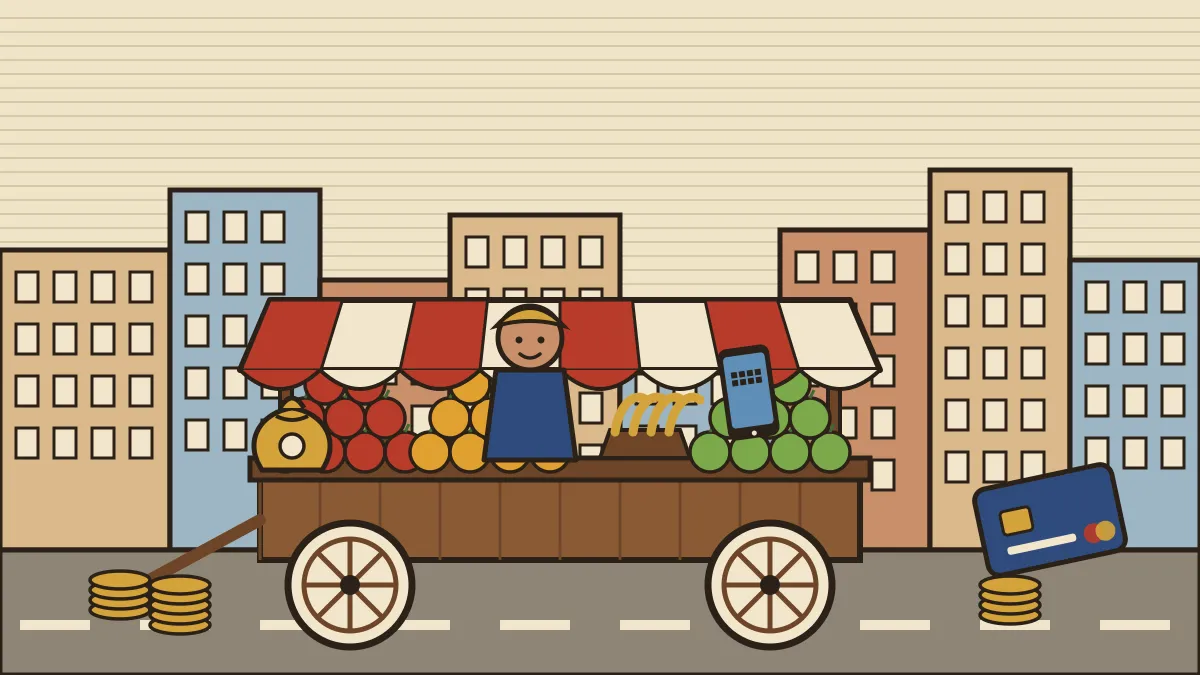
On 20 November 2026, the Ministry of Housing and Urban Affairs (MoHUA) held the SVANidhi Samman Awards 2026 at the Dr Ambedkar International Centre, New Delhi. Union Minister Manohar Lal presented 52 awards and five special recognitions to States, cities, banks and partner organisations, in the presence of Minister of State Tokhan Sahu.
An awards ceremony is not usually a news item for examinations, but this one came with a status report on the PM Street Vendor's AtmaNirbhar Nidhi (PM SVANidhi). Since its launch in June 2020, the scheme has enabled around 81 lakh street vendors to take over 1.21 crore loans worth roughly ₹20,000 crore. This article explains the scheme, the 2025 restructuring that changed it, the awards and the numbers, and why such a small-loan scheme appears in the economy section of your preparation.
The numbers from the release
| Item | Figure (as given in the 20 November release) |
|---|---|
| Street vendors who have accessed credit since June 2020 | around 81 lakh |
| Loans sanctioned | over 1.21 crore |
| Amount | about ₹20,000 crore |
| New loans since the August 2025 restructuring (first year) | about 22 lakh, worth ₹6,294 crore |
| New beneficiaries in that first year | 10.6 lakh |
| Families profiled under SVANidhi se Samriddhi | over 52 lakh |
| Scheme sanctions under eight welfare schemes | over 1.62 crore |
| Street Food Hubs being developed | 50 |
| Coverage of the awards | 35 States/UTs, over 4,900 urban local bodies, over 120 lending institutions |
Two simple calculations from these figures help. The average loan is about ₹16,500 (₹20,000 crore divided by 1.21 crore loans). And each vendor has taken about 1.5 loans on average (1.21 crore loans over 81 lakh vendors), which shows that many vendors have moved on to a second or third loan.
For comparison, when the Cabinet restructured the scheme in August 2025, the figures as of 30 July 2025 were over 96 lakh loans, ₹13,797 crore, and more than 68 lakh street vendors. Between July 2025 and the 2026 figures, the scheme has therefore added about 13 lakh vendors and roughly ₹6,200 crore of lending. The PIB's own figure for the first year after restructuring, ₹6,294 crore, is in line with this.
Why street vendors need a scheme of their own
Street vending is a large part of the informal economy. The PIB Backgrounder on the scheme describes it as a source of self-employment that gives all sections of the population easy access to goods and services close to home. The constraints are well known: no formal recognition, no designated vending space, low literacy and, above all, no access to formal credit. Without a bank loan, a vendor borrows from a moneylender, often at a daily or weekly rate that is far higher than any bank charges. Being unorganised and self-employed, vendors and their families also lack links to social security and welfare schemes.
The legal foundation is the Street Vendors (Protection of Livelihood and Regulation of Street Vending) Act, 2014. Under it, States and urban local bodies identify vendors through surveys and issue certificates of vending. The Ministry's March 2026 reply in the Lok Sabha repeated that this identification is the responsibility of the urban local bodies and States, and that PM SVANidhi is demand-driven: eligible vendors, including migrant and seasonal vendors, apply on the scheme's portal or mobile app.
How the scheme began
PM SVANidhi was launched on 1 June 2020, in the first months of the COVID-19 lockdown, to help vendors who had lost their business restart it. The original design was a collateral-free working-capital loan, with a 7% per annum interest subsidy (PIB still cites this rate in 2026), and a promise of larger loans on timely repayment. The first loan was ₹10,000, the second ₹20,000 and the third ₹50,000.
The word "collateral-free" is the heart of the scheme. A vendor has no land or building to pledge, so the scheme replaced collateral with identity and a repayment record. That record also creates a credit history, which is what lets the vendor move to bigger loans and, later, a credit card.
The scheme won recognition for its design: the Prime Minister's Award for Excellence in Public Administration (2023) in the Innovation (Central) category and a Silver Award for Excellence in Government Process Re-engineering for Digital Transformation (2022).
The 2025 restructuring
On 27 August 2025 the Union Cabinet approved the restructuring and extension of the scheme. The key changes:
| Feature | Before | After restructuring |
|---|---|---|
| Lending period | ended 31 Dec 2024 | extended to 31 March 2030 |
| First loan | ₹10,000 | up to ₹15,000 |
| Second loan | ₹20,000 | up to ₹25,000 |
| Third loan | ₹50,000 | unchanged, ₹50,000 |
| Credit card | none | UPI-linked RuPay credit card for those who have repaid the second loan |
| Digital incentive | cashback on digital transactions | cashback up to ₹1,200 on regular sales (maximum ₹100 a month) and up to ₹400 on wholesale purchases (₹20 per transaction, maximum ₹100 a quarter) |
| Coverage | statutory towns | graded expansion to census towns and peri-urban areas |
The total outlay is ₹7,332 crore, and the restructured scheme aims to benefit 1.15 crore vendors, including 50 lakh new ones. Implementation is shared between MoHUA and the Department of Financial Services (DFS) in the Ministry of Finance, which brings banks and financial institutions on board.
In January 2026 the PM SVANidhi Credit Card was launched by the Prime Minister from Thiruvananthapuram, Kerala. The MoHUA release of 20 November 2026 gives its limit as up to ₹30,000 for eligible beneficiaries who have repaid the second tranche. The credit card matters because it gives the vendor revolving credit for emergencies, and because it runs on UPI, it links the vendor to the digital payments system. Our note on PM Jan Dhan Yojana at twelve explains the account base that makes this chain possible.
SVANidhi se Samriddhi
The scheme's second pillar is SVANidhi se Samriddhi, which treats the vendor's family, not only the stall. The idea is a saturation approach: profile the vendor's household and then connect it to as many central welfare schemes as it qualifies for. The release says that over 52 lakh beneficiary families have been profiled, with more than 1.62 crore sanctions under eight central schemes. The Backgrounder of December 2025 gave an earlier snapshot of 47 lakh profiles and 1.46 crore sanctions as of 9 December 2025, so the programme is growing quickly.
Periodic Lok Kalyan Melas, a special campaign from 17 September to 15 October 2025 and another from 3 November to 2 December 2025 to clear pending applications, support this effort. Alongside the credit, the scheme builds skills in entrepreneurship, financial literacy, digital skills and marketing, and trains street-food vendors in hygiene and food safety with the FSSAI. The release lists 50 Street Food Hubs being developed.
Who won what
The awards were assessed on category-specific key performance indicators, using data mainly from the scheme's two portals. Performance after restructuring was assessed for 1 September 2025 to 31 August 2026, and overall performance from the scheme's start to 31 August 2026.
| Category | Highlights from the release |
|---|---|
| Leading States (overall) | Madhya Pradesh, Uttar Pradesh, Andhra Pradesh |
| North-Eastern and hilly States (overall) | Assam; loan performance Sikkim; digital adoption Mizoram; SVANidhi se Samriddhi Tripura |
| Union Territories (overall) | Chandigarh (loans: Puducherry; digital: Ladakh) |
| Digital adoption (other States) | Kerala, Maharashtra |
| Special award for loan disbursement after restructuring | Maharashtra, Gujarat, West Bengal |
| Lending institutions | State Bank of India, Bank of Baroda, Punjab National Bank, Union Bank |
| Cities, loan performance (mega and million-plus) | Indore, Ahmedabad, Chhatrapati Sambhajinagar |
The Minister of State also noted that Chhattisgarh won four awards, including recognition for Dantewada and Bade Bacheli, towns in areas once affected by left-wing extremism. You do not need to memorise the awardees, but the pattern is useful: the top performers are a mix of large States and small north-eastern ones.
How to read this scheme as an economy topic
Financial inclusion. The scheme brings people into the formal system in steps: a bank account (Jan Dhan), a small loan, digital payments and a credit card. For related schemes, see our article on Stand-Up India and the Mudra credit guarantee fund, and our notes on microfinance and self-help groups and the banking sector.
Interest subvention. The government pays part of the interest so that the borrower's cost falls. The subsidy is credited to the borrower's account, and the scheme leans on that to encourage timely repayment.
Digital incentives. Cashback rewards the vendor for taking payments on UPI, which builds a transaction record the bank can see.
Limits to keep in mind. Loans are small, the scheme is demand-driven, and the PIB's own March 2026 reply showed the need for special campaigns to clear pendency at banks and local bodies. The numbers measure credit delivered, not incomes raised.
🔑 Revision block
The event. SVANidhi Samman Awards 2026, 20 November 2026, New Delhi; 52 awards + 5 special recognitions; presented by Manohar Lal (Minister, Housing and Urban Affairs) with MoS Tokhan Sahu.
Scale. About 81 lakh vendors, over 1.21 crore loans, about ₹20,000 crore since June 2020. After restructuring: about 22 lakh loans, ₹6,294 crore, 10.6 lakh new beneficiaries.
The scheme. PM Street Vendor's AtmaNirbhar Nidhi, launched 1 June 2020; collateral-free working capital; 7% interest subsidy; MoHUA with DFS.
2025 restructuring (Cabinet, 27 August 2025). Lending to 31 March 2030; outlay ₹7,332 crore; target 1.15 crore vendors (50 lakh new); loans ₹15,000 / ₹25,000 / ₹50,000; UPI-linked RuPay credit card (up to ₹30,000, launched January 2026); cashback up to ₹1,600; expansion to census towns and peri-urban areas.
SVANidhi se Samriddhi. Over 52 lakh families profiled; 1.62 crore sanctions under eight schemes; 50 Street Food Hubs.
Law. Street Vendors (Protection of Livelihood and Regulation of Street Vending) Act, 2014: surveys and vending certificates by States and urban local bodies.
🎯 Practice MCQs
Q1. PM SVANidhi is implemented by which Union Ministry?
(a) Ministry of Finance
(b) Ministry of Rural Development
(c) Ministry of Labour and Employment
(d) Ministry of Housing and Urban Affairs
→ (d)
MoHUA implements it jointly with the Department of Financial Services, which brings in banks.
Q2. PM SVANidhi was launched in:
(a) 2018
(b) 2020
(c) 2022
(d) 2024
→ (b)
It was launched on 1 June 2020, during the COVID-19 lockdown, to help street vendors restart their businesses.
Q3. After the August 2025 restructuring, the maximum first-tranche loan under the scheme is:
(a) ₹10,000
(b) ₹12,000
(c) ₹15,000
(d) ₹25,000
→ (c)
The first tranche rose from ₹10,000 to ₹15,000 and the second from ₹20,000 to ₹25,000; the third stays at ₹50,000.
Q4. The UPI-linked RuPay credit card under PM SVANidhi is available to beneficiaries who have:
(a) Repaid the second loan
(b) Taken the first loan only
(c) Repaid all three loans in advance
(d) Opened a Jan Dhan account
→ (a)
Eligibility is linked to repayment of the second tranche, and the limit is up to ₹30,000.
Q5. Identification of street vendors through surveys and the issue of certificates of vending are carried out under the:
(a) Shops and Establishments Act
(b) Street Vendors (Protection of Livelihood and Regulation of Street Vending) Act, 2014
(c) Unorganised Workers' Social Security Act, 2008
(d) Code on Social Security, 2020
→ (b)
States and urban local bodies are responsible for surveys and certificates under the 2014 Act.
Q6. 'SVANidhi se Samriddhi' is a component that aims to:
(a) Pay cashback on digital transactions
(b) Fix the rate of interest on loans
(c) Provide a credit guarantee to banks
(d) Connect vendors' families to welfare schemes
→ (d)
It profiles beneficiary families and links them to eight central welfare schemes in a saturation approach.
Q7. Consider the following statements:
1. The Cabinet approved the restructuring of PM SVANidhi on 27 August 2025 with an outlay of ₹7,332 crore.
2. The PM SVANidhi credit card has a limit of up to ₹1 lakh.
Which of the statements given above is/are correct?
(a) 1 only
(b) 2 only
(c) Both 1 and 2
(d) Neither 1 nor 2
→ (a)
The outlay is correct. The credit limit is up to ₹30,000, not ₹1 lakh.
Q8. Consider the following statements about the restructured scheme:
1. Coverage is being expanded beyond statutory towns to census towns and peri-urban areas.
2. More than 52 lakh beneficiary families have been profiled under SVANidhi se Samriddhi.
Which of the statements given above is/are correct?
(a) 1 only
(b) 2 only
(c) Both 1 and 2
(d) Neither 1 nor 2
→ (c)
Both are in the PIB material: the graded expansion was part of the Cabinet decision, and the 20 November release gives over 52 lakh families profiled.
📋 How this gets asked (PYQ pattern)
Government-scheme questions in the CDS economy section reward precision on small facts more than depth. A scheme in the news is usually tested in three ways.
The first is "which ministry, which year": the ministry, the launch date and the target group. Options often mix up schemes with similar names, such as PM SVANidhi, PM Vishwakarma and Stand-Up India, so learn each one's target group (street vendors, artisans, SC/ST and women entrepreneurs).
The second is instrument and design: collateral-free loan, interest subvention, credit guarantee, cashback and credit card. A typical question asks which of these features a scheme has. Note that a feature added in a restructuring, such as the credit card, is the most likely fresh hook.
The third is numbers on the latest status: vendors reached, loans sanctioned, amounts and outlay. These move every year, so the safest approach is to remember the order of magnitude: about 81 lakh vendors, 1.21 crore loans and about ₹20,000 crore, with an outlay of ₹7,332 crore for the restructured scheme.
Preparing for CDS? Make a one-line card for each flagship credit and inclusion scheme: ministry, year, target group, loan size, key feature. Revise the economy basics in our notes on the economy section and follow the daily CDS current affairs. Learn with experienced faculty in the upcoming Cavalier courses in Delhi.
Source: PIB / Ministry of Housing & Urban Affairs, "Union Minister Shri Manohar Lal confers SVANidhi Samman Awards 2026", 20 November 2026; PIB, Cabinet, "Cabinet approves restructuring & extension of lending period beyond 31.12.2024 of PM Street Vendors AtmaNirbhar Nidhi (PM SVANidhi) Scheme", 27 August 2025; PIB Backgrounder, "SVANidhi: Empowering Street Vendors", 20 December 2025; PIB, MoHUA, "PM SVANidhi Loans", 12 March 2026; PIB, Prime Minister's Office, 23 January 2026. PIB, MoHUA, "PM SVANidhi: Advancing Financial Inclusion for Street Vendors", May 2026 (7% interest subsidy); PIB, "PM SVANidhi Scheme", August 2023 (original scheme terms). Averages calculated by The Cavalier from the published figures.
✍️ Written by Aditya Tiwari — Economy & current-affairs faculty at The Cavalier. Reviewed by the Cavalier Faculty Desk.