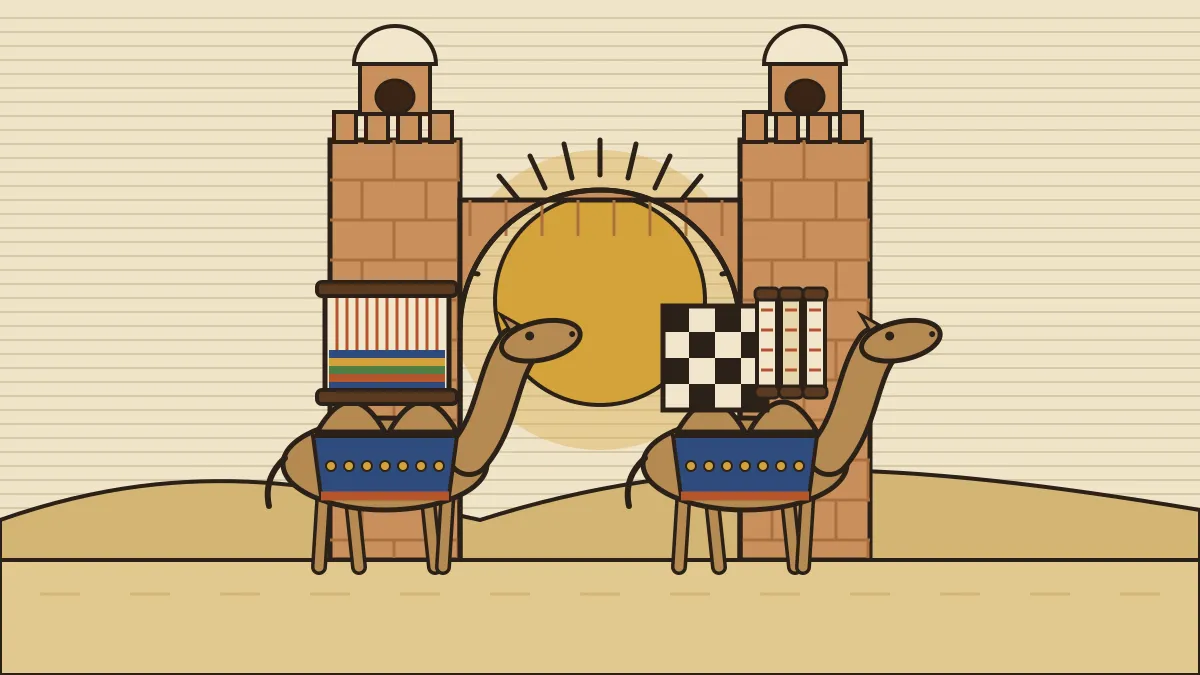
The Shanghai Cooperation Organisation is usually in the news for summits, defence ministers' meetings and counter-terror drills. This week it is in the news for something different. On 20 November 2026, at about 5:30 pm, the Prime Minister will inaugurate the first SCO Civilisational Dialogue Forum at Purana Qila, New Delhi, and will address the gathering. The Forum runs for three days, 20 to 22 November 2026.
The Prime Minister's Office announced the programme on 19 November. Its aim, in the release's words, is to celebrate the rich and interconnected civilisational heritage of the region, strengthen people-to-people ties and promote cross-cultural dialogue.
For an exam candidate the event is a useful one. It joins three things that are usually studied apart: the structure of the SCO, India's soft-power diplomacy, and the ancient and medieval history of Eurasia. This article takes them in turn.
Where the idea came from
The Forum is an Indian idea that has travelled the full length of the SCO calendar.
- Tianjin, 2025. At the 25th Meeting of the Council of Heads of State, held at Tianjin, China, from 31 August to 1 September 2025, the Prime Minister spoke of opportunities in start-ups, innovation, youth empowerment and shared heritage. He proposed commencing a Civilizational Dialogue Forum within the group to foster greater people-to-people ties and cultural understanding.
- Bishkek, 2026. The proposal was welcomed in the Bishkek Declaration, adopted at the 26th summit in the Kyrgyz Republic. Our explainer on the Bishkek summit lists the Indian initiatives that found a place in the Declaration; the Forum was one, and India offered to host the first edition.
- New Delhi, November 2026. The first Forum is now being held.
Notice the pattern. A proposal made at one summit became text in the next and an event within about fifteen months. That is how multilateral cultural projects usually move: from a leader's speech, to a declaration, to a host's calendar.
What the Forum will contain
The release describes four strands.
The inaugural show. The opening ceremony features "Civilisations in Conversation: Cultural Show", a presentation that combines music, dance, visual storytelling and narration. Its theme is "Vasudhaiva Kutumbakam: The World Is One Family", a phrase from Sanskrit tradition that India also used as the spirit of its G20 presidency in 2023, expressed there as "One Earth, One Family, One Future". The show highlights cultural connections across India and Eurasia.
Exhibition one: ASTITVA. "ASTITVA: The Essence of Our Existence" showcases India's archaeological, artistic and literary heritage. It offers an account of Delhi's history through archaeological evidence dating from 1200 BCE to 1200 CE, including excavated remains, artefacts and architectural fragments.
Exhibition two: the Mahabharat Scroll Pavilion. The pavilion, titled "Anant", displays a rare 18th-century illustrated Mahabharata scroll, which reflects India's epic and artistic traditions.
Four thematic sessions, on 21 and 22 November. Scholars, academics, experts and cultural representatives will discuss:
- cultural expressions such as music and performing arts, textiles, cuisine and traditional games;
- shared traditions in art and architecture;
- language and literary traditions, including scripts and manuscripts;
- monastic trails and philosophical traditions.
Read that list as a map of what the member states are believed to share. It is a map of exchange, and each item has a history.
Why Purana Qila
The venue is itself a lesson in layered history. Purana Qila ("the Old Fort") stands on the western bank of the Yamuna in Delhi, and it was built in more than one phase.
- Humayun began the citadel in 1533 as the inner fort of a new city he called Din Panah.
- Sher Shah Suri defeated Humayun in 1540, took Delhi and carried on the work, giving the fort the name Shergarh. The single-domed Qila-i-Kuhna mosque inside is attributed to him and dated to about 1541. (Sources give 1541 or 1542, so do not rely on a single year.)
- The octagonal Sher Mandal is a pavilion within the complex. Humayun died in January 1556 after a fall on its steps, shortly after he had recovered the throne.
Below the Mughal and Suri layers lies something older. Excavations by the Archaeological Survey of India, led first by B.B. Lal in 1954-55 and 1969-73 and resumed in 2013-14 and 2017-18, found Painted Grey Ware at the lowest levels, along with later deposits. Painted Grey Ware is a fine, grey pottery with painted black patterns, associated with the later Vedic and early Iron Age cultures of the Ganga-Yamuna region. The exact dating of the earliest layer is debated among scholars, and the popular link to the Mahabharata's Indraprastha rests on tradition, not proof. The Forum's exhibition, which covers Delhi from 1200 BCE to 1200 CE, is built on this evidence.
If you ask why the Forum was set there and not in a convention hall, the answer is that the venue makes the argument: a city that carries three thousand years of remains in a single mound.
The SCO in a few lines
The Forum sits inside an organisation whose structure is examined far more often than its events. The core facts are these.
| Item | Fact |
|---|---|
| Founded | 15 June 2001, Shanghai, from the Shanghai Five (1996) plus Uzbekistan |
| Charter | Signed in 2002 at St Petersburg; in force from 2003 |
| Supreme body | Council of Heads of State, meets yearly |
| Secretariat | Beijing |
| Anti-terror body | Regional Anti-Terrorist Structure (RATS), Tashkent |
| Official languages | Russian and Chinese |
| Full members | Ten, including India and Pakistan (joined together in 2017), Iran (2023) and Belarus (2024) |
| Summits | 25th: Tianjin (2025); 26th: Bishkek (2026) |
India held the SCO chair for 2022-23, after the Samarkand summit of September 2022, and hosted the summit of 4 July 2023 in virtual format. For the full structure and the Bishkek outcomes, see the Bishkek explainer.
Why India is pushing culture within the SCO
The SCO's public image is one of security. Its anti-terror structure, its joint exercises and its defence ministers' meetings dominate the headlines. India participates in all of that, but it has a particular interest in widening the agenda.
- A different register for the same room. Within the SCO, India sits alongside China, Russia and Pakistan. On security the positions are often divergent. On heritage, language and philosophy, the shared history is real and less contested.
- Soft power. Culture is a way of presenting India as a civilisational partner, not only an economic or military one. India's 2026 BRICS chairship has a culture track too; see our note on the BRICS Culture Working Group in Varanasi.
- Connectivity without the dispute. India has declined to endorse connectivity projects that pass through territory it claims, as the Bishkek explainer notes. Cultural connectivity, such as scripts, manuscripts, monastic routes and shared games, builds a connection that raises no sovereignty objection.
- Geography. India has no land border with any Central Asian republic. Old exchange, by caravan and pilgrim, is the connection it can claim.
The wider idea of "dialogue among civilisations"
The phrase has a United Nations history that is worth knowing. The UN General Assembly proclaimed 2001 the Year of Dialogue among Civilizations, on an initiative of Iran, itself now an SCO member. A separate UN Alliance of Civilizations was launched in 2005, sponsored by Spain and Turkey. The SCO Forum is a regional descendant of those ideas, but with a specific membership and a specific geography.
The history behind the four sessions
Each strand on the Forum's agenda corresponds to something you will meet in the history syllabus. Here are the ones most likely to matter.
Silk Route and textiles. The overland routes that crossed Central Asia carried silk, spices, horses, ideas and faiths between China, India, Persia and the Mediterranean. India took part in this trade as a producer of textiles and as a corridor, and the route is the backbone of the "shared textiles" theme.
The Kushans, Gandhara and Buddhism. The Kushan empire, of the early centuries CE, stretched from Central Asia into the Gangetic plain, and its best-known ruler, Kanishka, was a patron of Buddhism. Tradition holds that the Fourth Buddhist Council met under his patronage. The Gandhara school of art blended Indian Buddhist subjects with Hellenistic technique, which is a classic example of cultural fusion. Buddhism travelled north through Central Asia to China along these roads. Our revision note on Buddhist councils, schools and art covers the details.
Monastic trails. The Chinese pilgrims followed the same roads in reverse. Faxian came to India in the Gupta period, and Xuanzang travelled overland from China through Central Asia and spent years at Nalanda in the seventh century, during the reign of Harsha. Their accounts are among the best sources for the history of the time, and they are the reason "monastic trails and philosophical traditions" is on the Forum's list.
Games. Chaturanga, the ancient Indian war game, passed to Persia as shatranj and from there across the world as chess. A session on traditional games has a good story to tell.
Languages, scripts and manuscripts. Sanskrit and Prakrit texts were carried, translated and copied along these routes, and many manuscripts survive far from their place of origin. The same is true of the later Persian influence on Indian courts, which is part of the Mughal cultural heritage summarised in our note on Mughal culture.
What to watch
- The inaugural address on 20 November. The Prime Minister's language is usually the clearest guide to what India wants from the platform.
- Participation. Which member states send ministers, scholars or only officials will show how seriously the initiative is taken. The release does not list the delegations.
- Follow-up. A first edition becomes a series only if a second host is named. Watch for an announcement of the next venue.
- The link to security. The same states meet again in the SCO's regular councils. Whether cultural goodwill carries across is the open question.
🔑 Revision block
The event. First SCO Civilisational Dialogue Forum, Purana Qila, New Delhi, 20-22 November 2026; PM inaugurates on 20 November (about 5:30 pm).
Origin. Proposed by the PM at the 25th SCO summit, Tianjin (31 Aug-1 Sep 2025); welcomed in the Bishkek Declaration (26th summit, Kyrgyz Republic).
Programme. Cultural show "Civilisations in Conversation" (theme Vasudhaiva Kutumbakam); exhibitions ASTITVA (Delhi, 1200 BCE-1200 CE) and Anant, an 18th-century Mahabharata scroll; four sessions on 21-22 November: music, textiles, cuisine and games; art and architecture; language, scripts and manuscripts; monastic trails and philosophy.
SCO facts. Founded 15 June 2001; Secretariat Beijing, RATS Tashkent; ten members (India and Pakistan 2017, Iran 2023, Belarus 2024); official languages Russian and Chinese; India chaired 2022-23.
Purana Qila. Humayun, Din Panah, 1533; Sher Shah Suri, Shergarh, after 1540; Qila-i-Kuhna mosque about 1541; Sher Mandal; excavations B.B. Lal (1954-55, 1969-73), Painted Grey Ware.
Link facts. Kanishka (Kushan), Gandhara art, Faxian, Xuanzang at Nalanda; UN Year of Dialogue among Civilizations, 2001 (Iran's initiative); UN Alliance of Civilizations, 2005.
🎯 Practice MCQs
Q1. The proposal to start a Civilisational Dialogue Forum within the SCO was made by the Prime Minister at the summit held in:
(a) Samarkand, 2022
(b) Astana, 2024
(c) Tianjin, 2025
(d) Bishkek, 2026
→ (c)
It was made at the 25th Council of Heads of State at Tianjin, and the Bishkek Declaration of the 26th summit welcomed it.
Q2. The Regional Anti-Terrorist Structure of the SCO is headquartered at:
(a) Beijing
(b) Moscow
(c) Astana
(d) Tashkent
→ (d)
RATS is at Tashkent. The SCO Secretariat is at Beijing, and the commonest wrong option swaps the two.
Q3. The first SCO Civilisational Dialogue Forum is being held at:
(a) Purana Qila
(b) Red Fort
(c) Humayun's Tomb
(d) Qutb complex
→ (a)
The Forum runs from 20 to 22 November 2026 at Purana Qila in New Delhi.
Q4. Consider the following statements about the SCO:
1. The Council of Heads of State is its supreme decision-making body.
2. India is a founding member of the SCO.
Which of the statements given above is/are correct?
(a) Neither 1 nor 2
(b) 1 only
(c) 2 only
(d) Both 1 and 2
→ (b)
India joined in 2017, together with Pakistan. The organisation was founded in 2001 by six states.
Q5. Consider the following statements about the Forum:
1. The Prime Minister is to inaugurate it on 20 November 2026.
2. Four thematic sessions are to be held on 21 and 22 November.
Which of the statements given above is/are correct?
(a) 1 only
(b) 2 only
(c) Both 1 and 2
(d) Neither 1 nor 2
→ (c)
Both follow from the PMO's release of 19 November 2026.
Q6. The theme of the cultural show at the Forum's inauguration is:
(a) Vasudhaiva Kutumbakam
(b) Satyameva Jayate
(c) Sarve Bhavantu Sukhinah
(d) Ekam Sat
→ (a)
The show, "Civilisations in Conversation", is based on "Vasudhaiva Kutumbakam: The World Is One Family".
Q7. The United Nations General Assembly proclaimed 2001 as the Year of Dialogue among Civilizations on the initiative of:
(a) India
(b) China
(c) Turkey
(d) Iran
→ (d)
Iran, now an SCO member, put forward the idea. The UN Alliance of Civilizations of 2005 was sponsored by Spain and Turkey.
Q8. The Chinese pilgrim who travelled overland through Central Asia and studied at Nalanda in the seventh century was:
(a) Faxian
(b) Xuanzang
(c) Marco Polo
(d) Ibn Battuta
→ (b)
Xuanzang came during Harsha's reign. Faxian visited in the Gupta period, and the other two were later travellers.
📋 How this gets asked (PYQ pattern)
Questions from this theme arrive from two directions.
The first is organisation facts: the headquarters of the Secretariat and of RATS, the year of founding, the members and when each joined, the official languages, and which summit is which. The most reliable trap is the pair "Beijing and Tashkent". Another is the claim that India is a founding member.
The second is culture and history linked to a news hook. A forum on "monastic trails" or "scripts and manuscripts" invites questions on the Kushans, Gandhara art, the Fourth Buddhist Council, Xuanzang and Faxian, and the Silk Route. For this cycle the fresh hooks are Purana Qila (Humayun's Din Panah, Sher Shah's Shergarh), the Tianjin proposal and the 20-22 November dates. Expect statements that attribute a monument or a pilgrim to the wrong ruler or century.
Preparing for CDS? Make a one-line timeline of the Silk Route exchanges (Kushans, Gandhara, Faxian, Xuanzang) and revise it with our notes on Buddhist councils, schools and art and Mughal culture. Follow the daily CDS current affairs, and learn with experienced faculty in the upcoming Cavalier courses in Delhi.
Source: PIB / Prime Minister's Office, "PM to inaugurate First SCO Civilisational Dialogue Forum on 20 November", 19 November 2026; PIB / PMO, "Prime Minister participates in the 25th SCO Summit in Tianjin, China", 1 September 2025; SCO background from the Ministry of External Affairs' India-SCO briefs and the Cavalier's Bishkek explainer; Purana Qila facts from ASI and standard history references.
✍️ Written by Hitendra Deswal — Polity & current-affairs faculty at The Cavalier. Reviewed by the Cavalier Faculty Desk.