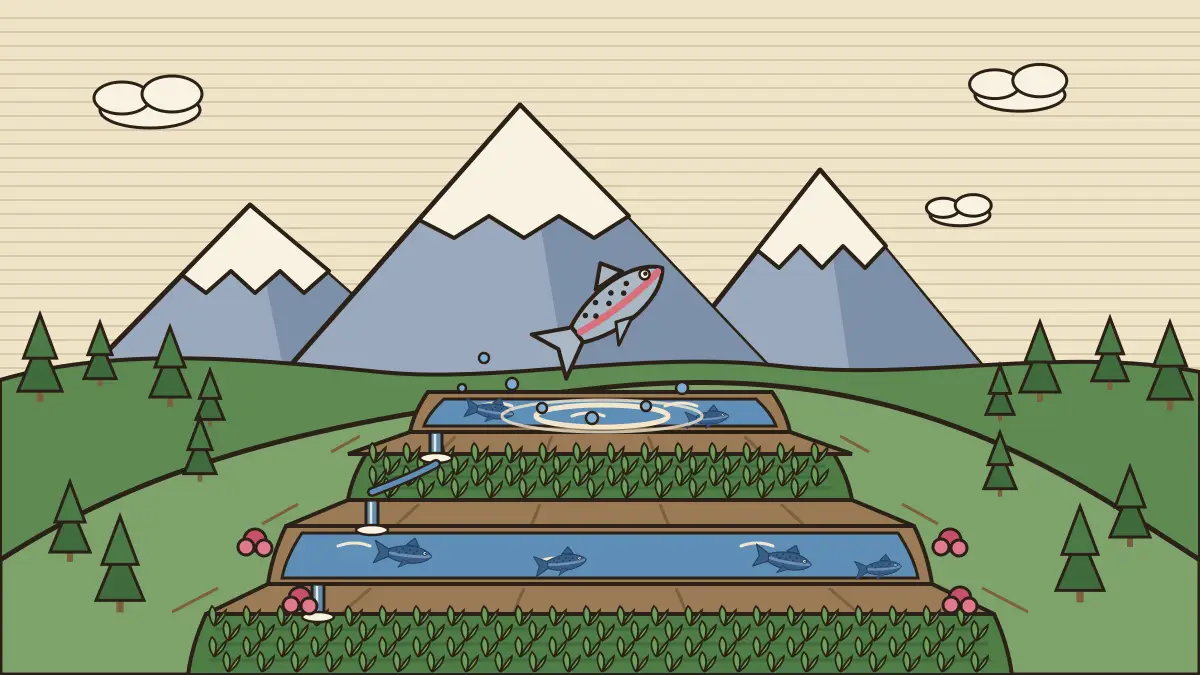
A fish farm in the Himalaya has two advantages that a pond in the plains does not: cold, clean mountain water, and a state that has been farming without chemicals for more than ten years. On 2 November 2026, the Union Government tied the two together. PIB described Soreng district in Sikkim as India's first notified Organic Fisheries Cluster under the Pradhan Mantri Matsya Sampada Yojana (PMMSY), and Union Minister Rajiv Ranjan Singh (Lalan Singh) launched a Standard Operating Procedure (SOP) for Organic Certification of Fisheries for the North-Eastern region.
The news is easy to read as a local event. It is better read as a test case for three bigger ideas: a flagship scheme (PMMSY), a way of organising it (clusters), and a way of earning a better price (organic certification). This article takes each in turn.
What happened on 2 November
The Minister's visit to Sikkim followed a structured mechanism, set up under the guidance of the Prime Minister, for periodic visits by Union Ministers to the North-Eastern Region to review programmes and gather field feedback. He was joined by Sikkim's Minister for Fisheries, Puran Kumar Gurung, the Secretary (Fisheries) of the Government of India, Dr Abhilaksh Likhi, and officials of the National Fisheries Development Board (NFDB) and ICAR institutes.
The main announcements:
- Organic cluster. Soreng is the first notified Organic Fisheries Cluster under PMMSY. It focuses on fish farming without harmful chemicals, antibiotics and pesticides, with special emphasis on Amur carp, Indian Major Carps (IMC) and trout.
- The SOP. The SOP for Organic Certification of Fisheries in the Northeast gives a structured framework for organic production and supports traceability across the value chain.
- Projects. Projects worth ₹375 lakh (₹3.75 crore) under PMMSY were inaugurated: hatcheries, feed mills, cold storage, and technologies such as Biofloc and the Recirculatory Aquaculture System (RAS).
- Credit and support. Kisan Credit Cards were given to fish farmers, cheques went to five farmers under the Mukhya Mantri Matsya Uthpadhan Yojana (MMMUY), and fish feed was distributed to 15 farmers from two cooperative societies.
- A buyer. Sikkim has entered an MoU with the Indo-Tibetan Border Police (ITBP) for institutional procurement of locally produced Rainbow Trout.
PMMSY in six facts
| Fact | Detail |
|---|---|
| Launched | 10 September 2020, as part of the Atmanirbhar Bharat package |
| Run by | Department of Fisheries, Ministry of Fisheries, Animal Husbandry & Dairying |
| Outlay | ₹20,050 crore for FY 2020-21 to 2024-25: Centre ₹9,407 crore, States ₹4,880 crore, beneficiaries ₹5,763 crore |
| Structure | An umbrella scheme with Central Sector and Centrally Sponsored components |
| Extension | Extended to FY 2025-26 on the same design and funding |
| Original aims | About 220 lakh tonnes of fish by 2024-25 (from 137.58 lakh tonnes in 2018-19), exports of ₹1 lakh crore, about 55 lakh jobs, and post-harvest losses cut from 20–25% to about 10% |
The three funding shares add up: 9,407 + 4,880 + 5,763 = 20,050. The scheme followed the earlier Blue Revolution scheme (December 2015, ₹3,000 crore), and a sub-scheme, PM-MKSSY (February 2024, about ₹6,000 crore), targets formalisation and credit for small fishers.
Set the aims against the results. Fish production reached about 197.75 lakh tonnes in 2024-25 (provisional), a record and double the 2013-14 level, but below the 220 lakh-tonne aim. Seafood exports were ₹62,408 crore in 2024-25, well short of ₹1 lakh crore. Our page on major fishing grounds of the world has the full set of India's fisheries figures. A balanced answer says that PMMSY pushed output and exports to records while missing its headline targets.
The cluster approach
The Government has adopted a cluster-based approach to the fisheries value chain: production, processing, value addition and marketing are brought together within an identified geographical area. Under PMMSY, 34 fisheries production and processing clusters have been notified across the country, including organic fisheries clusters in Sikkim and Meghalaya.
The reasoning is that the binding constraints of a value chain are shared ones. One farmer cannot build a cold chain, and a hatchery or feed mill is viable only if enough farmers use it. A cluster concentrates spending so that seed, feed, processing, storage and buyers exist side by side. We described the same logic in the cold-water trout cluster at Pithoragarh, in Trout to Nepal, and Trout to the ITBP. Soreng adds a new filter on top of the geography: the product must be certified organic.
What "organic" means for a fish pond
On a vegetable farm, "organic" is mostly about soil and inputs. In a pond, the farmer also manages the water, the feed and the density of fish. The release states the principle in plain terms: ecologically healthy farming with no harmful chemicals, antibiotics or pesticides.
India's national organic framework is the National Programme for Organic Production (NPOP), which began in 2001 under the Ministry of Commerce and Industry, with the Agricultural and Processed Food Products Export Development Authority (APEDA) acting as secretariat for the accreditation of certification bodies. NPOP's standards cover crops, livestock, aquaculture and other categories. Its aquaculture section deals with an organic management plan, a conversion period, ecosystem management and site selection. The conversion period is the time a farm must follow the rules before its produce can be sold as organic.
The new SOP works inside this system for a specific region. It provides, in the release's words, "a structured framework for organic production" and supports traceability, which means that a lot of fish can be followed from the pond to the retailer. The release does not set out the SOP's clauses, nor how technologies such as RAS and Biofloc fit its rules. Those are the details to watch when the document is published.
Why bother? Certification is what turns a farming method into a price. The release says it will help create a "more credible and market-oriented organic fisheries ecosystem" and open "premium domestic and international markets". Without a trusted label, organic fish is just fish.
Sikkim's organic record
The cluster sits on a long record, which is why it is possible there first.
| Year | Milestone |
|---|---|
| 2004 | State Policy on Organic Farming |
| 2010 | Sikkim Organic Mission launched |
| 2015–16 | All farmland (about 75,000 hectares) certified organic; declared India's first fully organic state in January 2016 |
| 2018 | Gold in the Future Policy Award (FAO, World Future Council, IFOAM), Rome, 15 October |
| 21 Dec 2021 | Soreng and Pakyong created as districts; the other four renamed |
| 2 Nov 2026 | Soreng notified as the first organic fisheries cluster |
Soreng was carved out of the former West Sikkim district (now Gyalshing) under the Sikkim (Re-organisation of Districts) Act, 2021. Sikkim's six districts are Gangtok, Mangan, Namchi, Gyalshing, Pakyong and Soreng. The release says the cluster "seeks to build on Sikkim's established organic ecosystem", which is a way of saying that the label already exists for crops and now has to be earned for fish.
The fish and the water
The three species groups in the Soreng cluster suit different conditions:
- Indian Major Carps (IMC): catla, rohu and mrigal, the backbone of Indian pond farming, which prefer warm water.
- Amur carp: a strain of common carp that tolerates cooler water better than the IMC. (The release names it but does not give its details.)
- Trout: the cold-water specialist. Rainbow trout is an introduced species that needs cold, well-oxygenated, flowing water that stays well below 20 °C, which only the hills provide.
Cold-water fisheries are research-led. The ICAR-Directorate of Coldwater Fisheries Research (DCFR) at Bhimtal, Uttarakhand, has worked on them since 1987, covering trout feeds and RAS as well as native fishes such as the golden mahseer and the snow trout. Of the two technologies named in the release, RAS filters and recirculates pond water, which suits hills where water is limited, and Biofloc lets beneficial microbes turn fish waste into feed, so that little water needs to be exchanged.
The ITBP MoU is the market half of the story. The proposed arrangement provides for regular supply of rainbow trout to ITBP establishments, with attention to quality specifications, supply capacity, pricing, inspection and schedules. A border force posted in the same mountains is a nearby buyer with predictable demand, as the Pithoragarh case showed.
Exam traps
- Soreng, not Mangan. The Minister's visit was to Mangan and Gangtok districts, but the cluster is in Soreng.
- Know the certifier. NPOP is run through APEDA under the Commerce Ministry. Do not assign it to FSSAI (food safety) or MPEDA (marine product exports).
- Keep PMMSY's dates apart. It was launched in 2020, its ₹20,050 crore outlay covered 2020-21 to 2024-25, and it was extended to 2025-26. Questions ask about each separately.
- "First" claims. Sikkim is the first fully organic state (2016); Soreng is the first notified organic fisheries cluster. Keep the two firsts apart.
🔑 Revision block
The news. 2 November 2026: Soreng, Sikkim, India's first notified Organic Fisheries Cluster under PMMSY; SOP for Organic Certification of Fisheries (North-Eastern region) launched by Union Minister Rajiv Ranjan (Lalan) Singh; projects worth ₹375 lakh; MoU with ITBP for rainbow trout.
PMMSY. Launched 10 September 2020; ₹20,050 crore (Centre 9,407, States 4,880, beneficiaries 5,763) for 2020-21 to 2024-25, extended to 2025-26; Central Sector + Centrally Sponsored; aims 220 lakh tonnes, ₹1 lakh crore exports, 55 lakh jobs. Actual 2024-25: 197.75 lakh tonnes (provisional), exports ₹62,408 crore.
Clusters. 34 fisheries clusters notified, including organic clusters in Sikkim and Meghalaya; Pithoragarh is the cold-water trout cluster.
Organic framework. NPOP (2001, Commerce Ministry, APEDA secretariat) covers aquaculture: management plan, conversion period, ecosystem, site. Aim: traceability and premium markets.
Sikkim. Organic Mission 2010; fully organic January 2016; FAO-linked Future Policy Award 2018; Soreng and Pakyong districts created 21 December 2021 (Soreng from West Sikkim).
Species and science. IMC (catla, rohu, mrigal), Amur carp, rainbow trout; ICAR-DCFR, Bhimtal (since 1987); Biofloc and RAS save water.
🎯 Practice MCQs
Q1. India's first notified Organic Fisheries Cluster under PMMSY is located in which district of Sikkim?
(a) Mangan
(b) Pakyong
(c) Namchi
(d) Soreng
→ (d)
The Union Minister's visit was to Mangan, which makes (a) tempting. Pakyong and Soreng were both created on 21 December 2021.
Q2. The Pradhan Mantri Matsya Sampada Yojana was launched in:
(a) 2015
(b) 2020
(c) 2022
(d) 2024
→ (b)
It was launched on 10 September 2020. The Blue Revolution scheme was approved in December 2015, and PM-MKSSY in February 2024.
Q3. Consider the following statements about PMMSY:
1. It is implemented as an umbrella scheme with both Central Sector and Centrally Sponsored components.
2. Its 2020-21 to 2024-25 outlay of ₹20,050 crore was borne entirely by the Union Government.
Which of the statements given above is/are correct?
(a) 1 only
(b) 2 only
(c) Both 1 and 2
(d) Neither 1 nor 2
→ (a)
The Centre's share was ₹9,407 crore; States put in ₹4,880 crore and beneficiaries ₹5,763 crore.
Q4. The National Programme for Organic Production (NPOP) is implemented through:
(a) FSSAI
(b) MPEDA
(c) APEDA
(d) NABARD
→ (c)
APEDA, under the Ministry of Commerce and Industry, is the secretariat for accrediting certification bodies. MPEDA handles marine product exports, FSSAI food safety and NABARD rural credit.
Q5. Sikkim was declared India's first fully organic state in:
(a) 2010
(b) 2016
(c) 2018
(d) 2021
→ (b)
2010 is the year of the Sikkim Organic Mission, 2018 the year of the Future Policy Award and 2021 the year Soreng became a district.
Q6. The ICAR-Directorate of Coldwater Fisheries Research is located at:
(a) Kochi
(b) Bhubaneswar
(c) Hyderabad
(d) Bhimtal
→ (d)
Kochi has CMFRI (marine fisheries), Bhubaneswar has CIFA (freshwater aquaculture) and Hyderabad has the NFDB. Bhimtal is in Uttarakhand.
Q7. Soreng district of Sikkim was carved out of the former:
(a) West Sikkim district
(b) East Sikkim district
(c) North Sikkim district
(d) South Sikkim district
→ (a)
Pakyong was carved out of East Sikkim. The four older districts were renamed Gangtok, Gyalshing, Mangan and Namchi.
Q8. Sikkim's MoU with the Indo-Tibetan Border Police is for the procurement of:
(a) Amur carp
(b) Catla
(c) Rainbow trout
(d) Mahseer
→ (c)
Rainbow trout is the high-value cold-water fish in the cluster. Catla is an Indian Major Carp and mahseer is a native cold-water fish.
📋 How this gets asked (PYQ pattern)
Fisheries and agriculture-economy questions appear in three usual ways. The first is schemes and "firsts": which scheme, which year, which ministry, and which place was first. The second is institutions: APEDA, MPEDA, NFDB, NABARD and ICAR bodies, each tied to a function. Candidates lose marks by swapping them. The third is geography and species: where cold-water fish are farmed, which carps are Indian Major Carps, and how currents or upwelling create fishing grounds.
The fresh hooks this cycle are Soreng, the 34 clusters, the organic certification SOP, the ITBP trout MoU and PMMSY's ₹20,050 crore outlay with its targets-versus-results story.
Preparing for CDS? For every scheme in the news, write one line each on what it funds, who runs it, which year it began and one number. Follow the daily CDS current affairs, revise with our notes on the agriculture economy, and learn with experienced faculty in the upcoming Cavalier courses in Delhi.
Source: PIB / Ministry of Fisheries, Animal Husbandry & Dairying, "Soreng, Sikkim: India's first notified Organic Fisheries Cluster under PMMSY; Union minister launched standard operating procedure for Organic Certification of Fisheries in the Northeastern region", 2 November 2026. PMMSY scheme details from the Cabinet approval of 2020 and Department of Fisheries releases; production and export figures from PIB, 30 October 2026; NPOP, Sikkim Organic Mission and Future Policy Award from APEDA, FAO and World Future Council records; district reorganisation from the Sikkim (Re-organisation of Districts) Act, 2021.
✍️ Written by Hitendra Deswal — Economy & current-affairs faculty at The Cavalier. Reviewed by the Cavalier Faculty Desk.