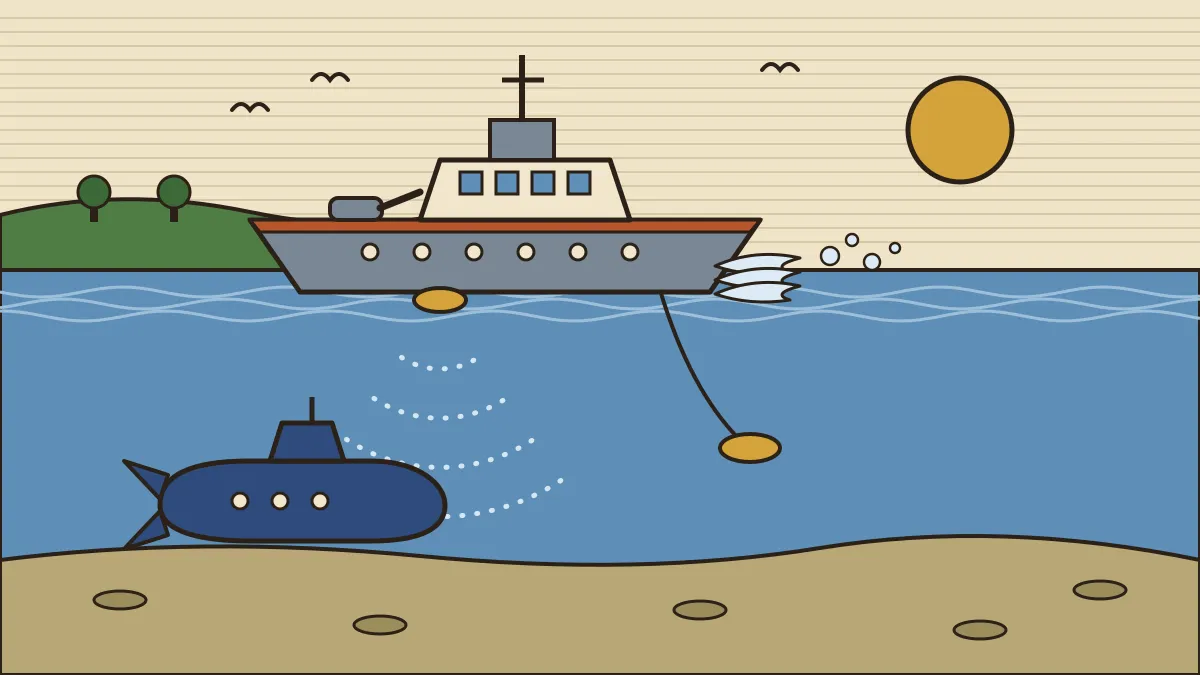
On 23 November 2026, the Ministry of Defence announced that 'Ashank', one of the Anti-Submarine Warfare Shallow Water Craft (ASW SWC), had been delivered to the Indian Navy at Visakhapatnam. The ship, listed as Yard 3036, was designed and built by Garden Reach Shipbuilders and Engineers (GRSE), Kolkata. It is the second GRSE craft of the class handed over this month, after Amini on 5 November 2026.
A delivery like this rarely makes headlines on its own. Its value for an NDA aspirant is that it sits on top of a well-defined programme: sixteen small warships, two shipyards, one requirement, and a steady drumbeat of deliveries and commissionings that the examiner can turn into a question about builders, names, firsts or roles. This article lays out the programme so that the next ship in the series is one line of revision, not a new topic.
What the Ministry announced
The release is short, and every sentence carries a fact worth holding on to.
- Builder and place. Designed and built by GRSE, Kolkata, delivered on 23 November 2026 at Visakhapatnam.
- Classification. The ASW SWCs "ex-GRSE" were designed and built to the Classification Rules of the Indian Register of Shipping (IRS). A classification society sets and checks technical rules for a hull, machinery and systems; the Navy specifies the capability, the society certifies the build standard.
- Fit. Lightweight torpedoes, indigenous rocket launchers and advanced sonar systems.
- Role. Strengthening underwater surveillance and anti-submarine warfare, "particularly in coastal water", plus coastal surveillance and mine laying.
- Propulsion. These are among the largest Indian naval warships propelled by waterjets.
- Indigenisation. Over 80 per cent indigenous content, in line with Aatmanirbhar Bharat.
The release does not give the ship's length or displacement, and it does not say where Ashank falls in the production sequence. Earlier GRSE releases give the class length as about 77 m, so that is the safe figure to carry.
Delivery is not commissioning
The most common confusion in naval current affairs is treating these two words as one event. They are separate steps in the life of a ship, and PIB uses both carefully.
- Keel laying marks the start of construction.
- Launch is when the hull is floated out, often with a naming ceremony; the ship still has to be fitted out.
- Delivery is when the shipyard hands the finished ship to the Navy after trials. From this point the Navy owns it, though it is not yet a commissioned unit.
- Commissioning is the ceremony that formally inducts the ship, hoists the naval ensign and gives it the prefix INS (Indian Naval Ship).
That is why PIB's headline says "Ashank" and not "INS Ashank". The ship has been delivered; its commissioning has not yet been announced. The GRSE craft show how long the gap can be.
| Craft | Delivered | Commissioned |
|---|---|---|
| Arnala | 8 May 2025, L&T Shipyard, Kattupalli | 18 Jun 2025, Visakhapatnam |
| Androth | 13 Sep 2025, GRSE, Kolkata | 6 Oct 2025, Visakhapatnam |
| Anjadip | 22 Dec 2025, Chennai | 27 Feb 2026, Chennai |
| Agray | 30 Mar 2026, Kolkata | 21 Jun 2026, Kolkata |
| Amini | 5 Nov 2026 | not yet announced |
| Ashank | 23 Nov 2026, Visakhapatnam | not yet announced |
Every date in the table comes from the Ministry of Defence's own releases. By our count of those releases, Ashank is the sixth of the eight GRSE-contract craft to be handed over; the Ashank release itself gives no number. Note the spread: from about three weeks (Androth) to almost three months (Agray) between delivery and commissioning. Note also that Arnala was built under a public-private partnership between GRSE and L&T Shipyard, Kattupalli, which is why its delivery took place at the private yard and not at Kolkata.
Why shallow water needs its own ship
Anti-submarine warfare is not one problem but two, and the difference is physics. A sonar sends out a sound pulse and listens for the echo. Sound behaves well in deep, open ocean. Close to the coast it does not, and a submarine that stays in the coastal belt can hide in exactly the conditions where a sonar works worst.
- Reverberation. The seabed and the surface are close together, so the pulse bounces many times and returns as a smear of echoes. A submarine sitting in that clutter can look like a rock or a wreck.
- Layers of water. Temperature and salinity change sharply near river mouths and in tidal waters, and sound bends at the boundaries. A submarine below a layer can escape a sonar that sits above it.
- Noise. Fishing boats, merchant traffic, surf and marine life all raise the background noise.
- Little room. A submarine in shallow water cannot dive away from a torpedo, but a deep-draught hunter cannot follow it into the shallows either.
The answer is a small, shallow-draught, quiet ship with the right sonar. That is the ASW SWC. It does not replace the frigate or the maritime patrol aircraft that watch the open sea. It guards the approaches to ports and the coastal belt, where a submarine would try to lay mines, land special forces or lie in wait for shipping. PIB describes the whole class as built for "coastal water", and that phrase is the one to remember.
What the craft carry and how they move
Releases across the programme describe a consistent kit.
- Sonars. A hull-mounted sonar and a Low Frequency Variable Depth Sonar (LFVDS), according to the GRSE launch release for the last hull. A variable depth sonar is lowered on a cable so that it can listen below a temperature layer; low frequency carries further through cluttered water.
- Torpedoes and rockets. Lightweight torpedoes for the kill, and anti-submarine rockets for fast, short-range attack on a spot where a contact was last held.
- Guns. An NSG-30 naval gun and a 12.7 mm stabilised remote-controlled gun for self-defence and low-intensity tasks.
- Mine laying. The ability to lay mines is listed in nearly every release. Mining the approaches to an enemy port is among the cheapest ways to deny a navy the use of its own coast.
- Speed and endurance. A maximum speed of 25 knots and an endurance of 1,800 nautical miles are given in the GRSE launch release for Abhay.
The propulsion matters as much as the weapons. Three diesel engines drive three waterjets. A waterjet draws water in, accelerates it through a nozzle and pushes the ship forward by reaction. There is no exposed propeller, so the draught stays shallow, the ship is highly manoeuvrable at low speed, and it can turn quickly to follow a contact. PIB repeatedly stresses that these are the largest Indian naval warships propelled by waterjets.
One caution on numbers: PIB figures for displacement vary from release to release and from yard to yard. The commissioning releases give about 1,500 tonnes for Androth and 1,400 tons for Anjadip, while the Cochin-built craft are described as about 1,100 tons. For the exam, remember the 77 m length and that these are corvette-sized or smaller, and the releases list torpedoes, rockets and guns but mention no helicopter or anti-ship missile.
Old names, new ships
The Navy likes to revive the names of retired vessels, and the GRSE craft carry a map of the coast in their names. Every name in the class begins with the letter A.
- Arnala: a historic fort off Vasai, Maharashtra.
- Androth: the northernmost island of the Lakshadweep group; the earlier INS Androth (P69) served for over 27 years before decommissioning.
- Anjadip: an island off the coast of Karwar, Karnataka; the earlier ship was a Petya-class corvette decommissioned in 2003.
- Agray: revives the fourth of the 1241 PE class patrol vessels, decommissioned in 2017.
- Amini: Amini Island in Lakshadweep; the earlier ship was a Petya III-class anti-submarine corvette decommissioned in 2002.
Two of the five names are Lakshadweep islands, which is worth a minute of map work in your NDA geography notes. Geography questions about islands are often hidden inside defence stories in just this way.
Two yards, sixteen hulls
The ASW SWC programme has 16 craft in total, split evenly between two shipyards.
- GRSE, Kolkata: eight ships, contract signed with the Ministry of Defence in April 2019. The class is called the Arnala class. The GRSE hulls were built partly at Kolkata and partly at the L&T yard at Kattupalli.
- Cochin Shipyard Limited (CSL), Kochi: eight ships, contract signed on 30 April 2019. This is the Mahe class, named after ports of strategic importance, among them Mahe, Malvan, Mangrol, Malpe, Mulki, Magdala and Machilipatnam. The CSL ships are classed to DNV, not IRS.
The CSL side is further on in commissioning. Mahe was delivered on 23 October 2025 and commissioned at Mumbai on 24 November 2025. Malwan (commissioned as INS Malvan) was delivered on 31 March 2026 and commissioned at Karwar on 22 July 2026. Mangrol was commissioned at Mumbai on 12 October 2026. The seventh CSL ship, Machilipatnam, was launched on 29 July 2026. PIB's keel-laying release says the eight Mahe-class ships were scheduled for delivery between August 2025 and June 2028. You can read about two of these in our earlier notes on INS Malvan and anti-submarine warfare and INS Mangrol.
Splitting one requirement between two yards is a deliberate industrial choice. It doubles the production rate, keeps two design and supply teams working, and gives the Navy a comparison on cost and schedule for the next order. The ships replace the Abhay-class anti-submarine corvettes, the Soviet-origin ships that entered service in the late 1980s.
The builder's Navy in context
The ASW SWC deliveries are one part of a larger trend. The Warship Design Bureau, the Navy's in-house design organisation, began in 1964 as the Central Design Office and has designed 20 types of warship, from seaward defence boats to aircraft carriers. The delivery of Udaygiri, a stealth frigate built by Mazagon Dock, on 1 July 2025 was marked as the 100th indigenously designed warship delivered to the nation. GRSE built the sister frigate Himgiri and, more recently, Dunagiri, which was commissioned at Kolkata on 21 June 2026 together with the survey vessel Sanshodhak and the ASW craft Agray. For the platform lists, our Defence GK page on the Navy's surface ships is the quickest revision.
What the delivery does not tell us
Good current-affairs reading records the limits as well as the milestone.
"Over 80 per cent indigenous" is a share of value, not of design. The hulls, wiring and fit-out are Indian; the hardest items to indigenise, such as high-end engines and some sensors, are where dependence tends to remain. The figure is real and rising, but it is not the same thing as independence.
Small ships cover a small part of the sea. Sixteen coastal craft guard the approaches. They do not answer the larger questions of submarine numbers and ASW helicopters, which belong to the deep-water half of the problem.
The release leaves gaps. It does not give the sequence number of the ship or its commissioning date. Treat the commissioning of Ashank and Amini as pending until the Ministry announces it.
🔑 Revision block
The event. Ashank (ASW SWC, Yard 3036), built by GRSE, Kolkata, delivered to the Navy on 23 Nov 2026 at Visakhapatnam · announced by the Ministry of Defence. Previous GRSE delivery: Amini, 5 Nov 2026.
The fit. Lightweight torpedoes · indigenous rocket launchers · advanced sonar (hull-mounted + LFVDS) · NSG-30 gun + 12.7 mm remote gun · mine laying · three waterjets driven by diesels · over 80% indigenous · about 77 m, 25 knots, 1,800 nm.
The programme. 16 craft: 8 GRSE (Arnala class, IRS rules) + 8 CSL (Mahe class, DNV rules) · both contracts April 2019 · replace the Abhay-class corvettes.
GRSE deliveries. Arnala 8 May 2025 · Androth 13 Sep 2025 · Anjadip 22 Dec 2025 · Agray 30 Mar 2026 · Amini 5 Nov 2026 · Ashank 23 Nov 2026.
Commissionings (INS prefix). Arnala 18 Jun 2025 (Visakhapatnam) · Androth 6 Oct 2025 · Anjadip 27 Feb 2026 (Chennai) · Agray 21 Jun 2026 (Kolkata). CSL: Mahe 24 Nov 2025 (Mumbai) · Malvan 22 Jul 2026 (Karwar) · Mangrol 12 Oct 2026 (Mumbai).
The names. Arnala: fort off Vasai · Androth: northernmost island of Lakshadweep · Anjadip: island off Karwar · Agray: 1241 PE class, decommissioned 2017 · Amini: Lakshadweep island.
The trap. Delivery is not commissioning. A ship without the prefix INS has been handed over but not yet inducted. Also: the class is built by two yards, never one.
The two-sided line. The programme shows serial indigenous warship building at scale; it also reminds us that engines and sensors are the chokepoints and that coastal craft are only part of the anti-submarine answer.
🎯 Practice MCQs
1. Which propulsion arrangement do Ministry of Defence releases highlight for the GRSE-built ASW Shallow Water Craft?
(a) Nuclear reactor driving a single shaft
(b) Diesel engines driving waterjets
(c) Gas turbines driving a conventional propeller
(d) Electric motors driving podded thrusters
→ (b)
The craft are among the largest Indian naval warships propelled by waterjets, with diesel engines driving three jets.
2. The ASW Shallow Water Craft built by GRSE are constructed to the Classification Rules of which body?
(a) Lloyd's Register
(b) DNV
(c) Bureau Veritas
(d) Indian Register of Shipping
→ (d)
GRSE builds to IRS rules. The Cochin-built Mahe-class craft are classed to DNV.
3. The Anti-Submarine Warfare Shallow Water Craft programme of 16 ships is divided between shipyards as:
(a) Eight by GRSE and eight by Cochin Shipyard
(b) All sixteen by GRSE
(c) Twelve by Cochin Shipyard and four by GRSE
(d) Ten by Mazagon Dock and six by Goa Shipyard
→ (a)
Both contracts were signed in April 2019 for eight ships each: the Arnala class at GRSE and the Mahe class at Cochin Shipyard.
4. Consider the following statements about the names of the GRSE-built craft:
1. Androth is named after the northernmost island of the Lakshadweep group.
2. Anjadip is named after an island off the coast of Karwar.
Which of the statements given above is/are correct?
(a) 1 only
(b) 2 only
(c) Both 1 and 2
(d) Neither 1 nor 2
→ (c)
Both are as stated in the Ministry of Defence releases on Androth and Anjadip.
5. The ASW Shallow Water Craft are intended to replace which in-service class of the Indian Navy?
(a) Kora class
(b) Khukri class
(c) Abhay class
(d) Veer class
→ (c)
The Arnala class replaces the Abhay-class anti-submarine corvettes, which entered service in the late 1980s.
6. In shipbuilding, a "yard number" such as Yard 3036 refers to:
(a) The builder's own serial number for a hull
(b) The number of the berth in a naval dockyard
(c) The pennant number painted on the bow
(d) The Navy's year of commissioning code
→ (a)
A yard number identifies the hull in the builder's records. The pennant number (such as P82 for Mangrol) is separate and is given by the Navy.
7. Which is the correct order of the stages in the life of a warship?
(a) Commissioning, delivery, launch, keel laying
(b) Delivery, launch, keel laying, commissioning
(c) Launch, commissioning, delivery, keel laying
(d) Keel laying, launch, delivery, commissioning
→ (d)
Construction starts at keel laying, the hull is launched, the finished ship is delivered to the Navy, and a ceremony then commissions it.
8. The contracts for eight ASW Shallow Water Craft each with GRSE and Cochin Shipyard were signed in:
(a) March 2015
(b) April 2019
(c) April 2021
(d) December 2022
→ (b)
The Ministry of Defence signed both contracts in April 2019; the Cochin contract is dated 30 April 2019.
📋 How this gets asked (PYQ pattern)
Naval inductions and platforms appear year after year in the General Ability paper and in service-selection discussions. The questions follow a few steady patterns.
The first is ship, builder and place: "which shipyard built X" or a match-the-following between warships and Mazagon Dock, GRSE, Cochin Shipyard, Goa Shipyard and Hindustan Shipyard. Remember each yard with one ship it has recently delivered, such as Ashank for GRSE.
The second is role and class: statement items that test whether you can tell a corvette, a frigate and a coastal anti-submarine craft apart, or that attach a capability the ship does not have. Items on this story will test the "coastal, shallow-water, torpedoes and rockets" idea.
The third is names and geography: warships named after forts, islands and ports turn into map questions. Arnala is a fort off Vasai, Androth and Amini are in Lakshadweep, Anjadip is off Karwar.
The fourth is the vocabulary of a ship's life: keel laying, launch, delivery, commissioning. Examiners like an option that swaps delivery and commissioning.
The fresh hooks this cycle are 23 November 2026 at Visakhapatnam, Yard 3036, the April 2019 contracts, and the fact that Amini and Ashank were delivered within three weeks of each other.
Preparing for NDA? Build the platform lists with our Defence GK library and the island and port names with the NDA study material. Follow the daily NDA current affairs, and prepare with our faculty in the upcoming Cavalier courses in Delhi.
Source: PIB / Ministry of Defence, "Delivery of Anti-Submarine Warfare Shallow Water Craft 'Ashank' (Yard 3036)", 23 November 2026 (Release ID 2340597). PIB / Ministry of Defence releases on the delivery of Amini (5 November 2026), Agray (30 March 2026, Release ID 2247087), Anjadip (22 December 2025, Release ID 2207446), Androth (13 September 2025, Release ID 2166488) and Arnala (8 May 2025, Release ID 2127729); on the commissioning of Arnala (18 June 2025, Release ID 2137263), Androth (6 October 2025, Release ID 2175480), Anjadip (27 February 2026, Release ID 2233666), Agray (21 June 2026) and Mangrol (12 October 2026, Release ID 2322494); on the launch of Abhay (25 October 2024, Release ID 2068207) and Ajay (21 July 2025, Release ID 2146420); on Cochin Shipyard's Mahe class (30 November 2023, Release ID 1981148; 30 May 2025, Release ID 2132735; 24 October 2025, Release ID 2182188; 31 March 2026, Release ID 2247339); and on the Warship Design Bureau (22 July 2025, Release ID 2146753).
✍️ Written by Maj Sunil Chopra — Veteran, Indian Army; defence-studies & current-affairs faculty at The Cavalier. Reviewed by the Cavalier Faculty Desk. The Cavalier, founded by ex-Army officers, has trained NDA/CDS/SSB aspirants since 2001 (Facebook · YouTube).