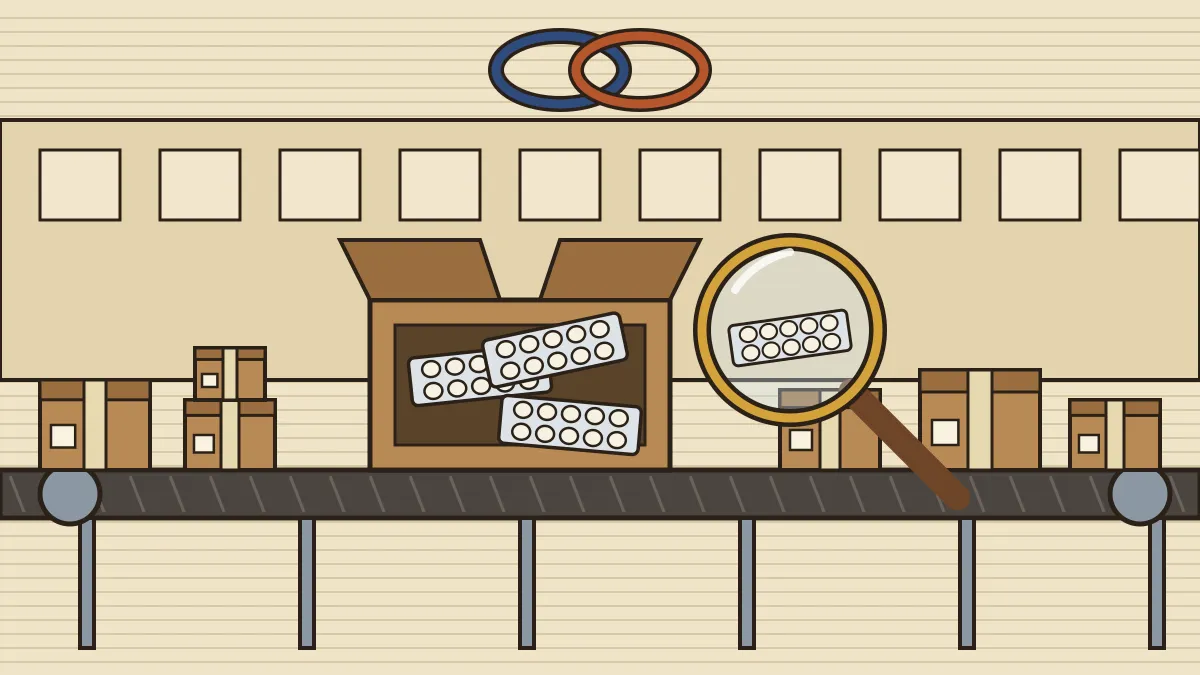
Most drug busts in the news involve a truck, a boat or a suitcase. Operation Monsoon Thunder is about something quieter: thousands of small parcels. On 21 November 2026, the Union Home Minister, Shri Amit Shah, congratulated the Narcotics Control Bureau (NCB) and the US Drug Enforcement Administration (DEA) on the "exemplary success" of the operation, which the two agencies launched jointly "to scuttle cross-border drug trafficking".
PIB set out the key operational outcomes:
- 6 persons arrested across 4 Indian cities.
- About 3,000 parcels, involving nearly 5 lakh tablets, identified as shipped within the USA.
- Data relating to more than 59,000 US subjects shared with the US DEA.
- 2 live consignments intercepted by the US DEA.
Further investigation, PIB adds, is under way "to identify the masterminds, dropshipers, trace financial proceeds and establish wider international linkages". The US Ambassador to India, Shri Sergio Gor, also praised the operation, saying that India's NCB, working closely with the DEA, "disrupted a transnational drug trafficking network supplying illegal drugs to consumers across the United States".
PIB does not say which drug was involved. It says "tablets", and we stay with that word. This article does not guess the substance; it explains what kind of network the facts describe, the law under which it is prosecuted, and the machinery that made a joint action possible.
What a parcel network looks like
The usual picture of drug trafficking is a few large, risky consignments. A parcel network turns that around: many small shipments, each of too little value to be worth a customs officer's time, sent to consumers directly. Three features are visible in the Monsoon Thunder figures.
Small units. About 3,000 parcels carrying nearly five lakh tablets works out to roughly 165 tablets per parcel on average (our own arithmetic). PIB gives no breakdown, so the average may hide large differences between parcels. The general point about such networks is that many small parcels are harder to spot than one large consignment.
The data trail. A line in the release worth noticing is the one about data on over 59,000 US subjects being shared with the DEA, alongside 2 live consignments intercepted by the DEA. PIB does not say how the data was used or whether it led to the interceptions, so we do not draw that link. It does show that the cooperation ran on information as well as arrests. A parcel business keeps customer, address and order records, which is why data matters so much in such cases.
Cross-border roles. The arrests were in India, the parcels were in the United States, and the interceptions were by American officers. No single agency could have done all three. This is why the release speaks of "India–US law enforcement cooperation" rather than of one agency's success.
India has met this pattern before. In July 2025 the NCB's Operation MED-MAX broke a pharmaceutical network that, in PIB's words, "used encrypted digital platforms, drop shipping models, and cryptocurrency to smuggle controlled medicines across four continents". That case began with a car stopped in Delhi on 25 May 2025, with 3.7 kg of Tramadol tablets, and ended with 8 arrests, parcels intercepted in the United States, a pill-making unit dismantled in Australia, and a re-shipper arrested by the DEA in Alabama. PIB called it a case of multi-agency coordination across 4 continents and more than 10 countries. PIB does not link Monsoon Thunder to MED-MAX; the two are separate operations, but they show the same method, and it is this method that NDA candidates should understand.
Drop shipping, in plain terms
In ordinary e-commerce, drop shipping means a seller takes the order, and a third party sends the goods, so the seller never touches the stock. In an illegal pharmacy network, the same structure hides the people at the top. The order-takers, the suppliers and the re-shippers (the people who post parcels locally from inside the buyer's country) are each separate, so that an arrest at one link says little about the rest. Payments through crypto-currency and encrypted messaging apps, as in MED-MAX, add another layer. That is the reason the government keeps asking for financial investigation along with seizure: the money is the one thread that runs through every link.
PIB's own figures show how large this part of the problem has become. In a 2024 reply, the Home Ministry said 1,025 cases involving parcels or couriers had been reported by all drug law enforcement agencies in the years 2020 to April 2024, and that the NCB itself had booked 92 cases involving the darknet and crypto-currencies.
The law behind the arrests
The legal basis is the Narcotic Drugs and Psychotropic Substances Act, 1985, the NDPS Act. We covered its structure when the Home Minister announced the Drug-Free India roadmap in September: punishment depends on whether a seizure is a small, intermediate or commercial quantity, and the Act is built to give effect to the UN drug conventions.
The point that matters for tablets is in the Act's name. It covers two families of substance:
| Family | Meaning | Typical example |
|---|---|---|
| Narcotic drugs | Opium-, coca- and cannabis-derived substances | Opium, heroin, cocaine |
| Psychotropic substances | Mind-altering substances, mostly synthetic, listed in the Act's schedule | Amphetamine-type stimulants and the tablets sold as medicines |
A tablet shipped as a "medicine" can be a psychotropic substance under the Act, which is why drug agencies, and not only drug regulators, deal with illegal online pharmacy trade. The NCB's May 2026 Operation RAGEPILL is an example from the same year: PIB records that it made India's first-ever seizure of Captagon, a drug whose main components, fenetylline and amphetamine, are psychotropic substances under the NDPS Act, with 227.7 kg recovered.
The constitutional footing is also familiar. "Drugs and poisons" is an entry in the Concurrent List, so both Parliament and the States can legislate, and Article 47, a Directive Principle, directs the State to work to prohibit intoxicating drugs injurious to health. Revise the Directive Principles with our NDA polity notes on DPSP.
The machinery: who does what
The headline agency is the NCB, set up in 1986, a year after the Act, as the apex drug law enforcement agency under the Ministry of Home Affairs. According to the Home Ministry's own figures, the NCB has increased its regional offices from 3 to 7 and upgraded its sub-zones to zones, making 30 zonal units across the country.
But the NCB is only one part of a larger structure that PIB has described in successive replies in Parliament:
- NCORD, the Narco-Coordination Centre, a four-tier mechanism (apex, executive, State and district levels), with an Anti-Narcotics Task Force in every State and Union Territory as its secretariat.
- A Joint Coordination Committee under the Director General of the NCB, to monitor important and significant seizures.
- A Task Force on Darknet and Crypto-Currency under the Multi Agency Centre mechanism, to monitor platforms that facilitate narco-trafficking.
- Border-guarding forces (BSF, Assam Rifles, SSB), the Railway Protection Force and the Indian Coast Guard, all of which have been empowered under the NDPS Act to search, seize and arrest in their own areas.
- The MANAS helpline, 1933, for citizens to report drug-related issues, and NIDAAN, a national database of arrested NDPS offenders.
The Coast Guard and the Assam Rifles are the armed forces' direct contribution, which is why this topic belongs in a defence aspirant's notes as much as in a polity chapter. For the wider internal-security picture, including the machinery that tracks terrorism, read our note on the counter-terrorism conference of 19 November.
The international side
A parcel sent from Delhi to an American doorstep crosses two legal systems, and neither agency can act in the other's territory. PIB's description of India's international arrangements shows how that gap is bridged.
- Bilateral agreements with 27 countries, Memoranda of Understanding with 16, and agreements on security cooperation with 2 more, all aimed at illicit trafficking in narcotics and chemical precursors.
- Real-time information sharing by the NCB with the Drug Liaison Officers posted in India by other countries' agencies. PIB names the DEA of the United States, the National Crime Agency of the UK, the Royal Canadian Mounted Police, the Australian Federal Police and France's OFAST.
- Controlled delivery operations, in which a consignment is allowed to move under watch so that the whole chain, and not just the first link, can be arrested.
- Links with the International Narcotics Control Board (INCB) and its alert systems PEN (pre-export notification), PICS (precursors incident communication) and IONICS (new psychoactive substances), and with bodies such as the UNODC, BRICS, BIMSTEC, SCO and ASEAN drug forums.
The DEA is the US federal agency that enforces its controlled-substances laws. In Monsoon Thunder, the pattern was simple: Indian officers acted on the supply side inside India, and American officers acted on the receiving side inside the United States, with data passing between them.
Why it matters for national security
The Home Minister's post carried two lines worth remembering: that the arrests and seizures "stand as a testament to the power of the India–US partnership", and that the government is "firmly committed to ensuring that neither a gram of narcotics enters India nor leaves for other countries". The second fits the policy the Home Minister described in September 2026: a three-year roadmap running from July 2026 to July 2029, in which the fight against drugs is treated as a priority of national security.
Two facts keep that framing honest. First, India is both a destination and a source and transit country: Monsoon Thunder and RAGEPILL both concern drugs leaving the country, not only entering it. Second, the networks use ordinary, legal infrastructure: courier companies, business-to-business web platforms and payment channels. That is why the agencies' answer is also ordinary at heart: intelligence, data-sharing, financial tracing and cooperation, rather than only force.
A caution on reading such releases. The figures here are outcomes announced by the agencies at the stage of arrest and interception. The investigation is continuing, and no conviction has been reported. Treat the numbers as the state of play on 21 November 2026, not as a final result.
🔑 Revision block
- 21 November 2026: Home Minister Amit Shah congratulated NCB and US DEA on Operation Monsoon Thunder, jointly launched against cross-border drug trafficking; US Ambassador Sergio Gor also praised it.
- Outcomes: 6 arrested in 4 Indian cities; about 3,000 parcels, nearly 5 lakh tablets, shipped within the USA; data on 59,000+ US subjects shared; 2 live consignments intercepted by DEA. Probe continues into masterminds, drop-shippers and financial trail.
- Precedent: Operation MED-MAX (July 2025): Tramadol seizure in Delhi on 25 May 2025; 8 arrests; 4 continents, 10+ countries; DEA arrested a re-shipper in Alabama. RAGEPILL (May 2026): India's first Captagon seizure, 227.7 kg.
- Law: NDPS Act, 1985: narcotic drugs + psychotropic substances; quantity-based punishment. Drugs and poisons = Concurrent List; Article 47 (DPSP).
- NCB: 1986, MHA; regional offices 3 to 7; 30 zonal units. NCORD (4-tier), ANTF in each State/UT, JCC under DG NCB, Darknet and Crypto Task Force under MAC.
- Empowered under NDPS Act: BSF, Assam Rifles, SSB, RPF, Indian Coast Guard. MANAS helpline 1933; NIDAAN database.
- International: bilateral agreements with 27 countries, MoUs with 16; Drug Liaison Officers; controlled delivery; INCB: PEN, PICS, IONICS.
- DEA: the US federal drug enforcement agency. Three-year anti-drug roadmap, July 2026 to July 2029 (described in Sept 2026).
🎯 Practice MCQs
Q1. Operation Monsoon Thunder, praised by the Home Minister on 21 November 2026, was jointly launched by the Narcotics Control Bureau and:
(a) Interpol
(b) The UN Office on Drugs and Crime
(c) The US Drug Enforcement Administration
(d) The Australian Federal Police
→ (c)
The US Ambassador also commended the "joint success of NCB and US DEA". Australian authorities featured in the separate 2025 MED-MAX case.
Q2. The Narcotics Control Bureau functions under the:
(a) Ministry of Home Affairs
(b) Ministry of Finance
(c) Ministry of Health and Family Welfare
(d) Ministry of Social Justice and Empowerment
→ (a)
It is the apex drug law enforcement agency, set up in 1986. Nasha Mukt Bharat Abhiyaan, the demand-side campaign, sits with Social Justice.
Q3. How many persons were arrested across four Indian cities under Operation Monsoon Thunder, according to PIB?
(a) 2
(b) 3
(c) 4
(d) 6
→ (d)
The release also lists about 3,000 parcels, nearly 5 lakh tablets and data on over 59,000 US subjects.
Q4. The Narcotic Drugs and Psychotropic Substances Act, 1985 deals with narcotic drugs and:
(a) Precursor chemicals only
(b) Psychotropic substances
(c) Tobacco products
(d) Alcoholic beverages
→ (b)
Mind-altering synthetic substances, such as the fenetylline and amphetamine in Captagon, are psychotropic substances under the Act.
Q5. Consider the following statements:
1. The Border Security Force and the Assam Rifles have been empowered under the NDPS Act to search, seize and arrest at international borders.
2. The Indian Coast Guard has no powers under the NDPS Act.
Which of the statements given above is/are correct?
(a) 1 only
(b) 2 only
(c) Both 1 and 2
(d) Neither 1 nor 2
→ (a)
The Coast Guard has been empowered to interdict narcotic drugs in coastal waters and on the high seas, so statement 2 is wrong.
Q6. Consider the following statements:
1. The NCB has increased its Regional Offices from 3 to 7 and upgraded its Sub-Zones to Zones.
2. The NCB shares operational information in real time with the Drug Liaison Officers of other countries, including the DEA.
Which of the statements given above is/are correct?
(a) 1 only
(b) 2 only
(c) Both 1 and 2
(d) Neither 1 nor 2
→ (c)
PIB (December 2024) records the rise in NCB regional offices from 3 to 7, and lists the DEA among the agencies with which the NCB shares real-time information.
Q7. The National Cybercrime Helpline number run by the Ministry of Home Affairs is:
(a) 112
(b) 1930
(c) 1933
(d) 14446
→ (b)
1933 is the MANAS anti-narcotics helpline, and 14446 is the government's toll-free de-addiction helpline.
Q8. India's first-ever seizure of Captagon, announced in May 2026, came under which NCB operation?
(a) Operation White Strike
(b) Operation MED-MAX
(c) Operation Monsoon Thunder
(d) Operation RAGEPILL
→ (d)
227.7 kg was seized. White Strike (May 2026) was a 349 kg cocaine case in the Mumbai region, and MED-MAX (July 2025) was a pharmaceutical network case.
📋 How this gets asked (PYQ pattern)
Internal-security questions on drugs come in three recognisable forms.
The first is agency and ministry: which body is under which ministry (NCB under MHA, CBN under Finance, NCORD under MHA), and which forces have powers under the NDPS Act. The trap is to put the Central Bureau of Narcotics, which controls licit opium cultivation, in the same ministry as the NCB.
The second is law and list: the year of the NDPS Act, what a psychotropic substance is, which Constitution entry covers "drugs and poisons", and which Article is the Directive Principle on intoxicating drugs. Options are kept one step away from the right answer, so learn the numbers: 1985 for the Act, Article 47 for the Directive Principle.
The third is geography and cooperation: where drugs come from (Golden Crescent and Golden Triangle) and which international bodies or partner agencies are involved (INCB, UNODC, DEA). The fresh hooks this cycle are Operation Monsoon Thunder, MED-MAX, RAGEPILL, 1933 and 2029. We describe the pattern only, not any exact past question.
Preparing for NDA? Learn the NDPS chain once, from Act to agency to partner abroad, and revise the Directive Principles with our NDA polity notes on DPSP. Follow the daily NDA current affairs, and train with experienced faculty in the upcoming Cavalier courses in Delhi.
Source: PIB / Ministry of Home Affairs, "Union Home Minister and Minister of Cooperation Shri Amit Shah congratulates NCB and US DEA on the exemplary success of Operation Monsoon Thunder" (21 November 2026). Background from MHA releases "Union Home Minister congratulates NCB and all agencies on busting a global drug cartel" (Operation MED-MAX, 2 July 2025), "Operation RAGEPILL" (16 May 2026), "Strengthening NDPS Act and tackling cross-border drug trafficking" (18 December 2024) and "Drug trafficking in the country" (24 July 2024); "Drug trafficking in the country" and "NDPS cases" (Parliament replies, July and December 2024); the Home Minister's press conference of 6 September 2026.
✍️ Written by Hitendra Deswal — Polity & current-affairs faculty at The Cavalier. Reviewed by the Cavalier Faculty Desk.