India marks Children's Day on 14 November, the birthday of Jawaharlal Nehru, born at Allahabad in 1889. The day has been observed on his birth anniversary since 1964, the year he died. Nehru was also his own Foreign Minister for seventeen years, and he left India two big ideas for dealing with the world: Panchsheel, five rules for how states should behave towards each other, and non-alignment, the refusal to join either side in the Cold War. UPSC asks about both nearly every year, usually as one-line questions on what the five principles are and who the founders were. The 1962 war with China showed how hard both were to live by.
Panchsheel: The Five Principles and the Treaty They Came From
The word comes from Sanskrit and Pali: panch (five) and sheel (virtuous conduct), echoing the five precepts of Buddhist ethics. The principles were first written into a treaty on 29 April 1954, at Peking (Beijing). Its full title was the Agreement on Trade and Intercourse between the Tibet Region of China and India, and the five principles sit in its preamble, not in the operative articles. The agreement was to run for eight years.
| # | Principle (as worded in the 1954 preamble) | What it meant in practice |
|---|---|---|
| 1 | Mutual respect for each other's territorial integrity and sovereignty | No claim on the other's land; borders respected |
| 2 | Mutual non-aggression | No use of force against each other |
| 3 | Mutual non-interference in each other's internal affairs | No meddling in politics or ideology |
| 4 | Equality and mutual benefit | Trade and diplomacy between equals, not patron and client |
| 5 | Peaceful coexistence | States with different systems can live side by side |
The treaty itself was practical. India gave up the special rights it had inherited from British rule in Tibet, including military escorts at trade posts and its postal and telegraph services, and accepted that Tibet was a "Tibet Region of China". In return, both countries set up trade agencies (Indian agencies at Yatung, Gyantse and Gartok) and opened six Himalayan passes for traders and pilgrims: Shipki La, Lipulekh, Mana, Niti, Kungri Bingri and Darma. Zhou Enlai came to Delhi in June 1954 and repeated the five principles in a joint statement with Nehru. Hindi-Chini bhai-bhai became a popular slogan.
The wrong options in past papers are plausible foreign-policy ideas: nuclear deterrence, nuclear non-proliferation, cultural cooperation, collective security. None is a Panchsheel principle. Also note that the principles are an agreement between two states. They are not a clause of the Constitution, although Article 51 (a Directive Principle on promoting international peace and respect for treaty obligations) points the same way. Our Directive Principles page covers it.
Bandung 1955 and Brioni 1956: Building the Third Path
By 1954 the Cold War had hardened into rival alliances: NATO (1949), then SEATO and the Baghdad Pact, and in 1955 the Warsaw Pact. Nehru argued that newly free Asian and African nations would lose their independence if they joined any of them. He first used the word "non-alignment" in a speech at Colombo in 1954, although V.K. Krishna Menon had put the idea to the United Nations a year earlier.
The next step came from five Asian leaders known as the Colombo Powers: Burma, Ceylon, India, Indonesia and Pakistan. They sponsored the Asian-African Conference at Bandung, Indonesia, from 18 to 24 April 1955. 29 countries came, including China, Egypt, Japan and the Gold Coast (the future Ghana). Much of Asia and Africa was still under colonial rule or newly free. The Soviet Union and the Western powers were not invited, though a few US allies such as Turkey, Thailand and the Philippines came. Its final communiqué set out ten principles: the Panchsheel ideas widened to include the UN Charter, human rights, racial equality, the right of self-defence, peaceful settlement of disputes and abstention from collective defence pacts that serve great powers.
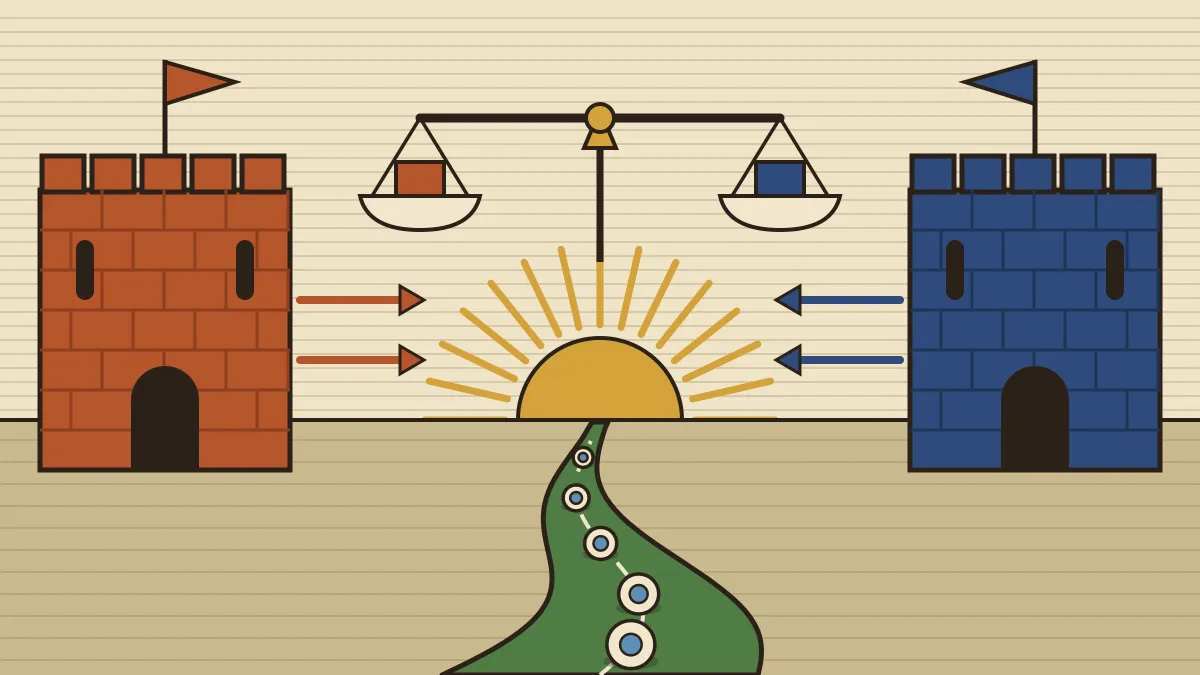
The movement's founding circle formed in July 1956 at the Brioni islands in Yugoslavia, where Tito, Nehru and Nasser met and signed a declaration against bloc politics. CDS 2019-I asked who began Afro-Asian solidarity as a core idea of foreign policy: Nehru.
Belgrade 1961: The Five Founders and the Rules of Entry
A preparatory meeting at Cairo in June 1961 fixed who could attend. The First Summit of the Non-Aligned Movement followed at Belgrade, 1 to 6 September 1961, with 25 member countries and three observers. A first membership test was agreed at Cairo: an independent policy based on coexistence and non-alignment; support for national independence movements; no membership of a multilateral military alliance formed in the context of great-power rivalry; no bilateral military pact with a great power in that context; and no foreign military bases on the member's soil at the great power's request.
| Founder | Country | Why remembered |
|---|---|---|
| Jawaharlal Nehru | India | Architect of the idea; co-author of Panchsheel; Prime Minister 1947-64 |
| Gamal Abdel Nasser | Egypt | Nationalised the Suez Canal (1956); leader of Arab nationalism |
| Josip Broz Tito | Yugoslavia | Broke with Stalin in 1948; host of Brioni and Belgrade |
| Kwame Nkrumah | Ghana | First leader in sub-Saharan Africa to win independence (1957) |
| Sukarno | Indonesia | Host of Bandung; first president of Indonesia |
Neutrality means staying out of a war. Non-alignment means staying out of the blocs while taking positions on every issue on its merits. Fidel Castro led Cuba into the movement and later hosted the 1979 summit, but he was never one of the five founders (CDS 2023-I tested exactly that). India was also not a mere member. It chaired NAM from the 1983 New Delhi summit (7 to 12 March), when Indira Gandhi took over from Castro, until 1986.
The Summit Trail, 1961 to 2024
NAM has no charter and no permanent secretariat. The summit is its highest body, the chair rotates, and a Coordinating Bureau sits at the UN in New York. Summits are held roughly every three years, though the gaps have been long. Today it has about 120 member states and more than fifteen observers.
| No. | Year | Host city | Note |
|---|---|---|---|
| 1 | 1961 | Belgrade | Founding summit, 25 members |
| 2 | 1964 | Cairo | First after Nehru's death |
| 3 | 1970 | Lusaka | Zambia |
| 4 | 1973 | Algiers | Call for a New International Economic Order |
| 5 | 1976 | Colombo | Sri Lanka |
| 6 | 1979 | Havana | Cuba |
| 7 | 1983 | New Delhi | India chairs until 1986 |
| 8 | 1986 | Harare | Zimbabwe |
| 9 | 1989 | Belgrade | Last summit of the Cold War |
| 10 | 1992 | Jakarta | First after the Soviet Union ended |
| 11 | 1995 | Cartagena | Colombia |
| 12 | 1998 | Durban | South Africa |
| 13 | 2003 | Kuala Lumpur | Malaysia |
| 14 | 2006 | Havana | Cuba again |
| 15 | 2009 | Sharm el-Sheikh | Egypt |
| 16 | 2012 | Tehran | Iran |
| 17 | 2016 | Porlamar, Margarita Island | Venezuela |
| 18 | 2019 | Baku | Azerbaijan chaired until 2023 |
| 19 | 2024 | Kampala | Uganda chairs 2024-27 |
The early summits fought colonialism, the middle ones demanded fairer trade, and after 1989 the movement lost its obvious enemy: with the Cold War over, critics asked what NAM was for.
1962: The War That Tested Both Ideas
Nehru had been among the first non-communist leaders to recognise the People's Republic of China (1949-50) and had backed its place at the United Nations. The friendship cooled quickly. China built a road across Aksai Chin, a region India claimed. The Dalai Lama fled to India in March 1959 and was given asylum. India adopted a "forward policy" of setting up border posts, and talks between Zhou Enlai and Nehru in April 1960 failed. China attacked on 20 October 1962 in the western sector (Ladakh) and the east (NEFA, now Arunachal Pradesh).
The fighting ended on 21 November 1962, when China announced a unilateral ceasefire and withdrew from most of the territory it had taken in the east, while keeping Aksai Chin. India's defining stand was at Rezang La (18 November), where the 13 Kumaon under Major Shaitan Singh held out against overwhelming numbers and he received the Param Vir Chakra. The 1954 treaty expired in June 1962 and was never renewed.
| Fallout | Detail |
|---|---|
| Politics | V.K. Krishna Menon resigned as Defence Minister (31 October 1962); Y.B. Chavan took over. Nehru admitted in Parliament that India had been living in an unreal atmosphere. |
| Constitution | A National Emergency was declared in October 1962 on grounds of external aggression, the first of three in Indian history. See our Emergency provisions page. |
| Military | Rapid expansion and modernisation of the army, and the creation of new mountain forces. The Henderson Brooks-Bhagat report on the defeat remains classified. |
| Diplomacy | Nehru appealed to US President Kennedy for air support. India still did not join any alliance. |
| NAM | A six-nation Afro-Asian conference at Colombo (December 1962) proposed a basis for talks. India accepted the proposals in full, China only partly. No NAM state backed India militarily, a lesson Delhi remembered. |
Panchsheel had not failed because its words were wrong. It failed because China and India disagreed about where the border lay, and the principle of "mutual respect for territorial integrity" cannot work when each side believes the same land is its own. In the next decades India stayed non-aligned in name but leaned towards the Soviet Union for arms, and in August 1971 signed the Indo-Soviet Treaty of Peace, Friendship and Cooperation.
Non-Aligned in 2026: Strategic Autonomy and the Global South
India's present phrase is strategic autonomy: decide each issue on India's interest, take defence equipment from several suppliers and join groupings that cut across blocs. Delhi sits in the Quad, BRICS and the SCO. Prime Minister Modi has not attended a NAM summit in person; India has sent a Vice-President or a minister. Instead, India leads a newer idea, the Global South, hosting the Voice of Global South Summit (January 2023) and securing the African Union's entry into the G20 at New Delhi in 2023.
Our recent explainers show the same old principles at work. India's chairship of BRICS is covered in the 18th BRICS summit report. The China question returned in the Modi-Xi meeting and its "three mutuals" formula, nearly seventy years after Zhou Enlai's visit. The roots of this thinking lie in the Gandhian phase of the national movement.
How UPSC Has Asked It: Past Papers Solved
Seven genuine questions from 2019 to 2026.
Which one among the following was NOT a Panchsheel principle?
(a) Peaceful Co-existence (b) Mutual respect for territorial integrity (c) Nuclear deterrence (d) Non-interference in internal affairs
Answer: (c). Three of the options are in the 1954 preamble. Nuclear deterrence belongs to strategic doctrine, not to Panchsheel.
Which of the following is NOT a part of the five principles enshrined in the 'Panchsheel' agreement signed by India and China in 1954?
(a) Mutual non-aggression (b) Mutual non-interference (c) Peaceful coexistence (d) Cultural cooperation
Answer: (d). The tempting wrong option is (a), which sounds like a loose phrase but is a genuine principle: mutual non-aggression is the second one. Cultural cooperation is not on the list.
Which one among the following does NOT figure among the Five Principles of Panchsheel?
(a) Mutual respect for each other's territorial integrity and sovereignty (b) Equality and mutual benefit (c) Peaceful coexistence (d) Nuclear non-proliferation
Answer: (d). Non-proliferation became a global issue with the 1968 NPT, fourteen years after Panchsheel. The other three are principles 1, 4 and 5.
With reference to the Panchsheel, which of the following is/are correct? I. Mutual respect for territorial integrity and sovereignty. II. Mutual non-interference. III. Collective security against non-aggression. IV. Peaceful co-existence.
(a) I only (b) I, II and III (c) II, III and IV (d) I, II and IV
Answer: (d). Statements I, II and IV are principles. Statement III is a made-up phrase. The real principle is mutual non-aggression, and "collective security" is the language of alliances like NATO, the opposite of non-alignment.
Who among the following was not in the core leadership of the Non-Aligned Movement (NAM) in its formative phase?
(a) Kwame Nkrumah (b) Gamal Abdel Nasser (c) Jawaharlal Nehru (d) Fidel Castro
Answer: (d). The five founders were Nehru, Nasser, Tito, Nkrumah and Sukarno. Cuba was one of the 25 members at Belgrade, but Castro was not among the five leaders who shaped the movement.
Nkrumah was one of the five leaders, who comprised the core of the Non-Aligned Movement (NAM). He was the leader of which country in Africa?
(a) Nigeria (b) Kenya (c) Uganda (d) Ghana
Answer: (d). Nkrumah led the Gold Coast to independence as Ghana in 1957.
Afro-Asian solidarity as a central element of India's foreign policy was initiated by which of the following Prime Ministers?
(a) Narendra Modi (b) I. K. Gujral (c) J. L. Nehru (d) Manmohan Singh
Answer: (c). Nehru convened the Asian Relations Conference in Delhi in 1947 and promoted Bandung. Gujral's name is attached to a different idea, the Gujral Doctrine of friendly relations with neighbours.
Four of the seven questions ask for the odd one out of the five principles. Learn them as respect, no aggression, no interference, equality, coexistence. For people, remember Nehru, Nasser, Tito, Nkrumah, Sukarno (India, Egypt, Yugoslavia, Ghana, Indonesia).
Practice MCQs (with answers)
- The five principles of Panchsheel were first set out in the preamble of the 1954 agreement between India and
- Pakistan
- China
- Burma
- Indonesia
- Which of these countries attended the Bandung Conference of 1955 but was NOT among its five sponsors, the Colombo Powers?
- Burma
- Ceylon
- Indonesia
- Egypt
- The first summit of the Non-Aligned Movement, in September 1961, was held at
- Belgrade
- Cairo
- Bandung
- Colombo
- Which of the following founders is matched with the correct country?
- Nkrumah: Nigeria
- Sukarno: Malaysia
- Nasser: Egypt
- Tito: Czechoslovakia
- India chaired NAM after hosting its summit at New Delhi in
- 1979
- 1983
- 1986
- 1992
- For how many years was the 1954 India-China agreement on Tibet to remain in force?
- 5
- 10
- 12
- 8
- Which of the following was one of the tests for NAM membership agreed at Cairo in 1961?
- An independent policy based on coexistence and non-alignment
- Membership of NATO
- Hosting a foreign military base
- A bilateral military treaty with a great power
- The Bandung Conference of 1955 announced how many principles?
- Five
- Seven
- Ten
- Twelve
1-b, 2-d, 3-a, 4-c, 5-b, 6-d, 7-a, 8-c. Q2: Egypt attended, but the five sponsors were Burma, Ceylon, India, Indonesia and Pakistan. Q5: the summit was in March 1983; India held the chair until 1986. Q7: the other three options are exactly what a member must NOT have.
Quick Revision
- Panchsheel: signed 29 April 1954, Peking, in the preamble of the India-China agreement on Tibet. Eight-year term, lapsed June 1962. Five principles: respect for territorial integrity and sovereignty, non-aggression, non-interference, equality and mutual benefit, peaceful coexistence.
- Bandung: 18 to 24 April 1955, 29 countries, ten principles; sponsors Burma, Ceylon, India, Indonesia, Pakistan. Brioni: July 1956 (Tito, Nehru, Nasser).
- Belgrade: 1 to 6 September 1961, 25 members. Founders: Nehru, Nasser, Tito, Nkrumah, Sukarno. Castro was not a founder.
- NAM: no charter, no secretariat, about 120 members. Summits: New Delhi 1983 (7th), Baku 2019 (18th), Kampala 2024 (19th).
- 1962: war 20 October to 21 November; China keeps Aksai Chin; Rezang La, Shaitan Singh PVC; Krishna Menon resigns; Emergency declared.
- Non-alignment is not neutrality. Today: strategic autonomy and the Global South. Children's Day: 14 November, since 1964.
Frequently asked questions
What are the five principles of Panchsheel?
The five principles are mutual respect for each other's territorial integrity and sovereignty, mutual non-aggression, mutual non-interference in each other's internal affairs, equality and mutual benefit, and peaceful coexistence. They were first written into the preamble of the India-China agreement on Tibet, signed at Peking on 29 April 1954.
Who were the founders of the Non-Aligned Movement?
Five leaders formed its core: Jawaharlal Nehru of India, Gamal Abdel Nasser of Egypt, Josip Broz Tito of Yugoslavia, Kwame Nkrumah of Ghana and Sukarno of Indonesia. The first summit was held at Belgrade from 1 to 6 September 1961, with 25 member countries.
What is the difference between non-alignment and neutrality?
Neutrality means staying out of a war between other states. Non-alignment means not joining either power bloc in peacetime and judging each issue on its merits.
How did the 1962 war affect Panchsheel and non-alignment?
The war showed that Panchsheel could not settle a border dispute when each side claimed the same land. India still stayed outside military blocs, but it reorganised and expanded its army, drew closer to the Soviet Union for arms, and later signed the 1971 Indo-Soviet treaty. No non-aligned country gave India military help.
Is the Non-Aligned Movement still relevant today?
It still has about 120 members and is the biggest grouping of states outside the UN, but it lost its clear purpose when the Cold War ended in 1991. India now speaks of strategic autonomy and of leading the Global South.
Related CDS / OTA History topics
Foreign-policy history is a steady scorer in GS
Cavalier's CDS/OTA batches teach modern history and international relations as one connected story, with weekly PYQ tests that expose the favourite traps.