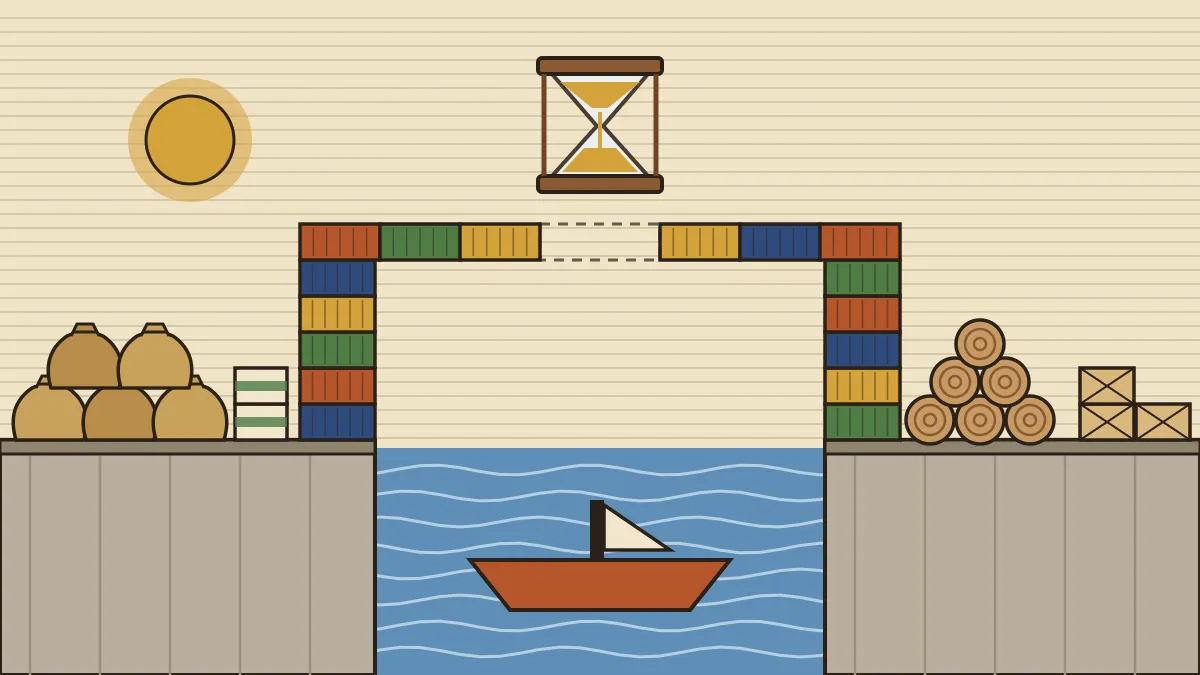
Trade agreements are rarely finished in a single dramatic meeting. They are built round by round, chapter by chapter, by teams of officials who sit across a table for days and argue over words such as "originating" and "substantially". The sixth round of the India–Canada Comprehensive Economic Partnership Agreement (CEPA) was one such stretch of patient work. It ran in New Delhi from 11 to 20 November 2026, and the Ministry of Commerce and Industry announced its close on 21 November.
India's team was led by Dr Brij Mohan Mishra, Chief Negotiator, and Canada's by Ms Mary-Catherine Speirs, also a Chief Negotiator. The talks covered trade in goods, trade in services, rules of origin, trade remedies, intellectual property and investment promotion. The round opened on 11 November with a meeting between Piyush Goyal, Minister of Commerce and Industry, and Maninder Sidhu, Canada's Minister of International Trade. Towards the end, Commerce Secretary Rajesh Agrawal met Canada's Vice Minister of International Trade, Glenn Purves, to review how far the two sides had come.
PIB's wording is careful. Both sides made "progress", the discussions were "constructive and substantive", and everyone remains committed to concluding "within the ambitious timelines envisaged by the leaders". No chapter was announced as closed. This article explains what that means, how such a negotiation actually works, and why the India–Canada deal matters well beyond the tariff schedule.
The sixth round at a glance
| Item | Detail |
|---|---|
| Dates | 11 to 20 November 2026 |
| Venue | New Delhi |
| India's chief negotiator | Dr Brij Mohan Mishra |
| Canada's chief negotiator | Ms Mary-Catherine Speirs |
| Ministers who met | Piyush Goyal and Maninder Sidhu, on 11 November |
| Officials who reviewed progress | Commerce Secretary Rajesh Agrawal and Canadian Vice Minister Glenn Purves |
| Topics named by PIB | Goods, services, rules of origin, trade remedies, intellectual property, investment promotion |
| Outcome announced | Progress reported; no chapter declared concluded |
The last row is the honest summary. A round that ends without a signed text is not a failure. It is how nearly every large trade deal moves.
How a trade agreement is negotiated
A CEPA has a life cycle, and each stage has its own vocabulary.
- Political decision. The leaders agree that talks should begin. For India and Canada this happened when Narendra Modi and Mark Carney met on the sidelines of the G20 Summit in Johannesburg, and PIB recorded on 23 November 2025 that the leaders agreed to begin negotiations.
- Terms of Reference (ToR). This short document fixes the format, frequency and approach of the talks and the broad subjects they will cover. The India–Canada ToR was signed on 2 March 2026 in New Delhi, with both Prime Ministers present at Hyderabad House.
- Negotiating rounds. Delegations meet, often for a week or more, with a separate group for each chapter. Between rounds, officials keep working in smaller "intersessional" meetings, which can be held by video link.
- Closing chapters. A chapter is "closed" when both sides agree its text. The hard ones, usually market access for goods and services, are left for last because they are traded against each other.
- Legal scrubbing and signature. Lawyers check every clause, and the agreement is then signed by the trade ministers or leaders.
- Ratification and entry into force. Each country completes its own domestic steps, and the agreement starts on an agreed date, as the India–Oman CEPA did on 1 June 2026.
Each country also has its own domestic approvals. In India, trade agreements normally go to the Union Cabinet before signature, and the legislative and legal steps differ from country to country.
What the chapters mean
A modern CEPA is wide. PIB's March 2026 release says the India–Canada talks cover trade in goods, services and "other mutually agreed policy areas". PIB highlighted six areas for the sixth round, and each deserves a plain explanation.
Trade in goods and market access. This is the tariff schedule: which goods will see duties cut or removed, how fast, and which are kept off the list because a country wants to protect farmers or small industry. It is the most politically sensitive chapter in every deal.
Rules of origin. Preferential tariffs must apply only to goods that really come from the partner. Otherwise a third country could route its goods through one partner and enjoy the benefit. The rules set the test, such as a minimum share of value added locally or a change in the product's tariff heading after processing. Stricter rules protect domestic producers. Looser rules help exporters who import parts. The same rules also decide whether a Canadian pulse processor or an Indian garment maker can use the deal at all.
Trade remedies. These are the lawful defences against unfair or sudden imports: anti-dumping duties (when goods are sold abroad below fair price), countervailing duties (when foreign subsidies make exports cheap) and safeguard measures (a temporary curb on a surge of imports). In India the investigating body is the Directorate General of Trade Remedies (DGTR) in the Department of Commerce. The chapter sets how each side may use these tools against the other.
Trade in services. Services are where India's strengths lie. PIB's March 2026 release names telecommunications, computer and information services and other business services as the leading Indian service exports to Canada. A services chapter also covers the movement of professionals for short assignments, often called the "temporary movement of business persons".
Intellectual property. The chapter sets how patents, trademarks, copyrights and related rights are protected and enforced. For pharmaceuticals, India's largest export to Canada, this is a chapter with real commercial weight.
Investment promotion. This covers how each country welcomes and protects the other's investors. Canadian pension funds are among the large foreign investors in India, and PIB's 27 May 2026 release records an investment roundtable with them in Toronto.
The road to the sixth round
The present talks are a restart. India and Canada first tried to reach a deal years ago, and the story has three phases.
| Date | Event |
|---|---|
| March 2022 | At the fifth Ministerial Dialogue on Trade and Investment, ministers agree to relaunch CEPA talks and consider an "Early Progress Trade Agreement" |
| May 2023 | Ahead of the sixth Dialogue, PIB records that seven rounds of negotiations had been held since March 2022 |
| 2023 | Relations rupture; talks stall |
| From mid-2025 | High-level engagement resumes; PIB describes it as "sustained" |
| 23 November 2025 | Leaders agree at the G20 in Johannesburg to begin CEPA negotiations |
| 2 March 2026 | Terms of Reference signed in New Delhi |
| March 2026 | First round, held virtually (PIB, 26 May 2026) |
| 4 to 8 May 2026 | Second round at Vanijya Bhawan, New Delhi |
| 25 to 29 May 2026 | Technical negotiations in Ottawa, alongside Piyush Goyal's visit |
| 11 to 20 November 2026 | Sixth round, New Delhi |
The 2023 rupture and the diplomatic recovery are covered in our earlier article on the inaugural India–Canada Defence Dialogue. The point to take from this table is the speed. Six rounds in about eight months is quick by the standards of trade diplomacy, and it is why both governments describe the process as "fast-tracked".
The numbers behind the deal
PIB's releases give a consistent picture of a modest trade relationship with room to grow.
- FY 2024-25: bilateral trade of about US$ 8.66 billion, made up of Indian exports of US$ 4.22 billion and imports of US$ 4.44 billion (PIB, 2 March 2026, citing DGCI&S).
- FY 2025-26: trade of about US$ 8 billion, with Indian exports of US$ 4.67 billion and imports of US$ 3.28 billion (PIB, 23 May 2026). India moved from a small deficit with Canada to a surplus.
- The target: both Prime Ministers have set a goal of US$ 50 billion in bilateral trade by 2030.
Read this target with care. PIB's 23 November 2025 release describes the aim as "doubling" bilateral trade to US$ 50 billion by 2030, yet the DGCI&S goods figures above are far below half of that. PIB does not explain the baseline, so do not treat the target as a simple multiple of the goods-trade numbers. What PIB does record is that Canada's Prime Minister called the proposed agreement a "game changer" (26 May 2026). For examinations, remember the figure exactly as PIB gives it: US$ 50 billion by 2030.
What each side sells. Indian exports to Canada include drugs and pharmaceuticals, iron and steel, seafood, cotton garments, electronic goods and chemicals. Indian imports from Canada include pulses, pearls and semi-precious stones, coal, fertilisers, paper and petroleum crude. The two baskets fit together. Canada needs affordable manufactures and medicines. India needs pulses, fertilisers, energy and minerals.
The people link. PIB records that Canada is home to more than 425,000 Indian students and, in its 23 May release, a diaspora of about 2.8 million people, of whom about 1.8 million are Indo-Canadians and about one million are non-resident Indians, including students. Trade negotiators call this the human side of the deal, and it is the reason services and mobility matter.
Canada in brief
Canada is a federation of ten provinces and three territories, with its capital at Ottawa. PIB puts its market at 41.65 million people (2025) and its economy at US$ 2.34 trillion at purchasing power parity. It is a member of the G7, the G20 and the Commonwealth of which India is also a member, and you can revise that grouping in our notes on the Commonwealth of Nations. Mark Carney has been Prime Minister since 2025, and his visit to New Delhi on 2 March 2026 was the high point of the thaw.
Beyond tariffs: what else was agreed
The ToR was only one of the outcomes of the March visit. PIB's list of outcomes shows how broad the reset is:
- A long-term contract between India's Department of Atomic Energy and Cameco of Canada for uranium ore concentrate, tied to India's aim of 100 GW of nuclear power by 2047.
- A Memorandum of Understanding on critical minerals, covering exploration, processing and resilient supply chains.
- An MoU on renewable energy, including storage, solar, wind and bio-energy.
- Canada's decision to join the International Solar Alliance and the Global Biofuels Alliance, and India's support for Canada becoming a Dialogue Partner of the Indian Ocean Rim Association (IORA).
- A new India–Canada Defence Dialogue, which held its first meeting on 3 November 2026.
- A three-way technology partnership with Australia, called ACITI.
Seen together, these show that the CEPA is the economic pillar of a wider relationship that now includes energy security, critical minerals, defence and technology. India's recent trade work has the same shape, from the India–Oman CEPA that came into force on 1 June 2026 to the India–New Zealand FTA that PIB said would enter into force on 20 October 2026. Canada is the latest of a long line of partners, and one of the largest developed economies on the list.
Why the end-of-year deadline is hard
At the May 2026 Ottawa talks, PIB recorded that both sides "reaffirmed their resolve to conclude a balanced and mutually beneficial agreement by the end of 2026". The 21 November release itself speaks only of the "ambitious timelines envisaged by the leaders" and does not repeat the date. About six weeks of the year remain after the sixth round. Three things will decide whether the date holds, and these are general features of such negotiations, not claims from the PIB release.
First, sensitive sectors (agriculture and dairy are the classic cases) are usually settled last and by ministers rather than by officials. Second, services and mobility commitments need domestic regulators on both sides to agree, and that takes time. Third, a deal can be concluded politically and still need weeks of legal scrubbing before signature, so "concluding" and "signing" are different milestones.
PIB's closing paragraph, in any case, says the CEPA should deliver "tangible benefits to farmers, industries, businesses and MSMEs in both countries". The word "farmers" is worth noticing. Canada is a major supplier of pulses to India, and Indian growers watch that chapter closely.
🔑 Revision block
The news. Sixth round of India–Canada CEPA talks held in New Delhi, 11 to 20 November 2026; PIB release dated 21 November 2026 (Ministry of Commerce and Industry).
People. Chief negotiators: Dr Brij Mohan Mishra (India) and Mary-Catherine Speirs (Canada). Ministers: Piyush Goyal and Maninder Sidhu. Officials: Commerce Secretary Rajesh Agrawal and Vice Minister Glenn Purves.
Topics. Goods, services, rules of origin, trade remedies (anti-dumping, countervailing, safeguards; DGTR), IP, investment promotion.
Timeline. Talks relaunched March 2022; ruptured 2023; leaders agreed at G20, November 2025; ToR signed 2 March 2026; second round 4 to 8 May 2026; sixth round 11 to 20 November 2026.
Numbers. Trade US$ 8.66 billion (FY 2024-25); about US$ 8 billion (FY 2025-26); target US$ 50 billion by 2030. Canada: 41.65 million people, US$ 2.34 trillion GDP (PPP).
Linked outcomes (2 March 2026). Cameco uranium contract; critical minerals MoU; Canada to join ISA and Global Biofuels Alliance; Defence Dialogue (first meeting 3 November 2026); ACITI with Australia.
Concepts. CEPA covers goods, services and investment plus rules. Rules of origin stop a third country gaining the preference. "Concluding" talks is not "signing" and not "entry into force".
🎯 Practice MCQs
Q1. The Terms of Reference for the India–Canada CEPA negotiations were signed on:
(a) 23 November 2025
(b) 2 January 2026
(c) 2 March 2026
(d) 8 May 2026
→ (c)
The ToR was signed by Piyush Goyal and Maninder Sidhu in New Delhi on 2 March 2026, in the presence of Prime Ministers Modi and Carney. November 2025 was when the leaders agreed to start.
Q2. The sixth round of India–Canada CEPA negotiations (11 to 20 November 2026) was held in:
(a) New Delhi
(b) Ottawa
(c) Toronto
(d) Mumbai
→ (a)
PIB records the round in New Delhi. The second round was also held in New Delhi, while a separate technical round met in Ottawa in May 2026.
Q3. In a trade agreement, the "rules of origin" chapter mainly determines:
(a) Which ports may handle the traded goods
(b) The rate of tax on imported services
(c) The quantity of goods each side may export in a year
(d) Whether a product is made in the partner country to the extent needed to receive the preferential tariff
→ (d)
Rules of origin prevent goods from a third country from entering through one partner to claim the preference. They typically use a value-addition test or a change of tariff heading.
Q4. In India, investigations leading to anti-dumping, countervailing and safeguard measures are carried out by the:
(a) Central Board of Indirect Taxes and Customs
(b) Directorate General of Trade Remedies
(c) Directorate General of Foreign Trade
(d) Competition Commission of India
→ (b)
DGTR, in the Department of Commerce, investigates and recommends. The DGFT administers the export-import policy, and the CCI deals with anti-competitive conduct.
Q5. Consider the following statements about Canada:
1. It is a member of the G7.
2. It is a member of BRICS.
Which of the statements given above is/are correct?
(a) 1 only
(b) 2 only
(c) Both 1 and 2
(d) Neither 1 nor 2
→ (a)
Canada is a G7 member and also belongs to the G20 and the Commonwealth. It is not a member of BRICS.
Q6. The bilateral trade target that India and Canada have set for 2030 is:
(a) US$ 20 billion
(b) US$ 30 billion
(c) US$ 40 billion
(d) US$ 50 billion
→ (d)
Prime Minister Modi stated the goal of US$ 50 billion by 2030 at the signing of the ToR on 2 March 2026.
Q7. During the March 2026 visit of Canada's Prime Minister to India, it was announced that Canada would join the:
(a) Quadrilateral Security Dialogue
(b) International Solar Alliance
(c) Shanghai Cooperation Organisation
(d) Asian Infrastructure Investment Bank
→ (b)
PIB lists Canada's decision to join the International Solar Alliance and the Global Biofuels Alliance among the announcements.
Q8. Under a contract announced in March 2026, which Canadian company is to supply uranium ore concentrate to India's Department of Atomic Energy?
(a) Bruce Power
(b) Teck Resources
(c) Cameco
(d) Suncor
→ (c)
The long-term contract is with Cameco and supports India's plan to reach 100 GW of nuclear power by 2047.
📋 How this gets asked (PYQ pattern)
Trade and international relations together make up a steady block of CDS general knowledge, and this story touches both. Three patterns are worth expecting.
The first is vocabulary: what a CEPA, FTA, rules of origin or anti-dumping duty actually means. Options are usually built so that each wrong answer is the correct definition of a neighbouring term, as in Q3 and Q4 above.
The second is bilateral background: the partner's capital, its groupings (G7, Commonwealth, BRICS or not), and recent agreements. Questions often test whether the candidate knows which bloc a country does not belong to, as in Q5.
The third is dates and numbers from the latest cycle: the year a deal was signed, the trade target, or the venue of a recent round. This cycle's anchors are 2 March 2026 (ToR), US$ 50 billion by 2030 and New Delhi, 11 to 20 November 2026.
Preparing for CDS? Pair this story with the earlier trade pieces: learn the agreement ladder in our India–Oman CEPA explainer and revise tariffs, quotas and dumping from our notes on international trade. Follow the daily CDS current affairs, and learn with experienced faculty in the upcoming Cavalier courses in Delhi.
Source: PIB / Ministry of Commerce & Industry, "Sixth Round of India–Canada CEPA Negotiations Concludes in New Delhi", 21 November 2026; "Terms of Reference Signed for India–Canada CEPA", 2 March 2026; PMO "List of Outcomes: Visit of Prime Minister of Canada to India", 2 March 2026; Ministry of Commerce & Industry releases of 8 May, 23, 26 and 27 May 2026, 24 November 2025, 11 March 2022 and 8 May 2023. Canadian dates, chapter list and trade figures from Global Affairs Canada, "Canada's objectives for negotiations for a Canada-India CEPA" and "Canada advances trade talks on a comprehensive economic partnership agreement with India", 21 September 2026.
✍️ Written by Aditya Tiwari — Economy & current-affairs faculty at The Cavalier. Reviewed by the Cavalier Faculty Desk.