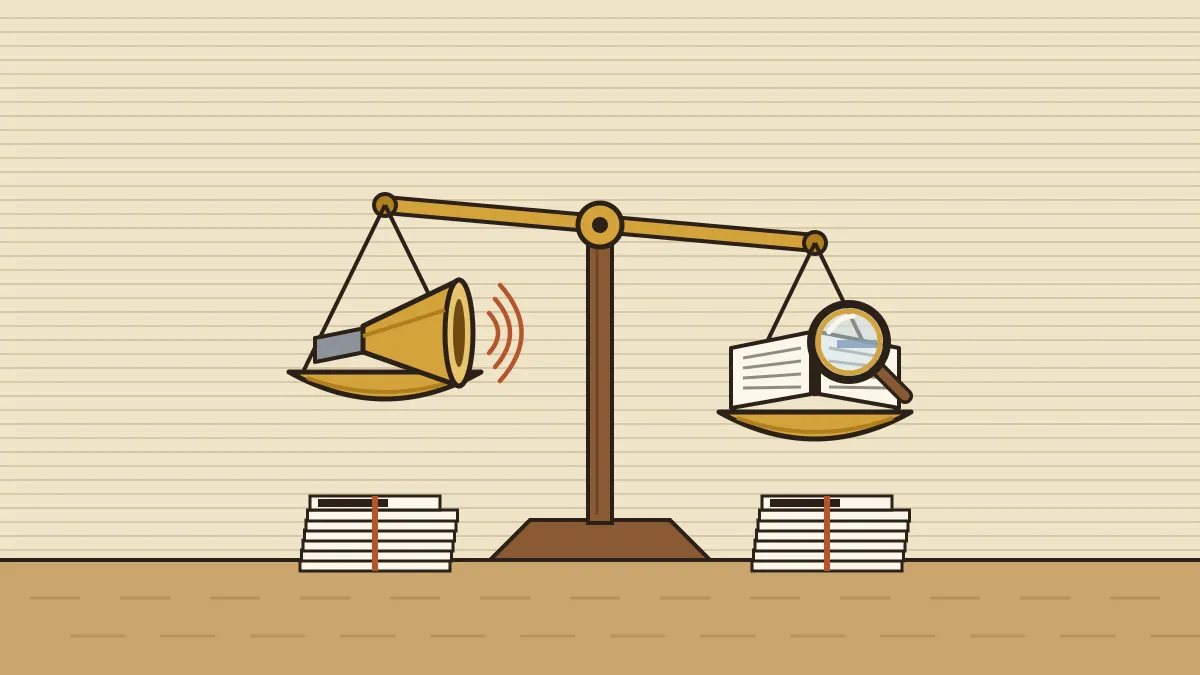
Every year on 16 November, India observes National Press Day. In 2026 the Press Council of India (PCI) marked it at the Rangbhawan Auditorium of Akashvani Bhawan in New Delhi, with Union Minister Shri Ashwini Vaishnaw, the minister for Information and Broadcasting (and for Railways and Electronics and Information Technology), addressing the gathering. The theme was "Journalism: Populist or Responsible".
The practical headline was a document: the Council released the 2026 edition of its Norms of Journalistic Conduct, the code that guides ethical reporting in print. The speeches around it dwelt on one theme: a media landscape where anyone with a phone can publish, where artificial intelligence can write copy, and where speed often beats checking.
This article explains the Council itself, how it works, where it stands among India's rulebooks for press, television and digital media, and why a day about newspapers is a polity topic.
What happened on the day
The PIB release of 16 November 2026 lists a short cast of speakers and their main messages:
- Shri Ashwini Vaishnaw said the next five years could bring more technological change than the previous two decades, and urged young journalists to keep upgrading their skills. He raised the question of whether platform "community guidelines" are enough against misinformation, deepfakes, misleading advertisements, digital arrests and content harmful to children, and asked how this changing media space should be governed.
- Shri Rajat Sharma, the keynote speaker, spoke of the thin line between sensationalism and responsibility. Recalling the Emergency, the 26/11 attacks and Operation Sindoor, he stressed restraint and verification when reporting on national security.
- Justice (Retd.) Ranjana Prakash Desai, Chairperson of the PCI, reaffirmed the Council's commitment to press freedom and better standards. She noted that people with a phone can now disseminate news, but not all of them are trained in or bound by journalistic ethics.
- Shri Chanchal Kumar, Secretary, Ministry of Information and Broadcasting, said popularity must not outrank truth nor virality outrank verification, and that AI can assist journalism but cannot take over the journalist's responsibility.
- Dr Sudhanshu Trivedi, a PCI Member and Rajya Sabha MP, called for a critical look at international indices, and stressed integrity in the spread of information.
The common thread, in the Secretary's phrasing, is editorial judgement and human accountability in the age of AI.
What the 2026 Norms add
The Council's Norms of Journalistic Conduct are the working ethics code for newspapers and news agencies. The PIB release says the 2026 edition adds updated guidance on:
- reporting during natural disasters and conflict situations;
- coverage of protests and demonstrations;
- reporting on sex workers and persons with disabilities;
- protecting children's privacy; and
- advertisements relating to online money games, in line with the Promotion and Regulation of Online Gaming Act, 2025.
The last item shows how the Norms trail the statute book: Parliament passed the online gaming law in August 2025, and the Council's code now tells newspapers how to treat advertisements for such games. The first item builds on guidelines for reporting on natural disasters that the Council had already framed in 2023, according to the PIB backgrounder on Press Day 2025.
Why 16 November
PIB's explanation is brief. National Press Day marks the day the Press Council of India began working in 1966, under the Press Council Act of 1965. The 1965 Act was repealed in 1975 (the year the Emergency began), and a new Act, the Press Council Act, 1978, followed. Under it the Council was reconstituted in 1979. The PIB description of the Council today is a statutory, autonomous, quasi-judicial body whose purpose is to preserve the freedom of the press and to improve the standards of newspapers and news agencies.
The idea of such a council traces back to the First Press Commission. PIB's Press Day backgrounder gives 1956 for it, but the Commission was appointed in 1952 and submitted its report in 1954, and most histories use those years, so check which source a question follows. The Council was first constituted on 4 July 1966 and began functioning on 16 November 1966, which is why that date is Press Day. The facts that all sources agree on are the 1966 start, the 1975 repeal and the 1979 reconstitution.
| Year | Event |
|---|---|
| 1966 | Press Council of India begins working (Act of 1965) |
| 1975 | The 1965 Act repealed; the Council ends |
| 1978 | Press Council Act enacted |
| 1979 | Council reconstituted under the 1978 Act |
Who sits on the Council
The PCI has a Chairperson and 28 members, and Section 5 of the Act fixes who they are. The tally below is from a PIB reply to Parliament in August 2025:
| Group (Section 5(3)) | Members |
|---|---|
| Working journalists | 13: six editors of newspapers and seven other working journalists |
| Owners or managers of newspapers | 6 |
| Persons managing news agencies | 1 |
| Persons with special knowledge of education and science, law, and literature and culture | 3, nominated by the UGC, the Bar Council of India and the Sahitya Akademi (one each) |
| Members of Parliament | 5: three from the Lok Sabha, nominated by the Speaker, and two from the Rajya Sabha, nominated by its Chairman |
| Total | 28, plus the Chairperson |
The sum is 13 + 6 + 1 + 3 + 5 = 28. The present Chairperson, Justice Ranjana Prakash Desai, a Supreme Court judge from 2011 to 2014, was appointed in 2022 and is the first woman to hold the post. The Chairperson is chosen by a three-member committee: the Chairman of the Rajya Sabha, the Lok Sabha Speaker and a member elected by the Council's own members.
The Council is renewed in terms. In a Rajya Sabha reply on 27 March 2026, the government said that 14 members of the 15th Press Council had been notified by gazette notifications of 19 December 2024 and 2 December 2025, and that the quorum for meetings is 11 members (Regulation 4 of the 1979 meeting regulations). In August 2025 the nomination of the 13 working-journalist members was before the Delhi High Court. Do not assume that the Council is at full strength; check the latest notification when a question depends on it.
The mix is deliberate: the Council is a body of the press, owners, parliamentarians and independent experts, which is why it is described as self-regulatory and not as an arm of the government.
What it can do, and what it cannot
PIB gives a clear picture of the Council's working:
- It considers complaints filed by the press about curtailment of press freedom, physical attacks on journalists and similar matters (Section 13 of the Act, processed under the Press Council (Procedure for Inquiry) Regulations, 1979).
- It can take suo motu cognizance of pressing issues concerning press freedom and standards.
- Under Section 14, it can inquire into alleged violations of the Norms, and may warn, admonish or censure newspapers, editors or journalists.
- It frames and updates the Norms of Journalistic Conduct, the very document released this year.
Two numbers from the March 2026 Rajya Sabha reply show how this works in practice. In the five years from 2020-21 to 2024-25 the Council used its power to censure or admonish in 48 instances. And as of January 2026 1,077 complaints were pending:
| Pending for | Complaints |
|---|---|
| 1 to 2 years | 463 |
| 2 to 5 years | 301 |
| More than 5 years | 313 |
| Total | 1,077 |
PIB's description of the Council is a "self-regulatory mechanism for the print media", and it lists warning, admonishing and censure as the sanctions. It does not list any power to fine or imprison, so the Council works through reputation, not punishment. Note the scope too: the Council's own field is print, meaning newspapers and news agencies. Television and digital news fall under other rulebooks, described below.
Freedom of the press in the Constitution
The Constitution does not contain a separate article titled "freedom of the press". The guarantee is read into Article 19(1)(a), the freedom of speech and expression, which courts have held to include freedom of the press. That freedom is not absolute. Article 19(2) lets the State impose reasonable restrictions on eight grounds:
- sovereignty and integrity of India,
- security of the State,
- friendly relations with foreign States,
- public order,
- decency or morality,
- contempt of court,
- defamation, and
- incitement to an offence.
"Sovereignty and integrity of India" was added by the 16th Amendment, 1963. A restriction must be reasonable, and courts can strike down one that is excessive. These distinctions are in our notes on fundamental rights of liberty.
The Council sits alongside this guarantee. It is not a court and does not decide what is legal; it applies standards of professional ethics. Its home in the exam syllabus is the family of statutory bodies, covered in our notes on statutory commissions.
Print, television and digital: three rulebooks
For a quick comparison:
| Medium | Main framework |
|---|---|
| Press Council Act, 1978; PCI Norms; Press and Registration of Periodicals Act, 2023 for registration | |
| Television | Cable Television Networks (Regulation) Act, 1995, whose Programme Code and Advertising Code channels must follow |
| Digital news | IT (Intermediary Guidelines and Digital Media Ethics Code) Rules, 2021, whose code of ethics draws on the PCI's journalistic norms and the cable TV programme code |
The third row explains why the Council's Norms matter beyond newspapers: the 2021 digital rules borrow from them. As Mr Vaishnaw's remarks suggest, the larger policy question now is how to govern content that spreads on platforms, including deepfakes and fraud, that none of these three frameworks was written for.
The registration side: PRP Act, 2023
A different part of the press system deals with registration, not ethics. The Press and Registration of Periodicals Act, 2023 was notified on 29 December 2023 and came into force on 1 March 2024. It replaces the colonial Press and Registration of Books Act, 1867, renames the Registrar of Newspapers for India (RNI) as the Press Registrar General of India (PRGI), and moves registration online through the Press Sewa Portal. PIB says the Act also decriminalises procedural lapses.
PIB's Press Day backgrounder (2025) gives the scale: registered publications rose from 60,143 in 2004-05 to about 1.54 lakh in 2024-25. It also mentions the Working Journalists Act, 1955, which protects journalists' service conditions, and the National Awards for Excellence in Journalism, presented every year on Press Day, with the Raja Ram Mohan Roy Award as the highest honour.
A short history: why the press needed protecting
The Council's job looks mild beside what earlier generations faced. The first newspaper printed in India was Hicky's Bengal Gazette, started in Calcutta in 1780, and it was shut down after its editor attacked the Governor-General. A long run of colonial press laws followed, among them Wellesley's censorship of 1799, Adam's licensing rule of 1823, Metcalfe's liberalisation of 1835 and the Vernacular Press Act of 1878. Our full note on the Indian press under British rule lays out the order. The Emergency of 1975 to 1977 brought back censorship in independent India, and the Press Council of the time was swept away with the 1965 Act. That is why the present Council's re-establishment in 1979 is read as a sign of the press's recovery.
🔑 Revision block
The day. National Press Day, 16 November; 2026 event at Akashvani Bhawan, New Delhi; theme "Journalism: Populist or Responsible"; 2026 Norms of Journalistic Conduct released.
New Norms cover. Disasters and conflict; protests; sex workers and persons with disabilities; children's privacy; ads for online money games (Online Gaming Act, 2025).
History. Council began 1966 (Act of 1965); Act repealed 1975; Press Council Act, 1978; reconstituted 1979.
Composition. Chairperson + 28: 13 working journalists (6 editors + 7), 6 owners, 1 news agency, 3 experts (UGC, Bar Council, Sahitya Akademi), 5 MPs (3 LS + 2 RS). Quorum 11. Chairperson: Justice (Retd.) Ranjana Prakash Desai.
Powers. Section 13 complaints; Section 14 warn, admonish, censure; suo motu; 48 censure/admonish cases in five years; 1,077 pending (Jan 2026).
Frameworks. Print: PCI. TV: Cable TV Act, 1995. Digital: IT Rules, 2021. Registration: PRP Act, 2023 (RNI becomes PRGI).
Constitution. Press freedom is read into Article 19(1)(a); limits in 19(2) (8 grounds; sovereignty and integrity added by 16th Amendment, 1963).
🎯 Practice MCQs
Q1. National Press Day, observed on 16 November, marks the establishment of the:
(a) Press Information Bureau
(b) Press Council of India
(c) Press Trust of India
(d) Registrar of Newspapers for India
→ (b)
PIB records that the day marks the start of the Press Council of India in 1966.
Q2. The Press Council of India consists of a Chairperson and how many other members?
(a) 11
(b) 15
(c) 21
(d) 28
→ (d)
Thirteen working journalists, six owners, one from news agencies, three experts and five Members of Parliament make 28.
Q3. The Press Council of India functions today under the:
(a) Press Council Act, 1978
(b) Press and Registration of Books Act, 1867
(c) Working Journalists Act, 1955
(d) Press and Registration of Periodicals Act, 2023
→ (a)
The 1965 Act was repealed in 1975, and the Council was reconstituted in 1979 under the 1978 Act. The other Acts deal with registration and working conditions.
Q4. After an inquiry under Section 14 of the Press Council Act, the Council may:
(a) Fine the editor
(b) Cancel a newspaper's registration
(c) Warn, admonish or censure
(d) Imprison the journalist
→ (c)
Its sanctions are moral: warning, admonishing and censure. It censured or admonished in 48 instances between 2020-21 and 2024-25.
Q5. Consider the following statements:
1. The Constitution has a separate Article guaranteeing freedom of the press, distinct from Article 19(1)(a).
2. "Sovereignty and integrity of India" was added as a ground of restriction in Article 19(2) by the 16th Amendment, 1963.
Which of the statements given above is/are correct?
(a) 1 only
(b) 2 only
(c) Both 1 and 2
(d) Neither 1 nor 2
→ (b)
Press freedom is read into Article 19(1)(a), so statement 1 is wrong. The 16th Amendment added the sovereignty and integrity ground.
Q6. Under the Press and Registration of Periodicals Act, 2023, the Registrar of Newspapers for India was renamed the:
(a) Registrar of Periodicals
(b) Press Commissioner of India
(c) Chief Registrar of Publications
(d) Press Registrar General of India
→ (d)
The 2023 Act, in force from 1 March 2024, replaced the 1867 law and created the PRGI, with registration through the Press Sewa Portal.
Q7. The theme of National Press Day 2026, observed by the Press Council of India, was:
(a) "Journalism: Populist or Responsible"
(b) "Press and Democracy"
(c) "Truth in the Age of Algorithms"
(d) "Free Press, Free Nation"
→ (a)
The theme, as PIB records it, reflects the debate between popularity and responsibility in the digital age.
Q8. The first newspaper printed in India was:
(a) Samachar Darpan
(b) Mirat-ul-Akhbar
(c) Hicky's Bengal Gazette
(d) Bombay Samachar
→ (c)
It was started at Calcutta in 1780 by James Augustus Hicky. Samachar Darpan (1818), Mirat-ul-Akhbar (1822) and Bombay Samachar (1822) came later.
📋 How this gets asked (PYQ pattern)
Press and media law gets asked in CDS in two quite different ways, and a Press Day story serves both.
The first is polity: which body is statutory and which constitutional, what a regulator can and cannot do, and which Article protects a freedom. The usual trap is to treat the Press Council as a body with penal powers, or to place press freedom in its own Article. Q4 and Q5 above are that pattern. The second is modern history: the order of press laws, and who started which paper, which is why a plain date like 1780 or 1878 is worth knowing. Q8 is that pattern.
A third pattern is a composition question, where the count of members (28) or the mix of nominating bodies is tested. Expect the examiner to offer the nearest wrong totals.
Preparing for CDS? Pair each regulator with its Act and its limits: what it can order, what it can only recommend. Revise the polity notes, follow the daily CDS current affairs, and learn with experienced faculty in the upcoming Cavalier courses in Delhi.
Source: PIB / Ministry of Information and Broadcasting, "Journalism Must Balance Freedom of Expression with Responsibility; Media Must Adapt to Rapid Technological Changes: Union Minister Shri Ashwini Vaishnaw" (16 November 2026); PIB Backgrounder "National Press Day 2025" (16 November 2025); "Constitution Process of 15th Press Council of India Underway" (8 August 2025); "Press Council Acts on 48 Cases in Last Five Years; 14 Members Notified for 15th Council" (27 March 2026). Details on the Chairperson's appointment from the Council's own biographical note and press reports of June 2022; Article 19 and the 16th Amendment from The Cavalier's study notes; the television and digital frameworks from PRS Legislative Research's review of the IT Rules, 2021.
✍️ Written by Hitendra Deswal — Polity & current-affairs faculty at The Cavalier. Reviewed by the Cavalier Faculty Desk.