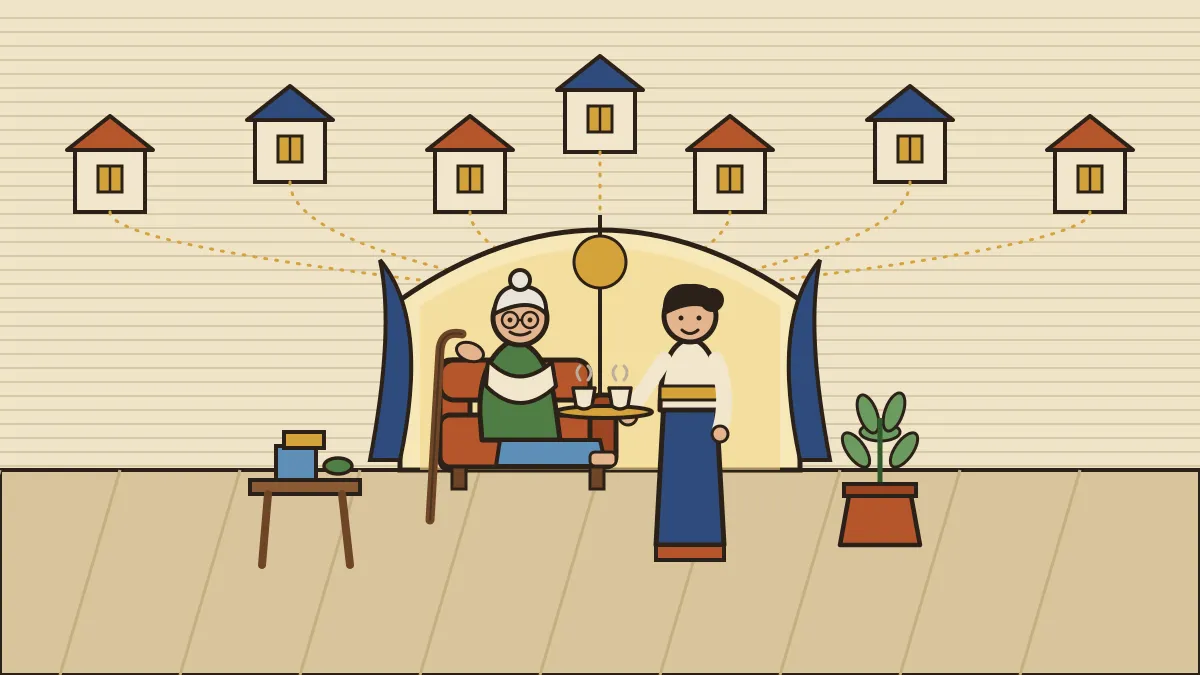
India is getting older faster than it is getting ready. The number of citizens above 60 is rising by roughly three per cent a year, and the people who actually look after them are mostly relatives, informal helpers or whoever a neighbour recommends. On 13 November 2026, the Ministry of Social Justice and Empowerment described a tool built to change that: SHATAYU, a national online directory of trained geriatric caregivers, which now lists 30,151 of them across States and Union Territories.
The name expands to Senior Holistic Care Assistance and Training for Your Utility. It is a digital initiative of the Department of Social Justice and Empowerment (DoSJE), and it sits at the junction of three themes that keep returning in current affairs: population ageing, the "care economy", and government platforms that match service seekers with skilled workers. This article explains what PIB said, how the platform works, and the older schemes and laws it builds on.
What SHATAYU is, in one paragraph
SHATAYU is a centralised national Geriatric Caregiver Dashboard and Directory. It was launched on 22 May 2026 during a National Workshop on "Creating a Well-Functioning Care Economy", where the Union Minister for Social Justice and Empowerment, Dr. Virendra Kumar, also launched a companion mobile application for senior citizens called JEEVAN (Joint Elderly Empowerment & Virtual Assistance Network). The aim, in the ministry's words, is to bridge the gap between professionally trained caregivers and the senior citizens, families and institutions that need them.
The ministry's official said the directory now features 30,151 caregivers. Anyone can search it by State/UT and district, so that a family in one district can find help that is available locally. The portal address given by PIB is shatayu.dosje.gov.in.
How the platform works
PIB describes the user side and the caregiver side separately.
For families and institutions
- Search the directory by State/UT and district and open caregiver profiles.
- "Request Callback": the user picks a State/UT and district, states the type of care required and submits contact details through an OTP-based verification. The request is then made available to caregivers in that district, and they can contact the family directly.
- Full-time or hourly: the facility covers both full-time and hourly caregiving needs.
- Free of charge: searching the directory and placing callback requests cost nothing. PIB does not describe any role for the platform in setting caregivers' fees, and it does not mention insurance or placement guarantees.
- Accountability features: besides OTP verification, the platform offers caregiver profile access, enrolment tracking and a feedback and rating mechanism, so that users can share how the service went.
For caregivers
- Eligible professionals enrol themselves by submitting personal details, address, course qualifications and training certificates.
- They can track the status of their application on the dashboard.
- After the application is reviewed and approved, the profile is listed and prospective employers or families can reach them.
Types of care a family can ask for
| Need | Examples named in the release |
|---|---|
| General geriatric care | Day-to-day assistance, help with daily living |
| Post-surgical care | Recovery support at home |
| Dementia and Alzheimer's care | Specialised cognitive and behavioural care |
| Physiotherapy and mobility | Mobility assistance, rehabilitation |
| Palliative care | Comfort-focused care for serious illness |
The word "holistic" in the name is deliberate. The release stresses that elders' needs vary with their health and circumstances, and that the platform is meant to reach those needing help with daily activities as well as those needing rehabilitation or specialised care.
Four training tracks, two training partners
Behind the directory is a training framework. PIB says the initiative recognises four broad professional training categories:
- Geriatric Care Provider
- Geriatric Caregiver (Institutional and Home Care)
- Wellness Therapist (Elderly)
- Elderly Care Companion
These tracks cover competencies such as holistic elderly care, physiological monitoring, emergency handling, bedside mobility, assistance with activities of daily living, therapeutic rehabilitation, cognitive engagement, emotional companionship and social integration. The framework is supported by two bodies under two different ministries:
- National Institute of Social Defence (NISD), under the Ministry of Social Justice and Empowerment.
- National Skill Development Corporation (NSDC), under the Ministry of Skill Development and Entrepreneurship.
The pairing is typical of how the "care economy" is being built: the social-sector ministry defines the need, and the skilling ministry's machinery certifies the workforce.
The scheme behind it: Atal Vayo Abhyuday Yojana
SHATAYU is a dashboard, not a scheme in itself. It rests on the geriatric-caregiver training that the Department already runs under the umbrella scheme Atal Vayo Abhyuday Yojana (AVYAY). A PIB note of 25 June 2026 says the dashboard is managed by the National Institute of Social Defence (NISD), the body mandated with that training, and that caregivers trained in 2023-24 and earlier years were also allowed to self-register on it. A PIB summary of February 2024 lists AVYAY's components as:
- Integrated Programme for Senior Citizens (IPSrC): grants to NGOs and other agencies for senior citizens' homes, continuous care homes and mobile medicare units.
- State Action Plan for Senior Citizens (SAPSrC): funds to States/UTs, including for pools of trained geriatric caregivers.
- Rashtriya Vayoshri Yojana (RVY): free assistive devices such as walking sticks, hearing aids, wheelchairs, dentures and spectacles for senior citizens who are below the poverty line or earn up to ₹15,000 a month, implemented through ALIMCO.
- Elderline (14567): the toll-free national helpline for information, guidance, emotional support and field intervention in cases of abuse.
- Senior-care Ageing Growth Engine (SAGE): equity support of up to ₹1 crore per project (government equity not exceeding 49%) for start-ups building products and services for the elderly; the SAGE portal was launched on 4 June 2021.
- Geriatric Caregivers Training: introduced to bridge the gap between the supply of, and growing demand for, professional geriatric caregivers.
Our earlier explainer on AVYAY, IPSrC and SAPSrC walks through these components in detail.
The training component has run under the name PM-SPECIAL (Training of Geriatric Care Givers). In a March 2025 reply to the Lok Sabha, the government said 32 institutes were empanelled in 2023-24, and that they trained 36,785 people. The largest numbers were in Madhya Pradesh (12,450) and Uttar Pradesh (9,750). Training is free of cost, institutes are paid under common cost norms of the Skill Development Ministry, and there is no stipend for trainees. Institutes are expected to tie up with hospitals, nursing homes or home-care providers for on-the-job training and jobs.
The two numbers should not be confused. 36,785 is the number trained in one year under one scheme. 30,151 is the number of caregivers PIB says the SHATAYU portal features. They measure different things.
Why the need is rising: India's ageing numbers
PIB has used these figures in its own releases:
- At the 2011 Census, people aged 60 and above were 8.6% of the population, about 103 million.
- The Health Ministry, releasing the first wave of the Longitudinal Ageing Study in India (LASI) in January 2021, said the elderly population was growing at about 3% a year and could reach 319 million by 2050. A 2024 PIB note from the Ministry of Ayush gives a different projection, from 153 million to 347 million by 2050. Projections differ with the base year and assumptions, so for the exam the safe takeaway is "more than three times the 2011 figure by mid-century".
- LASI Wave-1 covered 72,250 individuals aged 45 and above, including 31,464 people aged 60 and over. The Health Minister cited that about 75% of the elderly have a chronic disease, about 40% have a disability and about 20% have mental-health issues.
LASI is worth remembering for its design: it is India's national longitudinal survey on ageing, carried out through the International Institute for Population Sciences (IIPS), Mumbai, with the National Programme for Health Care of the Elderly, and it includes biomarkers alongside family, income and consumption data.
When a population ages, three pressures arrive together. Health needs rise and become long-term. Joint-family support thins as younger members migrate. And the demand for paid, skilled, home-based care grows. The ageing population is the demographic side of the story; SHATAYU is part of the supply side. Revise the demographic concepts in our notes on human geography and demography.
The legal and policy frame for elders
Constitution. There is no fundamental right to old-age care, but the Directive Principles direct the State to make effective provision for public assistance in cases of old age, sickness and disablement (Article 41), within the limits of its economic capacity. Directive Principles are not justiciable. See our notes on the Directive Principles of State Policy.
National Policy on Older Persons, 1999. It reaffirmed the State's commitment to the well-being of older persons, with support for financial and food security, health care, shelter, protection against abuse and an equitable share in development.
Maintenance and Welfare of Parents and Senior Citizens (MWPSC) Act, 2007. Enacted in December 2007 (PIB gives the date as 29 December 2007), it makes maintenance of parents and senior citizens a legal obligation. Points the exam likes:
- All States and UTs have notified it (Section 1(3)).
- Claims go to Maintenance Tribunals, with an Appellate Tribunal above them. An application is to be disposed of within 90 days of the notice being served.
- Under Section 17, parties cannot be represented by lawyers before the Tribunals, so that justice is cheap and quick for the elderly.
- Under Section 22, States confer powers on the District Magistrate to ensure implementation of the Act.
- An Amendment Bill was introduced in the Lok Sabha on 11 December 2019; it would, among other changes, start the 90-day clock from the date of filing.
Money and health. Under the National Social Assistance Programme, old-age pension is for BPL persons aged 60 and above, with central assistance of ₹200 a month for ages 60-79 and ₹500 for 80 and above. The Health Ministry runs the National Programme for Healthcare of the Elderly (NPHCE), and Ayushman Vay Vandana gives health cover to every citizen above 70, as our explainer on Ayushman Vay Vandana at two years shows. NALSA's Legal Services to Senior Citizens Scheme, 2016, offers free legal aid and legal clinics at old age homes.
What a directory can and cannot do
A directory solves a matching problem. A family in a small town may not know that a trained dementia-care provider lives two blocks away; a caregiver may not know who needs them. OTP verification and ratings add some trust. For caregivers, being visible on an official portal can mean more regular work.
But several things lie outside what PIB described. A listing is not the same as a regulatory licence. The release does not mention minimum wages, insurance or background checks for caregivers. And the platform can only help where caregivers have enrolled. These are the gaps the broader care economy debate keeps returning to: recognition of care work as skilled work, fair pay, and quality assurance.
🔑 Revision block
The news. On 13 November 2026 the Ministry of Social Justice and Empowerment (DoSJE) described SHATAYU (Senior Holistic Care Assistance and Training for Your Utility), a national Geriatric Caregiver Dashboard and Directory.
Key facts. Launched 22 May 2026 at the workshop "Creating a Well-Functioning Care Economy" (with the JEEVAN app); 30,151 caregivers listed; search by State/UT and district; Request Callback with OTP; full-time and hourly care; search and callback free; feedback and rating feature; portal shatayu.dosje.gov.in.
Training. Four tracks: Geriatric Care Provider, Geriatric Caregiver (Institutional and Home Care), Wellness Therapist (Elderly), Elderly Care Companion. Partners: NISD (Social Justice) and NSDC (Skill Development).
Scheme link. Atal Vayo Abhyuday Yojana (IPSrC, SAPSrC, RVY, Elderline 14567, SAGE, Geriatric Caregivers Training). PM-SPECIAL: 32 institutes, 36,785 trained in 2023-24, free, no stipend.
Numbers. 2011 Census: 8.6% (about 103 million) aged 60+. LASI Wave-1: 72,250 persons surveyed (IIPS). Projections for 2050 range from 319 to 347 million.
Law and policy. Article 41 (old-age assistance, a Directive Principle); National Policy on Older Persons 1999; MWPSC Act 2007 (tribunals, 90 days, no lawyers under Section 17, District Magistrate under Section 22); amendment bill introduced 11 December 2019.
🎯 Practice MCQs
Q1. SHATAYU, the initiative in the news, is a digital platform of which ministry?
(a) Ministry of Health and Family Welfare
(b) Ministry of Social Justice and Empowerment
(c) Ministry of Skill Development and Entrepreneurship
(d) Ministry of Rural Development
→ (b)
SHATAYU is a digital initiative of the Department of Social Justice and Empowerment. The Skill Development Ministry's NSDC is a training partner, not the owner.
Q2. Which of the following can a family do on the SHATAYU portal, according to PIB?
1. Search caregivers by State/UT and district.
2. Place a callback request verified by OTP.
3. Pay a government-fixed wage to the caregiver through the portal.
Which of the statements given above are correct?
(a) 1 and 2 only
(b) 2 and 3 only
(c) 1 and 3 only
(d) 1, 2 and 3
→ (a)
Searching and OTP-verified callbacks are described, and both are free. PIB does not describe any wage-fixing or payment function.
Q3. The National Policy on Older Persons was announced in:
(a) 1982
(b) 1991
(c) 1999
(d) 2007
→ (c)
The policy dates from 1999. The year 2007 is that of the Maintenance and Welfare of Parents and Senior Citizens Act.
Q4. Under the Maintenance and Welfare of Parents and Senior Citizens Act, 2007, parties before a Maintenance Tribunal:
(a) must be represented by an advocate
(b) may be represented by a senior advocate only
(c) must appear before the High Court first
(d) cannot be represented by a legal practitioner
→ (d)
Section 17 bars representation by lawyers so that proceedings stay simple, quick and affordable for senior citizens.
Q5. Which Article of the Constitution directs the State to provide public assistance in cases of old age, sickness and disablement?
(a) Article 21
(b) Article 39
(c) Article 41
(d) Article 46
→ (c)
Article 41 is a Directive Principle. It is non-justiciable and is subject to the State's economic capacity.
Q6. The two bodies named by PIB as supporting the SHATAYU training framework are:
(a) NITI Aayog and NHRC
(b) ALIMCO and IIPS
(c) ICMR and NIHFW
(d) NISD and NSDC
→ (d)
NISD works under the Social Justice Ministry and NSDC under the Skill Development Ministry. ALIMCO makes assistive devices under RVY, and IIPS ran LASI.
Q7. Consider the following statements about the Longitudinal Ageing Study in India (LASI).
1. It is a national survey on the health, economic and social aspects of population ageing.
2. It was carried out through the National Sample Survey Office.
Which of the statements given above is/are correct?
(a) 1 only
(b) 2 only
(c) Both 1 and 2
(d) Neither 1 nor 2
→ (a)
Only statement 1 is correct. LASI was carried out through the International Institute for Population Sciences, Mumbai, and its Wave-1 covered a baseline sample of 72,250 individuals aged 45 and above.
Q8. Rashtriya Vayoshri Yojana provides free assistive devices to eligible senior citizens. The scheme is implemented through:
(a) National Skill Development Corporation
(b) Artificial Limbs Manufacturing Corporation of India
(c) Indian Council of Medical Research
(d) National Institute of Social Defence
→ (b)
ALIMCO, a public sector undertaking under the Social Justice Ministry, implements RVY. Beneficiaries are BPL senior citizens or those earning up to ₹15,000 a month.
📋 How this gets asked (PYQ pattern)
Welfare-scheme questions in defence-service entrance papers usually come in three shapes.
The first is name and parent: which ministry runs a scheme, and what its acronym stands for. Acronym-heavy launches such as SHATAYU and JEEVAN are tailor-made for this, so learn each expansion once.
The second is statement-type, as in Q2 and Q7 above: one correct feature mixed with a plausible but invented one. The usual trap is a function the platform never claimed, such as paying or regulating caregivers.
The third is constitution and law: Directive Principles (Article 41), the 1999 policy and the 2007 Act. Section numbers are rarely asked, but the "no lawyers" rule and the District Magistrate's role are classic examiners' favourites. The fresh hook this cycle is 30,151 caregivers, the 22 May 2026 launch and the four training tracks.
Preparing for CDS? Pair every scheme with its ministry, its target group and its legal or constitutional anchor. Build that habit with our notes on the Directive Principles and the rest of the CDS/OTA study material. Follow the daily CDS current affairs, and learn with experienced faculty in the upcoming Cavalier courses in Delhi.
Source: PIB / Ministry of Social Justice & Empowerment, "Senior Holistic Care Assistance and Training for Your Utility (SHATAYU)", 13 November 2026, and "Launch of JEEVAN App and SHATAYU Geriatric Caregiver Dashboard", 22 May 2026. Background from PIB releases on AVYAY (22 February 2024), the National Policy on Older Persons and Elderline (15 March 2023), the MWPSC Act (5 April 2022 and 25 July 2023), senior-citizen welfare schemes (31 July 2024), PM-SPECIAL (18 March 2025) and LASI Wave-1 (6 January 2021).
✍️ Written by Hitendra Deswal — Polity & current-affairs faculty at The Cavalier. Reviewed by the Cavalier Faculty Desk.